

TNCC 8th Edition latest version 2024
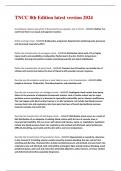
According to newtons law which of these two forces is greater: size or force? - ANSWER-Neither. For each force there is an equal and opposite reaction. Define Cushing's triad - ANSWER-Bradycardia, progressive hypertension (widening pulse pressure), and decreased respiratory effort Define the characteristics of neurogenic shock - ANSWER-Distributive shock with a T6 or higher injury results and vasodilation, bradycardia, flushed warm dry skin. Risk for temperature instability. Nursing interventions include maintaining warmth and spinal stabilization. Define the characteristics of spinal shock - ANSWER-Transient loss of function can include loss of reflexes and muscle tone below the level of industry with possible vascular response. Describe one fat embolism syndrome is most likely to occur in its characteristics - ANSWER-With longform fractures. Tachycardia, Thrombocytopenia, and petechiae rash. Describe the characteristics of cardiogenic shock - ANSWER-Cardiogenic shock results from pump failure in the presence of adequate intravascular volume. Lack of cardiac output and an organ perfusion occurs secondary to a decrease in myocardial contractility and or valvular insufficiency. This can happen with blunt cardiac trauma or an MI. Symptoms can include low blood pressure increase heart rate and respiratory rate chest pain shortness of breath dysrhythmias increase troponin and pale cool moist skin Describe the characteristics of distributive shock. - ANSWER-Distributive shock occurs as a result of Mel distribution of an adequate circulating blood volume with the loss of vascular tone or increased permeability. This can occur with spinal cord injuries, sepsis, or anaphylaxis. Symptoms include low blood pressure heart rate respiratory rate preload and afterload, spinal tenderness, difficulty breathing, warm pink and dry skin with a cool core temperature. Describe the characteristics of hypovolemic shock - ANSWER-Hypovolemia is caused by a decrease in the amount of circulating volume usually caused by massive bleeding, but also can be from vomiting and diarrhea. Characteristics include low blood pressure and preload, increase heart rate respiratory rate and afterload, with contractility unchanged. Signs include obvious bleeding, weak peripheral pulses, pale cool and moist skin, distended abdomen, pelvic fracture, or bruise swollen and deformed extremities especially long bones.
Información del documento
- Subido en
- 19 de junio de 2024
- Número de páginas
- 6
- Escrito en
- 2023/2024
- Tipo
- Examen
- Contiene
- Preguntas y respuestas

