Ancient Greek Theatre – Basics
From video Ancient Greek Theatre by untoldedu (YouTube), https://www.youtube.com/watch?
v=i41fSuyMUkE
Theatre began over 2000 years ago in Ancient Athens.
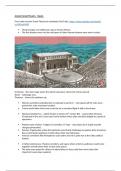
The first theatres were circular and open air (later Roman theatres were semi-circular).
Orchestra – the main stage where the action took place, where the chorus danced.
Skene – backstage area.
Theatron – where the audience sat.
Women sometimes attended but not allowed to perform – men played all the roles (very
patriarchal, male orientated society).
Cranes would often hoist actors into the air to simulate flight & add to the drama.
Dionysus Eleuthereus – oldest theatre in Greece (6 th century BC) – named after Dionysus
(Greek god of the arts). Every year held a festival where plays would be judged by a panel of
spectators.
Popular types of plays: Tradgies & Comedies (3 rd type – satyr plays aka a stupid sexually
charged pantomime).
Famous Tragedy play writes like Sophocles used Greek Mythology to explore their characters
flaws and inspired audience to think about their own behaviour.
Famous comedians like Aristophanes used satire and wit to poke fun at the cities political
leaders.
In Athens democracy, Theatre provided a safe space where artists & audiences could come
together and talk about their society (safe space).
The state even payed for citizens to attend plays so they could learn more about the
important issues plays explored.
, The chorus – an important part of Greek Theatre.
Up to 50 performers spoke, sung or danced in unison & commented on the action to help
the audience understand what was going on and how to feel about it.
They never acted as individuals. They thought as one and generally expressed the popular
opinion (propaganda). Aka a character played by 50 people (one mind).
The chorus became less important in Roman plays as the orchestra ( where the chrous
danced ) went from circular to semi-circular.
Story telling (passed orally) and Dithyramb (dance of the gods – agricultural) came together
to create theatre.
The first plays had 1 actor (storytelling) combined with the chorus (dithyramb).
Intro
Drama emerged in Athens in the late 6 th century BC – first organised theatre in western
civilisation.
Drama is one of ancients Greece’s best gifts to civilisation – impacted European drama ever
since, Athenian drama casts a long shadow even today.
The surviving plays continue to challenge, confuse and entertain today.
The issues they tackle are timeless and haven’t changed, we experience many of the same
today (the conflict between the individual and the state, the nature of human relationships,
the transience of human happiness & suffering). Athenians explored this in theatre.
Usually produced at religious festivals in large theatres.
Drama and the Theatre in Ancient Athenian Society 1.1
The religious context of the dramatic festivals:
Theatre was born in Athens (second half of 6 th century BC) and is one of ancient Greece’s
biggest legacies.
Their purpose wasn’t entertainment, more religious – drama was only performed at religious
festivals (an Athenian couldn’t choose to randomly go to the theatre).
, Key element of Athenian dramatic festival was competition – number of playwrights entered
plays written for the occasion so one could win.
Ancient Athenian dramatic festivals were associated with the worship of Dionysus (the god
of drama, wine & revelry).
Festivals included plays, processions, sacrifices and revelry in honour of Dionysus.
Athens was a polis – the Greek word for city state, the polis of Athens consisted of the city
and the surrounding region, Attica. MAP TEXTBOOK P6&7
As festivals were highly organised and grand civic occasions, any free man in the polis
(Athens or Attica) was immediately a full Athenian citizen & able to take part in civic events
i.e. Democratic assembly or festivals.
Festivals for Dionysus were generally held in the winter months.
The most important festivals were:
o The City Dionysia (more below)
o The Lenaea
Held in late January.
Had competitions for comedy and tragedy.
Comedy was more important.
Generally only open to Athenians because the seas were to journey at the
start of the year for others to make it.
o The Rural Dionysia
Held in mid winter.
It was a local festival celebrates in the demes.
Deme – a village / rural district of Attica (139 in fifth century).
The plays performed were probably revivals of those performed at the main
city festivals.
Despite being performed at religious festivals for Dionysus it is unclear how drama is linked
to his worship.
Out of the surviving Greek drama only appears as a character in Bacchae by Euripides &
Frogs by Aristophanes.
There is an estimate that only 4% of the okays were directly linked to Dionysus.
To help actors be heard:
o There were many acoustic effects such as the sound boucing off the theatron walls.
o Masks – hard masks with opening created a megaphones effect.
o Large Amphoras (Jars) placed around the theatron helped carry sound as it bounced
off it.
The City Dionysia:
For an Athenian late March held:
1. The coming of spring.
2. The reopening of sea lands.
3. The City Dionysia
They were all connected:
o It was appropriate to worship Dionysus, a god who encouraged new growth in spring
time.
o The start of sailing season allowed Athenians to show of their city and festival to
visitors from other parts of Greece.
From video Ancient Greek Theatre by untoldedu (YouTube), https://www.youtube.com/watch?
v=i41fSuyMUkE
Theatre began over 2000 years ago in Ancient Athens.
The first theatres were circular and open air (later Roman theatres were semi-circular).
Orchestra – the main stage where the action took place, where the chorus danced.
Skene – backstage area.
Theatron – where the audience sat.
Women sometimes attended but not allowed to perform – men played all the roles (very
patriarchal, male orientated society).
Cranes would often hoist actors into the air to simulate flight & add to the drama.
Dionysus Eleuthereus – oldest theatre in Greece (6 th century BC) – named after Dionysus
(Greek god of the arts). Every year held a festival where plays would be judged by a panel of
spectators.
Popular types of plays: Tradgies & Comedies (3 rd type – satyr plays aka a stupid sexually
charged pantomime).
Famous Tragedy play writes like Sophocles used Greek Mythology to explore their characters
flaws and inspired audience to think about their own behaviour.
Famous comedians like Aristophanes used satire and wit to poke fun at the cities political
leaders.
In Athens democracy, Theatre provided a safe space where artists & audiences could come
together and talk about their society (safe space).
The state even payed for citizens to attend plays so they could learn more about the
important issues plays explored.
, The chorus – an important part of Greek Theatre.
Up to 50 performers spoke, sung or danced in unison & commented on the action to help
the audience understand what was going on and how to feel about it.
They never acted as individuals. They thought as one and generally expressed the popular
opinion (propaganda). Aka a character played by 50 people (one mind).
The chorus became less important in Roman plays as the orchestra ( where the chrous
danced ) went from circular to semi-circular.
Story telling (passed orally) and Dithyramb (dance of the gods – agricultural) came together
to create theatre.
The first plays had 1 actor (storytelling) combined with the chorus (dithyramb).
Intro
Drama emerged in Athens in the late 6 th century BC – first organised theatre in western
civilisation.
Drama is one of ancients Greece’s best gifts to civilisation – impacted European drama ever
since, Athenian drama casts a long shadow even today.
The surviving plays continue to challenge, confuse and entertain today.
The issues they tackle are timeless and haven’t changed, we experience many of the same
today (the conflict between the individual and the state, the nature of human relationships,
the transience of human happiness & suffering). Athenians explored this in theatre.
Usually produced at religious festivals in large theatres.
Drama and the Theatre in Ancient Athenian Society 1.1
The religious context of the dramatic festivals:
Theatre was born in Athens (second half of 6 th century BC) and is one of ancient Greece’s
biggest legacies.
Their purpose wasn’t entertainment, more religious – drama was only performed at religious
festivals (an Athenian couldn’t choose to randomly go to the theatre).
, Key element of Athenian dramatic festival was competition – number of playwrights entered
plays written for the occasion so one could win.
Ancient Athenian dramatic festivals were associated with the worship of Dionysus (the god
of drama, wine & revelry).
Festivals included plays, processions, sacrifices and revelry in honour of Dionysus.
Athens was a polis – the Greek word for city state, the polis of Athens consisted of the city
and the surrounding region, Attica. MAP TEXTBOOK P6&7
As festivals were highly organised and grand civic occasions, any free man in the polis
(Athens or Attica) was immediately a full Athenian citizen & able to take part in civic events
i.e. Democratic assembly or festivals.
Festivals for Dionysus were generally held in the winter months.
The most important festivals were:
o The City Dionysia (more below)
o The Lenaea
Held in late January.
Had competitions for comedy and tragedy.
Comedy was more important.
Generally only open to Athenians because the seas were to journey at the
start of the year for others to make it.
o The Rural Dionysia
Held in mid winter.
It was a local festival celebrates in the demes.
Deme – a village / rural district of Attica (139 in fifth century).
The plays performed were probably revivals of those performed at the main
city festivals.
Despite being performed at religious festivals for Dionysus it is unclear how drama is linked
to his worship.
Out of the surviving Greek drama only appears as a character in Bacchae by Euripides &
Frogs by Aristophanes.
There is an estimate that only 4% of the okays were directly linked to Dionysus.
To help actors be heard:
o There were many acoustic effects such as the sound boucing off the theatron walls.
o Masks – hard masks with opening created a megaphones effect.
o Large Amphoras (Jars) placed around the theatron helped carry sound as it bounced
off it.
The City Dionysia:
For an Athenian late March held:
1. The coming of spring.
2. The reopening of sea lands.
3. The City Dionysia
They were all connected:
o It was appropriate to worship Dionysus, a god who encouraged new growth in spring
time.
o The start of sailing season allowed Athenians to show of their city and festival to
visitors from other parts of Greece.