AQA AS LEVEL BIOLOGY ASSESSMENT 2024
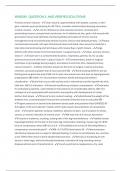
AQA AS LEVEL BIOLOGY ASSESSMENT 2024 What is the cellular and humoral response? - ANSWER-Cellular = The T-cells and other immune system cells that they interact with e.g phagocytes , form the cellular response Humoral - B cells and the production of antibodies form the humoral response. Explain what is meant by a primary response. - ANSWER-The primary response is slow because there aren't many B-cells that can make the antibody needed to bind to it. The infected person will show symptoms of the disease while the body produces enough of the right antibody to overcome the infection. T-cells and B-cells produce memory cells. Memory T-cells remember the specific antigen and will recognise it second time round. Memory B-cells record the specific antibodies needed to bind the antigen. The body is now immune. Explain what is meant by the secondary response. - ANSWER-If the same pathogen enters the body again, the immune system will produce a quicker, stronger immune response. What are the three ways a pathogen can damage hosts cells? - ANSWER-1) rupturing them to release nutrients inside them 2) breaking down nutrients inside the cell for their own use. This starves and eventually kills the cell. 3) replicating inside the cells and bursting them when they're released What are the two ways pathogens cause disease? - ANSWER-1) production of toxins 2) cell damage What are the lifestyle factors that can affect your chances of getting cancer? - ANSWER-1) smoking 2) excessive exposure to sunlight 3) excessive alcohol intake What are the three surfaces of contact- where pathogens enter our body? and how do they get in? - ANSWER-1) gas-exchange system = if you breathe in air that contains pathogens, most of them will be trapped in mucus lining the lung epithelium. Some pathogens are able to reach the alveoli where they can invade cells and cause damage. 2) Skin = if you damage your skin, pathogens on the surface can enter your bloodstream. blood clots prevent pathogens from entering. 3) Digestive system = if you eat or drink food that contains pathogens. Some will survive from the acidic conditions of the stomach, and invade cells of the gut wall and cause disease. Explain the process of phagocytosis. - ANSWER-1) A phagocyte recognises the antigens on a pathogene 2) The cytoplasm of the phagocyte moves round the pathogen, engulfing it. 3) The pathogen is now contained in a vacuole or a vesicle in the cytoplasm of the phagocyte. 4) A lysosome fuses with the phagocytic vacuole and the lytic enzymes break down with the pathogen 5) The phagocyte presents the pathogens antigens, it sticks the antigens on its surface to activate other immune system cells.
Escuela, estudio y materia
- Institución
- AQA AS LEVEL BIOLOGY
- Grado
- AQA AS LEVEL BIOLOGY
Información del documento
- Subido en
- 7 de junio de 2024
- Número de páginas
- 8
- Escrito en
- 2023/2024
- Tipo
- Examen
- Contiene
- Preguntas y respuestas
Temas
-
aqa as level biology assessment 2024
-
aqa as level biology assessment
-
aqa level biology assessment 2024

Documento también disponible en un lote