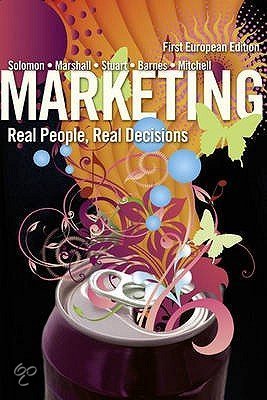
MARKETING
REAL PEOPLE, REAL DECISIONS
MY MARKETING LAB | SECOND EUROPEAN EDITION
Solomon, Marshall, Stuart, Barnes & Mitchell | Pearson
Chapters 9, 11, 12, 13 & 14
, Chapter 9 Services marketing
Meet Karen – Decision maker at KBW Management
- New potentially successful band discovered; Karen should think about best way to promote band
Option 1: Sign a lucrative deal with a major record company – long-term & multi-album deal
Large initial cheque in return for record company having all recording rights
Choose this option – signed an exclusive worldwide recording agreement
Option 2: Establish a licensing deal with an independent record label
Greater flexibility to Karen and band, but smaller initial up-front cheque
Option 3: Sign a production agreement between artist and production company
Make recordings which can be licensed to a recording company
No money paid in advance, only funding the recording costs – net profits will be split
Marketing what isn’t there
- Intangibles = services and other experience-based products that cannot be touched
- Services require a different kind of marketing than products – but same principles;
Develop mission statement, SWOT analysis, develop objectives, consider target markets
- Service = acts/efforts/performances exchanged form producer to user without ownership rights
Service satisfies needs by providing pleasure, information or convenience
- Services share four characteristics
1) Intangibility = can’t see, touch or smell a service – cannot inspect a service before we buy it
Makes it harder to evaluate – marketers use logo/furnishing/stationary/etc. as cues
2) Perishability = impossible to store for later sale or consumption – use it or lose it
Capacity management = adjusting services in attempt to match supply with demand
3) Variability = same service performed by same individual for same customer can vary
Consumers don’t necessarily want standardization when purchasing a service
Could implement Total Quality Management (TQM) = program for continuous improvement
4) Inseparability = impossible to separate production of a service from its consumption
Service encounter = interaction between customer and service provider – very important
Disintermediation = removing ‘middleman’ : e.g. self-service petrol stations and hotels
- Services can be classified
They are either tangible (haircut/car repair) or intangible (education/insurance)
Recipient can customer (personal trainer/TV program) or its possession (house cleaning/banking)
- Most products are a combination of goods and services – continuum shows scale of (in)tangibility
Good-dominated products = tangible product with 30-day warranty for example
Equipment- or facility-based services = mixture or tangible and intangible elements: restaurant
Operational factors = sign/guidelines must show customers how to use a service
Locational factors = location influences decision of frequently purchased services
Environmental factors = attractive environment to lure customers
People-based services = pure people-based; roaming masseur or mobile hairdresser
- Core service = benefit that customer gets from the service
- Augmented services = additional service offerings that differentiate the firm form the competition
- Nowadays services also very popular to order on the internet
Banking (online transferring money), software, travel (book online) or career-related sites
- Expansion of Traditional Marketing Mix, not only Price, Product, Place, and Promotion, but also:
People = management and motivation of people help consumer satisfaction and repeat custom
Process = procedures, mechanisms and routines put in place to deliver value to the customer
Physical evidence = environment where service is delivered and relating tangible cues
- Service encounter as already mentioned occurs when consumer in contact with employee(s)
Important because of social contact dimension and physical dimension
Employee represents organization, there actions/words/appearance reflects organizational value
, Customer also responsible for ensuring good quality experience: communicate and cooperate
Servicescape = environment in which service is delivered and where is interacted
Includes exterior design, parking, shop, colors, equipment, smell, website, etc.
These are the visual elements of the service encounter which influence consumers
Providing quality service
- Quality service ensures that customers are satisfied with what they have paid for
Differs per person, therefor marketers must identify customers’ expectations
- Because of inseparability difficult to estimate how good a service will be until you buy it
Hard to offer a free trial – hard to predict consistency of quality
- Different marketing ways to illustrate the benefits of a service
Search qualities = product attributes that can be examined before purchase; color/style/price/fit
Experience qualities = attributes that can be determined during or after purchase - holiday
Credence qualities = attributes that we find difficult to evaluate, even after – doctor diagnose
- SERVQUAL = scale to measure consumers’ expectations and perceptions of service quality
5 components: tangibles, reliability (accurately), responsiveness (help), assurance, empathy
- Gap analysis = measurement approach that gauges difference in expectations and reality of service
Gap between consumer expectations and management perceptions
Gap between management’s perception and quality standards that the firm sets
Gap between established quality standards and service delivery by employees
Gap between service quality standards and consumer expectations
Gap between expected service and perceived service
- Critical incident technique = company collecting and analyzing very specific customer complains
Identify critical incidents that lead to dissatisfaction
- Not always possible to deliver quality service: quick action is then very important
- Dominant logic for marketing = redefines services as the core deliverable instead of product
- Important trends that will both provide opportunities and challenges
Changing demographics = populations age, meeting needs of older population
Globalization = increasing need for logistics and distribution services to transport products
Technological advances = opportunities for growth and innovation in global service industries
Shift to flow of information = importance of obtaining, manipulating, reporting and using info.
Marketing people, places and ideas
- People are products too – different categories of people marketing
Politicians are marketed by consultant, they compete for ‘market share’ or votes
Actors, musicians, athletes, supermodels are all competing for a market position
- People can use same marketing strategies, but there are also additional strategies
Pure selling approach = agent presents a client’s qualifications to ‘buyers’
Product improvement approach = agent works with client to modify certain characteristics
Market fulfilment approach = agent scans market to identify unmet needs, then finds a person
- Place marketing = city/country/location as brand, position it so consumers chose it over competitors
REAL PEOPLE, REAL DECISIONS
MY MARKETING LAB | SECOND EUROPEAN EDITION
Solomon, Marshall, Stuart, Barnes & Mitchell | Pearson
Chapters 9, 11, 12, 13 & 14
, Chapter 9 Services marketing
Meet Karen – Decision maker at KBW Management
- New potentially successful band discovered; Karen should think about best way to promote band
Option 1: Sign a lucrative deal with a major record company – long-term & multi-album deal
Large initial cheque in return for record company having all recording rights
Choose this option – signed an exclusive worldwide recording agreement
Option 2: Establish a licensing deal with an independent record label
Greater flexibility to Karen and band, but smaller initial up-front cheque
Option 3: Sign a production agreement between artist and production company
Make recordings which can be licensed to a recording company
No money paid in advance, only funding the recording costs – net profits will be split
Marketing what isn’t there
- Intangibles = services and other experience-based products that cannot be touched
- Services require a different kind of marketing than products – but same principles;
Develop mission statement, SWOT analysis, develop objectives, consider target markets
- Service = acts/efforts/performances exchanged form producer to user without ownership rights
Service satisfies needs by providing pleasure, information or convenience
- Services share four characteristics
1) Intangibility = can’t see, touch or smell a service – cannot inspect a service before we buy it
Makes it harder to evaluate – marketers use logo/furnishing/stationary/etc. as cues
2) Perishability = impossible to store for later sale or consumption – use it or lose it
Capacity management = adjusting services in attempt to match supply with demand
3) Variability = same service performed by same individual for same customer can vary
Consumers don’t necessarily want standardization when purchasing a service
Could implement Total Quality Management (TQM) = program for continuous improvement
4) Inseparability = impossible to separate production of a service from its consumption
Service encounter = interaction between customer and service provider – very important
Disintermediation = removing ‘middleman’ : e.g. self-service petrol stations and hotels
- Services can be classified
They are either tangible (haircut/car repair) or intangible (education/insurance)
Recipient can customer (personal trainer/TV program) or its possession (house cleaning/banking)
- Most products are a combination of goods and services – continuum shows scale of (in)tangibility
Good-dominated products = tangible product with 30-day warranty for example
Equipment- or facility-based services = mixture or tangible and intangible elements: restaurant
Operational factors = sign/guidelines must show customers how to use a service
Locational factors = location influences decision of frequently purchased services
Environmental factors = attractive environment to lure customers
People-based services = pure people-based; roaming masseur or mobile hairdresser
- Core service = benefit that customer gets from the service
- Augmented services = additional service offerings that differentiate the firm form the competition
- Nowadays services also very popular to order on the internet
Banking (online transferring money), software, travel (book online) or career-related sites
- Expansion of Traditional Marketing Mix, not only Price, Product, Place, and Promotion, but also:
People = management and motivation of people help consumer satisfaction and repeat custom
Process = procedures, mechanisms and routines put in place to deliver value to the customer
Physical evidence = environment where service is delivered and relating tangible cues
- Service encounter as already mentioned occurs when consumer in contact with employee(s)
Important because of social contact dimension and physical dimension
Employee represents organization, there actions/words/appearance reflects organizational value
, Customer also responsible for ensuring good quality experience: communicate and cooperate
Servicescape = environment in which service is delivered and where is interacted
Includes exterior design, parking, shop, colors, equipment, smell, website, etc.
These are the visual elements of the service encounter which influence consumers
Providing quality service
- Quality service ensures that customers are satisfied with what they have paid for
Differs per person, therefor marketers must identify customers’ expectations
- Because of inseparability difficult to estimate how good a service will be until you buy it
Hard to offer a free trial – hard to predict consistency of quality
- Different marketing ways to illustrate the benefits of a service
Search qualities = product attributes that can be examined before purchase; color/style/price/fit
Experience qualities = attributes that can be determined during or after purchase - holiday
Credence qualities = attributes that we find difficult to evaluate, even after – doctor diagnose
- SERVQUAL = scale to measure consumers’ expectations and perceptions of service quality
5 components: tangibles, reliability (accurately), responsiveness (help), assurance, empathy
- Gap analysis = measurement approach that gauges difference in expectations and reality of service
Gap between consumer expectations and management perceptions
Gap between management’s perception and quality standards that the firm sets
Gap between established quality standards and service delivery by employees
Gap between service quality standards and consumer expectations
Gap between expected service and perceived service
- Critical incident technique = company collecting and analyzing very specific customer complains
Identify critical incidents that lead to dissatisfaction
- Not always possible to deliver quality service: quick action is then very important
- Dominant logic for marketing = redefines services as the core deliverable instead of product
- Important trends that will both provide opportunities and challenges
Changing demographics = populations age, meeting needs of older population
Globalization = increasing need for logistics and distribution services to transport products
Technological advances = opportunities for growth and innovation in global service industries
Shift to flow of information = importance of obtaining, manipulating, reporting and using info.
Marketing people, places and ideas
- People are products too – different categories of people marketing
Politicians are marketed by consultant, they compete for ‘market share’ or votes
Actors, musicians, athletes, supermodels are all competing for a market position
- People can use same marketing strategies, but there are also additional strategies
Pure selling approach = agent presents a client’s qualifications to ‘buyers’
Product improvement approach = agent works with client to modify certain characteristics
Market fulfilment approach = agent scans market to identify unmet needs, then finds a person
- Place marketing = city/country/location as brand, position it so consumers chose it over competitors