

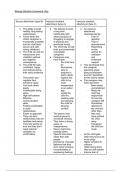
Strange Situation Homework- Roji
Secure attachment (type B) Insecure Avoidant Insecure resistant
attachment (type A) attachment (type C)
● The ability to build ● The failures to build ● An insecure
healthy, long lasting a long term attachment
relationships. relationship with characterised by:
● Forms when the others because of - Fear of
child’s caregiver is struggling to engage rejection
emotionally available in physical and - Fear of
and the child feels emotional bonds. abandonment
secure and safe ● The child may of had - Depending
during childhood. strict and emotionally on the
● The child can ask for unavailable partner for
reassurance and caregivers validation
validation without ● Caregivers may and
any negative have made: emotional
consequence. - the child fend support.
● The child felt safe, for ● This developed from
comforted, happy themselves, the caregiver
and relaxed during - slow to parenting styles
their early childhood. respond to being inconsistent
basic needs, and isn’t beneficial
- The person can - expects the for the child’s needs.
regulate their child to be ● The caregiver may
emotions easily. more have also been
- Can trust others independent - Been easily
easily. at an earlier overwhelmed
- Comfortable being age, - Made the
alone. - scolds the child feel
- High self esteem. child for responsible
- Effective needing help, for how the
communication and denying caregiver felt
skills. the child for - Sometimes
- Feeling comfortable denying attentive to
in close comfort. the child but
relationships. other days
- Easier to approach. - The person may they may
- They can form avoid physical or have pushed
relationships that are emotional intimacy the child
healthier and easier. - They have a strong away
- They feel worthy of sense of - Pampered
love and they don’t independence. the child too
need external - Have a hard time much.
validation as trusting others
confirmation. - Spends time alone - As the child gets
rather than with older they tend to be
people more clingy
- Dismissive of people - Highly sensitive to
- Believes that they criticism
don't need company - Hates being alone
- Uncomfortable at - Has low self esteem
expressing feelings. - Intense fear of
Secure attachment (type B) Insecure Avoidant Insecure resistant
attachment (type A) attachment (type C)
● The ability to build ● The failures to build ● An insecure
healthy, long lasting a long term attachment
relationships. relationship with characterised by:
● Forms when the others because of - Fear of
child’s caregiver is struggling to engage rejection
emotionally available in physical and - Fear of
and the child feels emotional bonds. abandonment
secure and safe ● The child may of had - Depending
during childhood. strict and emotionally on the
● The child can ask for unavailable partner for
reassurance and caregivers validation
validation without ● Caregivers may and
any negative have made: emotional
consequence. - the child fend support.
● The child felt safe, for ● This developed from
comforted, happy themselves, the caregiver
and relaxed during - slow to parenting styles
their early childhood. respond to being inconsistent
basic needs, and isn’t beneficial
- The person can - expects the for the child’s needs.
regulate their child to be ● The caregiver may
emotions easily. more have also been
- Can trust others independent - Been easily
easily. at an earlier overwhelmed
- Comfortable being age, - Made the
alone. - scolds the child feel
- High self esteem. child for responsible
- Effective needing help, for how the
communication and denying caregiver felt
skills. the child for - Sometimes
- Feeling comfortable denying attentive to
in close comfort. the child but
relationships. other days
- Easier to approach. - The person may they may
- They can form avoid physical or have pushed
relationships that are emotional intimacy the child
healthier and easier. - They have a strong away
- They feel worthy of sense of - Pampered
love and they don’t independence. the child too
need external - Have a hard time much.
validation as trusting others
confirmation. - Spends time alone - As the child gets
rather than with older they tend to be
people more clingy
- Dismissive of people - Highly sensitive to
- Believes that they criticism
don't need company - Hates being alone
- Uncomfortable at - Has low self esteem
expressing feelings. - Intense fear of


