

What is Business Analytics
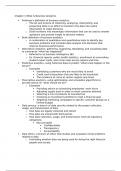
Based on the notes provided: **1. Definitions of Business Analytics:** - Business analytics is described as both an art and science involving the collection, analysis, interpretation, and presentation of data. Its purpose is to transform raw data into actionable insights that support decision-making. **2. Types of Business Analytics:** - **Descriptive Analytics:** This involves gathering, organizing, tabulating, and visualizing data to summarize "what has happened" in the past. It often includes generating reports and dashboards to present historical data trends. - **Predictive Analytics:** Utilizes historical data to forecast future outcomes and trends. Examples include predicting customer behavior, identifying potential fraud, and forecasting market demand. - **Prescriptive Analytics:** Goes beyond predicting outcomes to recommend actions that can optimize or solve business problems. This involves using optimization and simulation techniques to determine "what should we do" to achieve specific objectives. **3. Data Privacy and Ethics:** - **Data Privacy:** Focuses on the proper collection, usage, and transmission of data in accordance with legal and regulatory standards. Key principles include confidentiality, transparency, and accountability. - **Data Ethics:** Evaluates the moral implications of data usage, ensuring that data is used ethically and responsibly. Principles include prioritizing human interests, avoiding biases, and ensuring fairness in data-driven decisions. **4. Types and Characteristics of Data:** - **Structured Data:** Data organized in a predefined format (e.g., spreadsheets, databases) that is easily searchable and analyzable. Examples include numerical data like financial records and categorical data like demographic information. - **Unstructured Data:** Data that lacks a predefined format and is often textual or multimedia. Examples include social media posts, emails, and video content, which require advanced processing techniques for analysis. **5. Big Data Characteristics:** - Refers to datasets that are large in volume, generated at high velocity, and vary in format (variety). Big data requires specialized tools and techniques for storage, processing, and analysis due to its scale and complexity. **6. Variables and Scales of Measurement:** - Variables are characteristics that can differ among observations, categorized into categorical (qualitative) and numerical (quantitative). Measurement scales include nominal (categories), ordinal (ranked categories), interval (measured differences with no true zero), and ratio (measured differences with a true zero point). **7. Data Sources and File Formats:** - Includes fixed-width and delimited formats for structured data, XML for structured information exchange, HTML for web content display, and JSON for transmitting human-readable data across programming languages. These concepts collectively form the foundation of business analytics, providing the tools and frameworks necessary to derive meaningful insights from data to drive informed business decisions and ensure ethical data practices.
Document information
- Uploaded on
- May 27, 2024
- Number of pages
- 5
- Written in
- 2023/2024
- Type
- Class notes
- Professor(s)
- Professor blair
- Contains
- Chapter 1


