NURS 6501 ADVANCED PATHOPHYSIOLOGY EXAM WITH BEST SOLUTIONS
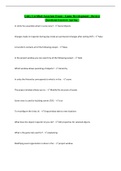
NURS 6501 ADVANCED PATHOPHYSIOLOGY EXAM WITH BEST SOLUTIONS What is the plasma membrane? - encloses the cell and, by controlling the movement of substances across it, exerts a powerful influence on metabolic pathways What is signal transduction? - The transfer of molecular signals from the exterior to the interior of a cell. If not done apoptosis occurs What is protein regulation and what is it composed of? - protein homeostasis and is defined by the proteostasis network. This network is composed of ribosomes (makers), chaperones (helpers), and protein breakdown or proteolytic systems. Malfunction of these systems is associated with disease. What do protein receptors do? - on the plasma membrane, enable the cell to interact with other cells and with extracellular substances What means accomplish cell-to-cell adhesions? - (1) the extracellular membrane, (2) cell adhesion molecules in the cell's plasma membrane, and (3) specialized cell junctions. What makes up the extracellular matrix and what does it do? - (1) fibrous structural proteins (collagen and elastin), (2) adhesive glycoproteins, and (3) proteoglycans and hyaluronic acid. The matrix helps regulate cell growth, movement, and differentiation. How do cells communicate? - (1) they form protein channels (gap junctions); (2) they display receptors that affect intracellular processes or other cells in direct physical contact; and (3) they use receptor proteins inside the target cell. How is intercellular signaling done? - contact-dependent, paracrine, hormonal, neurohormonal, and neurotransmitter. What is ATP? - Adenosine Triphosphate - ENERGY - is required for active transport. What is anabolism? - energy-using process of metabolism What is catabolism? - the energy-releasing process of metabolism What is passive transport? - The movement of materials across the cell membrane without using cellular energy, water and small electrically uncharged molecules, done through osmosis How are cells specialized? - through the process of differentiation or maturation What are the eight specialized cellular functions? - movement, conductivity, metabolic absorption, secretion, excretion, respiration, reproduction, and communication What are the three general components of an eukaryotic cell? - the plasma membrane, the cytoplasm, and the intracellular organelles. What causes the release of lysosomal enzemes? - Cellular injury causing cellular self-digestion What is the location and function of the nucleus? - the largest membrane-bound organelle and is found usually in the cell's center. The chief functions of the nucleus are cell division and control of genetic information. What is Cytoplasm? - an aqueous solution (cytosol) that fills the space between the nucleus and the plasma membrane. What is the endoplasmic reticulum and what does it specialize in? - a network of tubular channels (cisternae) that extend throughout the outer nuclear membrane. It specializes in the synthesis and transport of protein and lipid components of most of the organelles
Escuela, estudio y materia
- Institución
- NURS 6501 ADVANCED PATHOPHYSIOLOGY
- Grado
- NURS 6501 ADVANCED PATHOPHYSIOLOGY
Información del documento
- Subido en
- 11 de mayo de 2024
- Número de páginas
- 14
- Escrito en
- 2023/2024
- Tipo
- Examen
- Contiene
- Preguntas y respuestas
Temas
- nurs 6501
-
nurs 6501 advanced pathophysiology exam
-
nurs 6501 advanced pathophysiology