PSI FNP Your Key to Success: Comprehensive Guides for Testing Exams
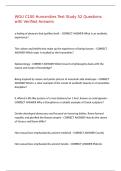
C. Levofloxacin (Levaquin) D. Erythromycin A. Amoxicillin-Clavulanate (Augmentin) Which of the following is the leading cause of cancer-related deaths in the majority of women? A. cervical Cancer B. Ovarian Cancer C. Breath Cancer D. Lung Cancer D. Lung Cancer A 29-year old male with no complicated Chlamydia infection may exhibit: A. Urticarial B. No remarkable clinical symptoms C. A green mucoid penile discharge D. A penile ulcer B. No remarkable clinical symptoms To assess a patient's ability to think abstractly, a nurse practitioner could ask the patient: A. The meaning of a common proverb B. What action the patient would take if there was a fire in the house C. To count backwards from 100 by 7s D. To spell a word backward. A. The meaning of a common proverb A common rule to follow when prescribing many medications for the elderly is to: A. Give most medications in the morning to allow slowed body functions to have time to adjust to the drug. B. Start at a lower dose than what is commonly prescribed for adults, and increase the dose slowly. C. Perform a creatinine clearance test for baseline data on all person over age 70 before starting on new medications. D. Give medication with a full glass of water to promote absorption and limit harm to the kidneys. B. Start at a low dose than what is commonly prescribed for adults, and increase the dose slowly. A 72-year-old female presents with a medical history unremarkable except for the occasional headache. She enjoyed emotional health throughout marriage and childrearing, although her family history is significant for strokes and nervous breakdowns. Since her husband died a year ago, however, she has been waking every morning at 3am, is reluctant to go out although she has family member living nearby, and feels a continual urge to sleep. She cannot discuss her late husband without crying. Differential diagnoses would include: A. Stroke, depression, and hyperthyroidism B. Depression, Unresolved grief, and hypothyroidism C. Migraine, anxiety disorder, and hypertension D. Dementia, delirium, and pan B. Depression, Unresolved grief, and hypothyroidism
Escuela, estudio y materia
- Institución
- PSI FNP
- Grado
- PSI FNP
Información del documento
- Subido en
- 6 de mayo de 2024
- Número de páginas
- 25
- Escrito en
- 2023/2024
- Tipo
- Examen
- Contiene
- Preguntas y respuestas
Temas
-
psi fnp your key to success comprehensive guides
-
a 14yo male with bronchitis is being treated with