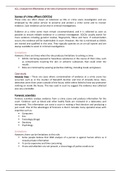
Light as a modulator of cognitive brain function
The long term and acute effects of light on (circadian) physiology are referred to as non-
visual effects of light. This is because they are not directly related to vision. Moreover, they
present several features that separate them from the visual system.
Studies using monochromatic light exposures in humans, macaques and rodents have
demonstrated that non-visual responses are maximally sensitive to blue light. In humans,
there is a greater response to blue light than to green light for several variables including
changes in the timing of the rhythm of melatonin, acute suppression of melatonin secretion,
elevation of body temperature and heart rate reduction off subjective sleepiness and
improvement of alertness.
These findings point to a presence of a non-classical photoreception system that
mediates the non-visual effects of light. Receptors of blue light almost directly influence the
suprachiasmatic nucleus (SCN) of the hypothalamus, which houses the circadian clock.
Therefore, it becomes evident that non-visual responses to light could affect many brain
functions, including cognitive functions.
Cognition is modulated by circadian rhythms and non-visual effects of light
In humans, the circadian rhythmicity influences multiple cognitive processes (attention,
executive functions and memory). Cognitive performance is characterized by a progressive
decline in performance during the biological night and an improvement during the day. Light
can influence cognitive performance through its phase shifting effect on the circadian rhythm.
Cognitive improvements after exposure to light typically occur within 30 minutes.
Neuroimaging the non-visuals effects of light on cognition
Difference between non-visuals tasks and classic-visuals tasks
1) Studies characterized responses to light that outlast the exposure to light
2) Ambient light levels were selectively manipulated using uniform diffusive light
sources
3) monochromatic lights of different wavelengths were carefully equated for photon
densities, which is the unit of measurement of the non-visual system
Widespread impact of light on the brain
Light-induced modulations of the brain were found using PET and fMRI in the following
brain areas:
• Brainstem (alertness-related
• Locus coeruleus
• Hypothalamus
• SCN
• Dorsal and posterior thalamus
• Hippocampus
• Amygdala
First important feature of light modulation on cog processes is that is triggered in widespread
sets of subcortical and cortical region encompassing different cognitive features.
,Wavelength dependent modulation of brain responses
Blue light has been shows to be effective in sustaining performance. This effect is modulated
by the wavelength of the light (~480 nm). Thus, the brain activity elicited by cognitive
processes is therefore wavelength dependent.
Different dynamics for different brain regions, intensities and durations
The magnitude, time-course and regional brain distribution of non-visual light effects are
related to the dose of light administered. Longer durations and or higher intensities triggered
larger and longer lasting modulations.
Swift limbic responses to light
Reaction of the hippocampus and the amygdala on blue light are different than the reaction of
other brain areas. The amygdala and hippocampus have an almost immediate response to
blue light. The amygdala receives direct input from cells sensitive to blue light (ipRGC),
hippocampus has a direct response on amygdala activation.
Light as a modulator of cognition: a scenario of the brain mechanisms
• Light quickly activates alertness-related subcortical structures
o Non-visual response to light reacts to the SCN, enhancement in SCN activity
then spreads to the forebrain (including locus coerelus; source of NE).
• The thalamus is an interface between alertness, cognition and the effect of light
o Studies show that the thalamus is the structure most consistently recruited in
response to light exposures during a cognitive task. Parts of the thalamic
nuclei, provide a direct link between the SCN and the PFC
• The changes in forebrain activity foreshadow behavioural effects.
o Modulation of cortical activity by light results from the recruitment of
multiple multi-synaptic pathways.
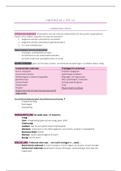
,The memory function of sleep
Dielkelmann and Born
Sleep duration and timing
Significant sleep benefits on memory are observed after an 8-hour night of sleep, but also
after shorter naps of 1-2 hours, even for ultra-short naps. Some data suggest that a short delay
between learning and sleep optimizes the benefits of sleep on memory consolidation
Explicit versus implicit encoding
Whether memories gain access to sleep-dependent consolidation depends on the conditions of
encoding.
• Declarative memories: explicit encoding
• Procedural memory: implicit & explicit
Benefit of sleep is greater for memories formed from explicitly encoded information, that
was more difficult to encode or that was only weakly encoded. Moreover, it is greater for
memories that were behavioural relevant. Thus, sleep enhances the consolidation of
memories for intended future actions and plans.
Sleep changes memory representations quantitatively and qualitatively.
Consolidation of memory during sleep can produce a strengthening of associations as well as
a qualitative change in memory representations. Sleep therefore provides stabilization and
enhancement of memory. Moreover, there is strong evidence for an active consolidating
influence of sleep which leads to qualitative changes in memory.
Interacting or competing memory system
The findings described above show that sleep can ‘re-organize’ newly encoded memory
representation. Sleep can enable the generation of new associations and the extraction of
invariant features from complex stimuli, and thereby eventual easing novel inferences and
insights. This reorganization also helps with transforming implicit into explicit knowledge.
Influence of sleep stages on consolidation
In humans, Slow wave sleep (SWS) and REM sleep dominate the early and late part of sleep.
• Sws promotes consolidation of declarative memory
• REM-rich sleep benefits procedural and emotional aspects of memory
Consistent with dual-process hypothesis: sws facilitates declarative hippocampus dependent
memory and REM sleep supports non-declarative hippocampus-independent memory.
Intermediate sleep stages can also contribute to memory consolidation. This finding shows
that the neurophysiological mechanisms associated with the sleep stages mediates memory
consolidation.
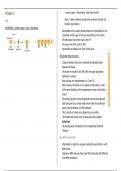
Core features of off-line consolidation
It is now widely accepted that the consolidation process that takes place off-line after
encoding relies on the re-activation of neuronal circuits that were implicated in the encoding
of the information.
Reactivation of memory traces during sleep
Same patterns of neuronal firing in the hippocampus are re-activated, mostly, during SWS.
Unlike reactivation during wakefulness, reactivation during SWS occurs in the same order in
, which they were experienced. Reactivation during SWS seems to be noisier, less accurate and
happens at a higher firing rate. It is assumed that the reactivations during system
consolidation stimulate the redistribution of hippocampal memories to neocortical storage
sites.
Synaptic consolidation
Long term potentiation is considered a key mechanism of synaptic consolidation. These
findings indicate that local, off-line re-activation of specific glutamatergic circuits supports
both LTP induction and maintenance, and the molecular processes underlying synaptic
consolidation. Moreover, these processes probably occur preferentially during REM sleep,
although they are likely to be triggered by the re-activations that occur during prior SWS.
Synaptic homeostasis versus system consolidation
Two hypothesis for SWS
Synaptic homeostasis: information encoding during wakefulness leads to a net increase in
synaptic strength in the brain. Sleep would serve to globally downscale synaptic strength to a
level that is suitable in term of energy and tissue volume demands and that allows for the
reuse of synapses for future encoding
Active system consolidation during sws: in the waking brain events are initially encoded in
parallel in neocortical networks and in the hippocampus. During subsequent periods of SWS
the newly acquired memory traces are repeatedly re-activated and thereby become gradually
redistributed such that connections within the neocortex are strengthened forming more
persistent representations. Reactivation of the new representations gradually adapt them to
pre-existing neocortical knowledge networks, thereby promoting the extraction of invariant
repeating features and qualitative changes in the memory representations.
The concept of active system consolidation during SWS integrates a central finding from
behavioral studies, namely that post-learning sleep not only strengthens memories but also
induces qualitative changes in their representations and so enables the extraction of invariant
features from complex stimulus materials, the forming of new associations and, eventually,
insights into hidden rules.
A role for REM sleep in synaptic consolidation
The active system consolidation hypothesis leaves open one challenging issue: although it
explains a reactivation-dependent temporary enhancement and integration of newly encoded
memories into the network of pre-existing long-term memories, active system consolidation
alone does not explain how post-learning sleep strengthens memory traces and stabilizes
underlying synaptic connections in the long term. Hence, sleep presumably also supports a
synaptic form of consolidation for stabilizing memories and this could be the function of
REM sleep.
The long term and acute effects of light on (circadian) physiology are referred to as non-
visual effects of light. This is because they are not directly related to vision. Moreover, they
present several features that separate them from the visual system.
Studies using monochromatic light exposures in humans, macaques and rodents have
demonstrated that non-visual responses are maximally sensitive to blue light. In humans,
there is a greater response to blue light than to green light for several variables including
changes in the timing of the rhythm of melatonin, acute suppression of melatonin secretion,
elevation of body temperature and heart rate reduction off subjective sleepiness and
improvement of alertness.
These findings point to a presence of a non-classical photoreception system that
mediates the non-visual effects of light. Receptors of blue light almost directly influence the
suprachiasmatic nucleus (SCN) of the hypothalamus, which houses the circadian clock.
Therefore, it becomes evident that non-visual responses to light could affect many brain
functions, including cognitive functions.
Cognition is modulated by circadian rhythms and non-visual effects of light
In humans, the circadian rhythmicity influences multiple cognitive processes (attention,
executive functions and memory). Cognitive performance is characterized by a progressive
decline in performance during the biological night and an improvement during the day. Light
can influence cognitive performance through its phase shifting effect on the circadian rhythm.
Cognitive improvements after exposure to light typically occur within 30 minutes.
Neuroimaging the non-visuals effects of light on cognition
Difference between non-visuals tasks and classic-visuals tasks
1) Studies characterized responses to light that outlast the exposure to light
2) Ambient light levels were selectively manipulated using uniform diffusive light
sources
3) monochromatic lights of different wavelengths were carefully equated for photon
densities, which is the unit of measurement of the non-visual system
Widespread impact of light on the brain
Light-induced modulations of the brain were found using PET and fMRI in the following
brain areas:
• Brainstem (alertness-related
• Locus coeruleus
• Hypothalamus
• SCN
• Dorsal and posterior thalamus
• Hippocampus
• Amygdala
First important feature of light modulation on cog processes is that is triggered in widespread
sets of subcortical and cortical region encompassing different cognitive features.
,Wavelength dependent modulation of brain responses
Blue light has been shows to be effective in sustaining performance. This effect is modulated
by the wavelength of the light (~480 nm). Thus, the brain activity elicited by cognitive
processes is therefore wavelength dependent.
Different dynamics for different brain regions, intensities and durations
The magnitude, time-course and regional brain distribution of non-visual light effects are
related to the dose of light administered. Longer durations and or higher intensities triggered
larger and longer lasting modulations.
Swift limbic responses to light
Reaction of the hippocampus and the amygdala on blue light are different than the reaction of
other brain areas. The amygdala and hippocampus have an almost immediate response to
blue light. The amygdala receives direct input from cells sensitive to blue light (ipRGC),
hippocampus has a direct response on amygdala activation.
Light as a modulator of cognition: a scenario of the brain mechanisms
• Light quickly activates alertness-related subcortical structures
o Non-visual response to light reacts to the SCN, enhancement in SCN activity
then spreads to the forebrain (including locus coerelus; source of NE).
• The thalamus is an interface between alertness, cognition and the effect of light
o Studies show that the thalamus is the structure most consistently recruited in
response to light exposures during a cognitive task. Parts of the thalamic
nuclei, provide a direct link between the SCN and the PFC
• The changes in forebrain activity foreshadow behavioural effects.
o Modulation of cortical activity by light results from the recruitment of
multiple multi-synaptic pathways.
,The memory function of sleep
Dielkelmann and Born
Sleep duration and timing
Significant sleep benefits on memory are observed after an 8-hour night of sleep, but also
after shorter naps of 1-2 hours, even for ultra-short naps. Some data suggest that a short delay
between learning and sleep optimizes the benefits of sleep on memory consolidation
Explicit versus implicit encoding
Whether memories gain access to sleep-dependent consolidation depends on the conditions of
encoding.
• Declarative memories: explicit encoding
• Procedural memory: implicit & explicit
Benefit of sleep is greater for memories formed from explicitly encoded information, that
was more difficult to encode or that was only weakly encoded. Moreover, it is greater for
memories that were behavioural relevant. Thus, sleep enhances the consolidation of
memories for intended future actions and plans.
Sleep changes memory representations quantitatively and qualitatively.
Consolidation of memory during sleep can produce a strengthening of associations as well as
a qualitative change in memory representations. Sleep therefore provides stabilization and
enhancement of memory. Moreover, there is strong evidence for an active consolidating
influence of sleep which leads to qualitative changes in memory.
Interacting or competing memory system
The findings described above show that sleep can ‘re-organize’ newly encoded memory
representation. Sleep can enable the generation of new associations and the extraction of
invariant features from complex stimuli, and thereby eventual easing novel inferences and
insights. This reorganization also helps with transforming implicit into explicit knowledge.
Influence of sleep stages on consolidation
In humans, Slow wave sleep (SWS) and REM sleep dominate the early and late part of sleep.
• Sws promotes consolidation of declarative memory
• REM-rich sleep benefits procedural and emotional aspects of memory
Consistent with dual-process hypothesis: sws facilitates declarative hippocampus dependent
memory and REM sleep supports non-declarative hippocampus-independent memory.
Intermediate sleep stages can also contribute to memory consolidation. This finding shows
that the neurophysiological mechanisms associated with the sleep stages mediates memory
consolidation.
Core features of off-line consolidation
It is now widely accepted that the consolidation process that takes place off-line after
encoding relies on the re-activation of neuronal circuits that were implicated in the encoding
of the information.
Reactivation of memory traces during sleep
Same patterns of neuronal firing in the hippocampus are re-activated, mostly, during SWS.
Unlike reactivation during wakefulness, reactivation during SWS occurs in the same order in
, which they were experienced. Reactivation during SWS seems to be noisier, less accurate and
happens at a higher firing rate. It is assumed that the reactivations during system
consolidation stimulate the redistribution of hippocampal memories to neocortical storage
sites.
Synaptic consolidation
Long term potentiation is considered a key mechanism of synaptic consolidation. These
findings indicate that local, off-line re-activation of specific glutamatergic circuits supports
both LTP induction and maintenance, and the molecular processes underlying synaptic
consolidation. Moreover, these processes probably occur preferentially during REM sleep,
although they are likely to be triggered by the re-activations that occur during prior SWS.
Synaptic homeostasis versus system consolidation
Two hypothesis for SWS
Synaptic homeostasis: information encoding during wakefulness leads to a net increase in
synaptic strength in the brain. Sleep would serve to globally downscale synaptic strength to a
level that is suitable in term of energy and tissue volume demands and that allows for the
reuse of synapses for future encoding
Active system consolidation during sws: in the waking brain events are initially encoded in
parallel in neocortical networks and in the hippocampus. During subsequent periods of SWS
the newly acquired memory traces are repeatedly re-activated and thereby become gradually
redistributed such that connections within the neocortex are strengthened forming more
persistent representations. Reactivation of the new representations gradually adapt them to
pre-existing neocortical knowledge networks, thereby promoting the extraction of invariant
repeating features and qualitative changes in the memory representations.
The concept of active system consolidation during SWS integrates a central finding from
behavioral studies, namely that post-learning sleep not only strengthens memories but also
induces qualitative changes in their representations and so enables the extraction of invariant
features from complex stimulus materials, the forming of new associations and, eventually,
insights into hidden rules.
A role for REM sleep in synaptic consolidation
The active system consolidation hypothesis leaves open one challenging issue: although it
explains a reactivation-dependent temporary enhancement and integration of newly encoded
memories into the network of pre-existing long-term memories, active system consolidation
alone does not explain how post-learning sleep strengthens memory traces and stabilizes
underlying synaptic connections in the long term. Hence, sleep presumably also supports a
synaptic form of consolidation for stabilizing memories and this could be the function of
REM sleep.