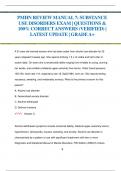
PMHN REVIEW MANUAL 7: SUBSTANCE USE DISORDERS EXAM | QUESTIONS & 100% CORRECT ANSWERS (VERIFIED) | LATEST UPDATE | GRADEA+
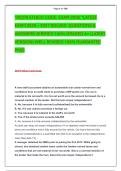
A 61-year-old married woman who has been sober from alcohol use disorder for 25 years relapsed 3 weeks ago. She reports drinking 1.5 L of vodka and half a liter of scotch daily. On exam she is emotionally labile ranging from irritable to crying, slurring her words, and exhibits a bilateral upper extremity fine tremor. Vitals: blood pressure 150/100, heart rate 110, respiratory rate 18, SpO2 98% room air. She reports feeling nauseous, sweating, and moderately anxious. What is the primary concern for this patient? A. Alcohol use disorder B. Generalized anxiety disorder C. Alcohol withdrawal D. Delirium tremens : Answer C. Alcohol withdrawal symptoms include emotional lability, bilateral upper extremity tremor, hypertension, tachycardia, nausea, sweating, and anxiety. Alcohol use disorder is characterized by a pattern of use with significant impairment with two or more Diagnostic and Statistical Manual of Mental Disorders, Fifth Edition (DSM-5) criteria 2 over the previous 12-month period. Generalized anxiety disorder is characterized by excessive worrying lasting at least 6 months. Delirium tremens is a severe form of alcohol withdrawal marked by global confusion, audiovisual hallucinations, fever, hypertension, and diaphoresis, which occur within 3 to 10 days of the last alcoholic drink. A patient who has required increasing amounts of medication to achieve the desired effect and develops withdrawal symptoms when dosing is delayed is said to be: A. Dependent B. Tolerant C. Addicted D. In withdrawal : Answer A. Dependence is characterized by the repeated use of a substance for physical needs leading to increased tolerance and, when discontinued, results in physical withdrawal symptoms. Tolerance is a condition in which repeated administration of the dosage causes a decreased effect despite increasingly larger doses, which are required to obtain the effect observed in the initial dosage. Addiction is psychological dependence leading to persistent and increased use of the substance or behavior and when discontinued causes distress and urges to resume use despite adverse consequences. Withdrawal is a substance-specific cluster of signs and symptoms that occur when reducing or stopping the consistent use of the substance
Escuela, estudio y materia
- Institución
- PMHN
- Grado
- PMHN
Información del documento
- Subido en
- 8 de abril de 2024
- Número de páginas
- 15
- Escrito en
- 2023/2024
- Tipo
- Examen
- Contiene
- Preguntas y respuestas
Temas
-
pmhn review manual 7 substance use disorders exa

Documento también disponible en un lote