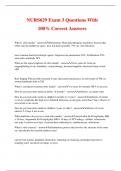
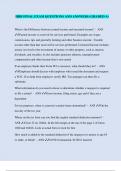
NURS629 Exam 3 Questions With 100% Correct Answers
NURS629 Exam 3 Questions With 100% Correct Answers What is otitis media? - answerInflammatory fluid and pathogenic respiratory bacteria that reflux into the middle ear space- does not drain normally. 75% are viral infections most common bacterial etiologic agents: streptococcus pneumoniae 49%, H influenzae 29%, moraxella catarrhalis 28% What are the signs/symptoms of otitis media? - answerfever, pain, d/c from ear, tugging/batting at ear, irritability, crying lethargy, decreased appetite, decreased sleep, recent URI Red, bulging TM, possible-retracted w/ pus, decreased translucency, no movement of TM, no normal landmarks,hole in TM What is considered recurrent otitis media? - answer3 or more in 6 months OR 4 in one year How do you treat otitis media in babies <6 months? - answerantibiotics, no matter what How do you treat otitis media in children 6 months to 2 years? - answerantibiotics if certain or severe symptoms like high fever, bilateral infections, severe pain, more than 7 days; observe if not certain or not severe How do you treat otitis media in children 2 years or older? - answerantibiotics if severe, observe 2-3 days if not severe What antibiotics do you use to treat otitis media? - answerAmoxicillin 80-90 mg/kg/day BID x 10 days; Augmentin 80-90 mg/kg/day BID x 10 days; if PCN allergy- cefdinir, cefuroxime- non type 1 reaction or if type 1 reaction then azithromycin, clarithromycin, ceftriaxone What is otitis externa? - answerinflammatory process that involves the structure of the outer ear, specifically the external auditory canal can be from trauma, glandular obstruction, repeating ear cleansing, prolonged exposure to standing water, increased sweating, or stress What are the s/sx of otitis externa? - answertenderness of pinna or tragus, boggy canal What is the treatment for otitis externa? - answerototopical antimicrobial-steroid solution containing neomycin, polymyxin B, and hydrocortisone 4x/day x 7-10 days topical fluoroquinolone ciprofloxacin, ofloxacin What is malignant otitis externa? - answernecrotizing, invasive infection of the external auditory canal usually caused by P aeuginosa and can lead to osteomyelitis What is otitis media with effusion? - answernon-infected fluid in middle ear without s/sx of acute otitis media What is mononucleosis? - answercaused by epstein-barr virus and spread by saliva; incubation of 2-5 weeks; 50% of kids with mono also have strep s/sx fever, exudative pharyngitis, POSTERIOR cervical adenopathy, malaise, headache, anorexia, spleno/hepatomegaly How do you treat mono? - answersymptomatic treatment, f/u in 1-2 weeks, avoid contact sports x 1 month or until spleen no longer palpable What are symptoms of group A beta-hemolytic strep pharyngitis? - answerrapid onset sore throat, fever 103-104, swollen glands, abdominal pain, usually no URI symptoms, headache, decreased appetite, dysphagia, irritability exudate tonsils, anterior cervical lymphadenopathy, strawberry tongue, rash How do you treat strep pharyngitis? - answerAmoxicillin 50-80 mg/kg/day x 10 days, if PCN allergy- cephalosporins or macrolide warm water gargles, tylenol/nsaids Contagious- no school x 24 hours, discard toothbrush What is impetigo? - answercontagious bacterial infection caused by staphylococci or streptococci, spread by contact pruritic rash that won't go away, yellow-crusted lesions, if crust removed- becomes inflammed/red How do you treat impetigo? - answerwash face BID with soap and water, no school for 24- 48 hours, wash sheets/pillow cases, monitor for serous sequalae treat with mupirocin/bactroban TID x 7-14 days or bacitracin TID x 7-14 days, or erythromycin, cephalexin What is fifth's disease? - answercaused by human parvovirus B19, most common in 5-15 yo; symptomatic treatment has low-grade fever, malaise, sore throat, "slap cheek" facial redness in first 4 days, then fishnet/racey rash within 2 days after initial onset, then fever/itching/petechiae to hands/feet What is tinea corporis? - answerringworm- pink, scaly, round with raised border treat with topical antifungal cream for 2-6 weeks, avoid contact with lesion, no contact sports x 48 hrs of tx What is pityriasis rosea? - answercommon, benign rash- usually viral with 29% having recent URI starts as herald patch, 2-10 cm oval/round lesion first then changes; often on trunk How do you treat pityriasis rosea? - answerantihistamines, topical steroids, avoid sun exposure, moisturize; may take up to 3 months to resolve What is eczema? - answerinflammatory response to allergen, chemical, or unknown etiology; increased serum IgE itchy, red, burning/tinging, dryness; pruritc, papulovesicular lesions that ooze and crust, erythematous,edematous dry patches with cracking/fissuring, indistinct borders, lichenification, excoriations How do you treat eczema? - answeravoid harsh soaps, may use antihistamines and corticosteroids; bleach bath?
Escuela, estudio y materia
- Institución
- NURS 629
- Grado
- NURS 629
Información del documento
- Subido en
- 1 de abril de 2024
- Número de páginas
- 11
- Escrito en
- 2023/2024
- Tipo
- Examen
- Contiene
- Preguntas y respuestas
Temas
-
nurs629 exam 3 questions with 100 correct answers

Documento también disponible en un lote