A. STRUCTURE
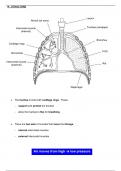
Larynx
Alveoli (air sacs)
Intercostal muscle Trachea (windpipe)
(internal)
Bronchus
Cartilage rings
Lung
Bronchiole
Intercostal muscle
Rib
(external)
Diaphragm
• The trachea is lined with cartilage rings. These:
- support and protect the trachea
- allow the trachea to flex for breathing
• There are two sets of muscles that move the ribcage:
- internal intercostal muscles
- external intercostal muscles
Air moves from high low pressure
, B. HOW WE BREATHE IN AND OUT
Inhaling
External
intercostal
muscles
contract
VOLUME IN CHEST (THORAX) INCREASES
Ribcage
PRESSURE IN CHEST (THORAX) DECREASES
moves
up and out
AIR MOVES FROM HIGH LOW PRESSURE
AIR ENTERS THE CHEST
Diaphragm
contracts
(moves down)
Exhaling
Internal
intercostal
muscles Ribcage
contract moves
down and in
VOLUME IN CHEST (THORAX) DECREASES
PRESSURE IN CHEST (THORAX) INCREASES
AIR MOVES FROM HIGH LOW PRESSURE
AIR LEAVES THE CHEST
Diaphragm
relaxes
(moves up)
Larynx
Alveoli (air sacs)
Intercostal muscle Trachea (windpipe)
(internal)
Bronchus
Cartilage rings
Lung
Bronchiole
Intercostal muscle
Rib
(external)
Diaphragm
• The trachea is lined with cartilage rings. These:
- support and protect the trachea
- allow the trachea to flex for breathing
• There are two sets of muscles that move the ribcage:
- internal intercostal muscles
- external intercostal muscles
Air moves from high low pressure
, B. HOW WE BREATHE IN AND OUT
Inhaling
External
intercostal
muscles
contract
VOLUME IN CHEST (THORAX) INCREASES
Ribcage
PRESSURE IN CHEST (THORAX) DECREASES
moves
up and out
AIR MOVES FROM HIGH LOW PRESSURE
AIR ENTERS THE CHEST
Diaphragm
contracts
(moves down)
Exhaling
Internal
intercostal
muscles Ribcage
contract moves
down and in
VOLUME IN CHEST (THORAX) DECREASES
PRESSURE IN CHEST (THORAX) INCREASES
AIR MOVES FROM HIGH LOW PRESSURE
AIR LEAVES THE CHEST
Diaphragm
relaxes
(moves up)