RRT Case Study Questions
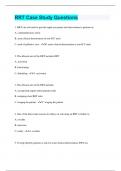
RRT Case Study Questions 1. RRTs are activated to provide rapid assessment and intervention to patients in: A. cardiopulmonary arrest B. acute clinical deterioration in non-ICU units C. need of palliative care - B. acute clinical deterioration in non-ICU units 2. The afferent arm of the RRT includes RRT A. activation B. functioning C. debriefing - A. activation 3. The efferent arm of the RRT includes A. recognizing urgent unmet patient needs B. assigning clear RRT roles C. triaging the patient - C. triaging the patient 4. One of the three main reasons for delays in activating an RRT is failure to: A. escalate B. intervene C. notify - A. escalate 5. To help identify patients at risk for acute clinical deterioration, EWS use A. comorbidity scores B. medical history scores C. total risk scores - C. total risk scores 6. EWS scores can predict cardiac arrest and mortality within how many hours? A. 24 B. 48 C. 72 - B. 48 7. Which vital sign is known to be an early indicator of clinical deterioration? A. HR B. BP C. Respiratory Rate - C. Respiratory Rate 8. Complete documentation of which element is important for any EWS? A. demographics B. medical history C. vital signs - C. vital signs 9. Advantages of continuous electronic monitoring systems include all except: A. trended data B. alarm fatigue C. nurse satisfaction - B. alarm fatigue 10. The criterion of "worried/concerned" has been incorporated into some EWS or RRT activation criteria based on the intuition of A. family B. nurses C. patients - B. nurses 11. Which factor results in failure to escalate clinical deterioration to the RRT? A. fear of criticism B. lack of information C. informal hierarchical culture D. all of the above - D. all of the above 12. Adding a pharmacist to the RRT has not been shown to optimize medication A. availability B. selection C. dosing - A. availability 13. Which member of the RRT is typically responsible for leading patient evaluation? A. the bedside nurse B. the critical care nurse C. the nursing supervisor - B. the critical care nurse
Información del documento
- Subido en
- 21 de marzo de 2024
- Número de páginas
- 5
- Escrito en
- 2023/2024
- Tipo
- Examen
- Contiene
- Preguntas y respuestas