
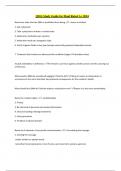
QMA Study Rated A+ 2024
QMA Study Guide for Final Rated A+ 2024 Name four tasks that the QMA is prohibited from doing. 1. Assess a resident. 2. Call a physician 3. Take a physician's written or verbal order 4. Administer medication per injection 5. Administer meds per nasogastric tube 6. Instill irrigation fluids of any type (except comercially prepared disposable enema) 7. Treatment that involves an advanced skin condition (stage II-IV decubitus ulcer) Assault and Battery is defined as: The threat to use force against another person and the carrying out of the force. What would a QMA be considered negligent if he/she did? Failing to report an observation or occurrence to the nurse that later has profound consequences for the resident's health. What should the QMA do if he/she makes a medication error? Report it to the nurse immediately. Name the resident rights: 1. Confidentiality 2. Privacy 3. Be informed of personal and medical information 4. Choice (including refusing treatment) 5. Voice grievances 6. Freedom of abuse/restraint Name the 4 elements of successful communication: 1. Formulating the message 2. Sending the message verbal- written or spoken words nonverbal- facial expressions, tone of voice, eye movement, posture, gestures 3. Receiving the message 4. Observing the feedback What is considered verbal communication? Written or spoken words What is temporary cognitive impairment? A temporary change within the brain affecting the resident's ability to think, reason, learn, or communicate. Possible causes: stress medication vitamin deficiency thyroid dysfunction alcohol head trauma What is permanent cognitive impairment? A permanent change within the brain affecting the resident's ability to think, reason, learn, or communicate. Possible causes: severe head trauma stroke brain disease What is sundowning? increased confusion and restlessness in late afternoon, evening and night. What should you do with an anxious resident? Provide quiet, calm environment, away from groups of people and activity. How would you calm a combative resident? Redirect a resident who is out of control in a group area into a smaller, more private are. How can infection be transmitted? Water, air, soil, plants, animals, minerals and on humans. What are standard precautions: 1. Wearing gloved when indicated 2. Wearing a gown, apron, mask, and protective eyewear in situations or udring procedures when splashing or contamination may occur. 3. Washing hands at appropriate times. 4. Transporting infected residents using indicated safeguards. 5. Cleaning common use equipment between residents. What is a nosocomial infection? An infection acquired in a healthcare facility. What is the definition of Hepatitis? contagious disease of the liver caused by a virus and spread by exposure to infection blood, sexual contact or fecal/oral contact. In a fire emergency what should you do first? R. -Remove residents from immediate harm. What should you do if a resident is choking and there is a complete blockage of the airway? The Heimlich Maneuver What should you do first if a resident falls? Call for help (nurse) What is the definition of shock? when vital parts of the body do not get enough blood What is the definition of cardiac arrest? Heart function and circulation stops What should you do if a resident has a seizure? 1. Call for help and stay with the resident. 2. Protect the resident from injury a. remove objects from vicinity b. loosen clothing, especially around the neck c. never restrain the resident or place anything in mouth d. After the seizure, turn resident on side e. Assist nurse in documenting incident by providing observations. How can poisoning be prevented? 1. Never use anything from an unlabeled container. 2. In case of suspected poisoning, take container to nurse immediately. 3. Keep toxic substances and cleaning supplies locked and out of reach of residents. To use a fire extinguisher you must first do what? Pull the pin Something that serves to relieve or alleviate symptoms, but not cure is called? palliative care What are the most common complications associated with terminal illness? 1. Sleeping 2. Lack of appetite 3. Nausea and vomiting 4. Constipation and diarrhea 5. Stomatitis (inflammation of mouth) 5. Pruritus (severe itching without rash)` Does everyone feel the same intensity of pain? No What is the study of medication called? Pharmacology
Información del documento
- Subido en
- 18 de marzo de 2024
- Número de páginas
- 15
- Escrito en
- 2023/2024
- Tipo
- Examen
- Contiene
- Preguntas y respuestas

