Particle Collision Theory
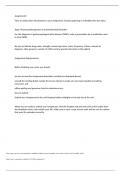
Reactions take place when particles collide with a certain amount of energy.
Activation energy
● Min amount of energy needed for particles to react\
● Different amount for each reaction
● If particles collide but dont have enough activation energy, they bounce off each other
Rate of reaction depends on
● Frequency of collisions between particles
● Energy with which particles collides
Change
Rate = ____________________________
Time
Any number (normally 1000 or 1)
Frequency = ____________________________
Time
Amount of reactant used OR product formed
Rate of Reaction = ____________________________
Time
Things that speed up rate of reaction
● Higher Temp
● Increased concentration of dissolved reactants
● Increased pressure gas reactants
● Increased surface area of solid reactants
● Catalyst
, Surface area
ONLY WORKS ON SOLIDS
Higher surface area = faster rate of reaction
This is because
● Greater collision frequency
○ Since there is more area to collide with
Textbook explaination
If a solid is broken down into smaller pieces, there is an increased area for the reactant
particles to collide with. The smaller the pieces, the larger the surface area and so a greater
frequency of collisions.
Experiment
Calcium Carbonate + Hydrochloric Acid → Calcium Chloride + Water + Carbon Dioxide
CaCO3 (s) + 2HCl (aq) → CaCl2 (aq) + H2O (l) + CO2 (g)
Method
1. Get 3 large marble chips (CaCO3) of same size
2. Measure 25cm3 of ___(concentration)___ hydrochloric acid into a small conical flask
with a gas syringe attachment
3. Add first marble chip to beaker
4. At __ secs intervals, record the volume of carbon dioxide until 100cm3 of gas is
reached
a. Observe the rate of reaction by seeing how fast the CO2 is collected in the
gas syringe (its losing mass bc this reaction produces CO2)
5. Crush the 2nd marble chip using a pestle and mortar into powder & add this to
another conical flask and gas syringe attachment w/ 25cm3 of hydrochloric acid
6. Repeat observations & recording
Reactions take place when particles collide with a certain amount of energy.
Activation energy
● Min amount of energy needed for particles to react\
● Different amount for each reaction
● If particles collide but dont have enough activation energy, they bounce off each other
Rate of reaction depends on
● Frequency of collisions between particles
● Energy with which particles collides
Change
Rate = ____________________________
Time
Any number (normally 1000 or 1)
Frequency = ____________________________
Time
Amount of reactant used OR product formed
Rate of Reaction = ____________________________
Time
Things that speed up rate of reaction
● Higher Temp
● Increased concentration of dissolved reactants
● Increased pressure gas reactants
● Increased surface area of solid reactants
● Catalyst
, Surface area
ONLY WORKS ON SOLIDS
Higher surface area = faster rate of reaction
This is because
● Greater collision frequency
○ Since there is more area to collide with
Textbook explaination
If a solid is broken down into smaller pieces, there is an increased area for the reactant
particles to collide with. The smaller the pieces, the larger the surface area and so a greater
frequency of collisions.
Experiment
Calcium Carbonate + Hydrochloric Acid → Calcium Chloride + Water + Carbon Dioxide
CaCO3 (s) + 2HCl (aq) → CaCl2 (aq) + H2O (l) + CO2 (g)
Method
1. Get 3 large marble chips (CaCO3) of same size
2. Measure 25cm3 of ___(concentration)___ hydrochloric acid into a small conical flask
with a gas syringe attachment
3. Add first marble chip to beaker
4. At __ secs intervals, record the volume of carbon dioxide until 100cm3 of gas is
reached
a. Observe the rate of reaction by seeing how fast the CO2 is collected in the
gas syringe (its losing mass bc this reaction produces CO2)
5. Crush the 2nd marble chip using a pestle and mortar into powder & add this to
another conical flask and gas syringe attachment w/ 25cm3 of hydrochloric acid
6. Repeat observations & recording