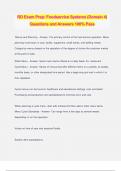
RD Exam Prep: Foodservice Systems (Domain 4) Questions and Answers 100% Pass
RD Exam Prep: Foodservice Systems (Domain 4) Questions and Answers 100% Pass Menus and Planning - Answer- The primary control of the food service operation. Menu planning must factor in cost, facility, equipment, small wares, and staffing needs. Categorize menus based on the operation of the degree of choice the customer makes at the point of sale. Static Menu - Answer- Same menu items offered an a daily basis. Ex: restaurant Cycle Menu - Answer- Series of menus that offer different items on a weekly, bi-weekly, monthly basis, or other designated time period. Has a beginning and end in which it is then repeated. Cycle menus can be found in healthcare and educational settings; cost-controlled. Purchasing and production are standardized to minimize error and cost. When planning a cycle menu, start with entrees first then add in other menu items. Menu Cycle Standards - Answer- Can range from a few days to several weeks depending on on the operation. Varies on time of year and seasonal foods. Satisfy client expectations. Single Use Menu - Answer- A menu planned for service on a specific day and can be a special event menu such as wedding, holiday, or other celebration. Master Menu - Answer- A collection of all menus for a food service operation that is used to manage both front of house and back of house operations. Menu Choice - Answer- Menu choice may differ within each operation depending on customer type and financial goals. Select Menu - Answer- Person selects from many choices Non-select Menu - Answer- Patient or person receives standard menu items. No choice in menu selection. Partial-Selection Menu - Answer- Person selects from a few menu options and has no choice for other menu items Menu Design - Answer- First select the meat or the meat alternative for the main meal (heaviest meal) for the entire menu cycle. If the lunch meal is the main meal of the day, start with planning lunch entrees first followed by dinner entrees. Select starch: whole grains, potatoes, rice, pasta, or starchy veggie Select salad, sides, appetizers; work between lunch and dinner menu. Compare week to week to avoid repetition. Monitor for color and texture variety. Plan dessert. After lunch and dinner menus are planned, plan breakfast menus last. View each day in a block. Review other factors such as government regulations, nutritional guidelines, or client guidelines. Sensory Characteristics of Menus - Answer- Color gives the eye appeal and helps to merchandise the food. Include at least one to two different colors at each meal. Texture refers to the structure of food and is experienced by mouth feel. Can be described as crisp, soft, smooth, chewy, etc. Meals should include a variety of textures. Consistency refers to the way foods adhere - degree of firmness, density, or viscosity. The menu planner should work toward a balance of consistencies and be aware of consumer preferences. Shapes plays an important role in eye appeal and can be created through variety. Use various shapes and cuts in food presentation to increase visual appeal. Flavor combinations and profiles are important considerations. Combine sweet, salty, bitter, and sour. Variety in preparation: use various cooking methods when preparing food. Broil, stir fry, bake, and braise menu items to increase variety. Commercial Foodservice Operation - Answer- Food sales are most important
Escuela, estudio y materia
- Institución
- CDR RD
- Grado
- CDR RD
Información del documento
- Subido en
- 16 de marzo de 2024
- Número de páginas
- 58
- Escrito en
- 2023/2024
- Tipo
- Examen
- Contiene
- Preguntas y respuestas
Temas
-
rd exam prep foodservice systems domain 4 quest

Documento también disponible en un lote