Introduction lecture
Microbiome
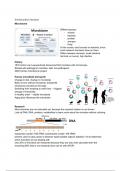
Different groups:
- viruses
- bacteria
- protists
- archaea
- fungi
In this course, only focused on bacteria, since
most research has been done on them.
Differs between stomach, small intestine
(luminal vs mucus), big intestine
History
1670 Antoni van Leeuwenhoek discovered first microbes with microscope
Started with pathogenic microbes, later non-pathogenic
2005 Human microbiome project
Human microbiota during life
Change in diet, change in microbiota
Baby is born without microbiota, breastmilk
introduces microbes to the baby
Switching from weaning to solid food → biggest
change of microbiota
In healthy adult → stable microbiota
Aging also influences the microbiota
Research
Most microbes are not culturable yet, because the required medium is not known
Look at DNA, RNA, proteins, metabolites to learn more about the microbes without culturing
eukaryotes contain 18S rRNA, prokaryotes contain 16S rRNA
primers used on gray areas in between hypervariable regions (labeled 1-9) to determine
which microbes we are dealing with
only 35% of microbes are measured because they are way more abundant then the
remaining 65% that is not measured (but can be with qPCR)
,Early life Microbiota
Change in diet, change in microbiota
Baby
Phases
Baby is born without microbiota
breastmilk introduces microbes to the baby
Switching from weaning to solid food → biggest
change of microbiota
- developmental phase (month 3-14)
- transitional phase (month 15-30)
- stable phase (month 31-46)
firstly facultative anaerobes, after few days anaerobes
Bifidobacterium (actinobacteria), strictly anaerobic
→ milk degradation
low variety at first, so the immune system has time to
establish
shift from firmicutes (e.g. lactobacillus) to bacteroidetes
later
bacteroidetes → can break down almost anything
proteobacteria → indicate disease
First 1000 days are important
→ after 1000 immune system & microbiome are mature
programming of the immune system in early life
→ less chance of allergy and chronic immune diseases later in life
Breastmilk
- immune cells
- antibodies (IgA)
- Lactoferrin (binds up iron) to avoid growth of pathogenic bacteria
- Promotion of beneficial bacteria (lactobacillus)
→ lowers pH → discourage growth of potentially
pathogenic bacteria
HMO = human milk oligosaccharides
FUc / Neuo5Ac → protect HMO from breakdown
→ Bifidobacterium have the enzymes for breakdown
GOS = galactose oligosaccharides
FOS = fructose oligosaccharides
→ stimulate Bifido growth, added to formula
Formula fed → microbiome is more adultlike earlier on → immune system can’t keep up
, Bifidobacterium
➢ produce lactic acid
○ lowers pH → discourage growth of potentially pathogenic
○ used by other microbes = cross-feeding
→ only possible with bifidobacterium bifidum
➢ use urea as N source
➢ Produce vitamins
➢ Interact with the immune system
Determinants of microbiome of infant
- maternal source (genotype, diet, health status, antibiotic use)
- MTCT = mother to child transmission (place of birth, weaning or not, delivery mode)
→ most important
- Infant recipient (genotype, etc.)
- environmental factors
Preterm infants
- low gestational age (<37 weeks)
- C section needed
- Hospitalised
- Formula/donor milk → no microbes/IgA → antibiotics given
Lots of infections still → stress → hampers organ development e.g. brain, lungs
Underdeveloped lungs → air support → swallow air → less anaerobic bacteria e.g. Bifido
(strictly anaerobic) → less food digestion
later in life, teens → attention deficit, behavioural problems, cognition
Adults
diverse diet → diverse microbiota → healthier
In healthy adult → stable microbiota
Elderly
Aging reduces the variety of the microbiota
Microbiome
Different groups:
- viruses
- bacteria
- protists
- archaea
- fungi
In this course, only focused on bacteria, since
most research has been done on them.
Differs between stomach, small intestine
(luminal vs mucus), big intestine
History
1670 Antoni van Leeuwenhoek discovered first microbes with microscope
Started with pathogenic microbes, later non-pathogenic
2005 Human microbiome project
Human microbiota during life
Change in diet, change in microbiota
Baby is born without microbiota, breastmilk
introduces microbes to the baby
Switching from weaning to solid food → biggest
change of microbiota
In healthy adult → stable microbiota
Aging also influences the microbiota
Research
Most microbes are not culturable yet, because the required medium is not known
Look at DNA, RNA, proteins, metabolites to learn more about the microbes without culturing
eukaryotes contain 18S rRNA, prokaryotes contain 16S rRNA
primers used on gray areas in between hypervariable regions (labeled 1-9) to determine
which microbes we are dealing with
only 35% of microbes are measured because they are way more abundant then the
remaining 65% that is not measured (but can be with qPCR)
,Early life Microbiota
Change in diet, change in microbiota
Baby
Phases
Baby is born without microbiota
breastmilk introduces microbes to the baby
Switching from weaning to solid food → biggest
change of microbiota
- developmental phase (month 3-14)
- transitional phase (month 15-30)
- stable phase (month 31-46)
firstly facultative anaerobes, after few days anaerobes
Bifidobacterium (actinobacteria), strictly anaerobic
→ milk degradation
low variety at first, so the immune system has time to
establish
shift from firmicutes (e.g. lactobacillus) to bacteroidetes
later
bacteroidetes → can break down almost anything
proteobacteria → indicate disease
First 1000 days are important
→ after 1000 immune system & microbiome are mature
programming of the immune system in early life
→ less chance of allergy and chronic immune diseases later in life
Breastmilk
- immune cells
- antibodies (IgA)
- Lactoferrin (binds up iron) to avoid growth of pathogenic bacteria
- Promotion of beneficial bacteria (lactobacillus)
→ lowers pH → discourage growth of potentially
pathogenic bacteria
HMO = human milk oligosaccharides
FUc / Neuo5Ac → protect HMO from breakdown
→ Bifidobacterium have the enzymes for breakdown
GOS = galactose oligosaccharides
FOS = fructose oligosaccharides
→ stimulate Bifido growth, added to formula
Formula fed → microbiome is more adultlike earlier on → immune system can’t keep up
, Bifidobacterium
➢ produce lactic acid
○ lowers pH → discourage growth of potentially pathogenic
○ used by other microbes = cross-feeding
→ only possible with bifidobacterium bifidum
➢ use urea as N source
➢ Produce vitamins
➢ Interact with the immune system
Determinants of microbiome of infant
- maternal source (genotype, diet, health status, antibiotic use)
- MTCT = mother to child transmission (place of birth, weaning or not, delivery mode)
→ most important
- Infant recipient (genotype, etc.)
- environmental factors
Preterm infants
- low gestational age (<37 weeks)
- C section needed
- Hospitalised
- Formula/donor milk → no microbes/IgA → antibiotics given
Lots of infections still → stress → hampers organ development e.g. brain, lungs
Underdeveloped lungs → air support → swallow air → less anaerobic bacteria e.g. Bifido
(strictly anaerobic) → less food digestion
later in life, teens → attention deficit, behavioural problems, cognition
Adults
diverse diet → diverse microbiota → healthier
In healthy adult → stable microbiota
Elderly
Aging reduces the variety of the microbiota