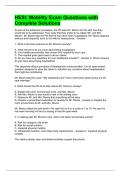
HESI: Mobility Exam Questions with Complete Solutions
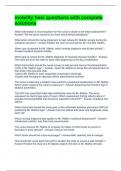
HESI: Mobility Exam Questions with Complete Solutions In Mr. Moore's plan of care, the PN identifies a short-term objective for impaired physical mobility. 4. Which objective is correct? A. The PN will reposition the client every 2 hours while the client is awake. B. The client will move from the bed to a chair for each meal, beginning on the day of admission C. The PN will assist the client to ambulante in the hall by the second hospital day. D. The client will demonstrate better mobility by time of discharge. - Answer-B. The client will move from the bed to a chair for each meal, beginning on the day of admission This is a correctly stated objective. A measurable objective requires performance, condition, and criterion. The client is always the subject of the objective. Mr. Moore is reluctant to move in the bed or move to the chair. Assessment reveals diminished dorsalis pedis pulses bilaterally Which nursing intervention(s) should the PN implement to help prevent venous thrombosis? (Select all that apply.) A. Advise Mr. Moore to eat well-balanced meals and between-meal snacks. B. Encourage Mr. Moore to cough and breathe deeply 10 times an hour. C. Explain the importance of dorsal and plantar flexion of the feet while in the bed and chair. D. Emphasize to Mr. Moore that he should not cross his legs when sitting up in bed or in a chair. E. Reinforce the instruction to Mr. Moore about changing positions every 2 hours in the bed or chair. - Answer-C. Explain the importance of dorsal and plantar flexion of the feet while in the bed and chair. D. Emphasize to Mr. Moore that he should not cross his legs when sitting up in bed or in a chair. Mr. Moore states the pain level in his right foot is 8 on a scale of 1 to 10. He says he has been favoring his foot by staying in bed the past week. 3. In helping plan Mr. Moore's care, which risk factor should take priority? A. Risk for caregiver role strain. B. Risk for social isolation C. Impaired physical mobility D. Imbalanced nutrition, move than body requirements. - Answer-C. Impaired physical mobility The client's plantar ulcer and limited activities support this priority.
Escuela, estudio y materia
- Institución
- HESI MOBILITY
- Grado
- HESI MOBILITY
Información del documento
- Subido en
- 3 de marzo de 2024
- Número de páginas
- 4
- Escrito en
- 2023/2024
- Tipo
- Examen
- Contiene
- Preguntas y respuestas
Temas
-
hesi mobility exam questions with complete soluti

Documento también disponible en un lote