Macroeconomics summary
Kt = Physical Capital (accumulating) Capital S=savings ratio
(Number of Machines) It= gross investment
L=Physical Labor, labor (number of working Yt= income, GDP
hours) Λ*K = depreciation
H=Human Capital Ys= quantities service goods
P=Public Goods Yi= quantities industrial goods
A=Technical Knowledge Ps=Price service goods
B=Land Pi=price induatrial goods
S=Savings Y=GDP
1. Introduction to Macroeconomics
Macroeconomics studies the economy as a whole – that is the sum of the individual behavior of
households and firms.
…deals with aggregated data like
-GDP(the sum of the value of all goods and services produced in an economy)
-inflation(the sum of the common change of all prices of goods and services)
-unemployment rate(the share of all unemployed persons in the total labor force)
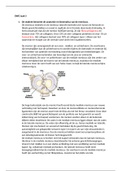
The circular-flow model
Neoclassical version <-> Keynesian version
Households own labor force and capital ->supply to firms
-foreign capital: saving accounts at banks
-own capital: -hh buy shares of firms
-hh own the firm directly
-fixed rate securities: hh buy corporate bonds = foreign capital
Households own real estate->rend to firms via real estate markets
→CF model is based on the simplifying assumption that only households and firms exist
->GDP of simplified economy: net production value + depreciation
Gross Domestic Product
“Market value of all final products produced within a country in a given period of time”
->wants to measure the production of an economy
Market value ~ market price can be taken to evaluate a product
Products ~ tangible + intangible products
All final products ~ sales of firm – intermediate inputs from other firms=contribution of the
firm to GDP (=Gross Value added of the firm)
→only production that reaches the final consumer via a market transition
→only home production undertaken by officially registered employees
→also drugs + smuggling + black market economy (since September 2014)
→subsistence farming: actual GDP in developing countries is significantly
larger than GDP as measured by statistical offices
3 ways of computing GDP
1.) GDP= Value added of Firms + Value added of illegal economic units + Value added of
government & NPOs + Value Added of Households
2.) GDP=Gross Compensation of Domestic&Foreign Employees&Self-Employed working within
the Country + Net Income from wealth held within the Country by Natives&Foreigners +
Indirect Taxes (Value Added Tax) – Subsidies (to firms) + Depreciation
, 3.) GDP=Consumption of Households (C) + Government Consumption (G)
+ Depreciation (ƛ*K)
+Net Investment (NI) Gross Investment
+Exports (X) – Imports (M) =balance of income
Nominal vs real GDP & the GDP Deflator
Nominal GDP = with inflation (evaluating with current prices)
Real GDP = without inflation (evaluating with prices in the base year->arbitrary fixed year)
→the rate of inflation is eliminated from real GDP
→if positive, inflation was prevalent from the past to the present,
-real GDP before the base year if always larger than nominal GDP
-real GDP after the base year is always smaller than nominal GDP
→growth rate of nominal GDP is always larger than growth rate of real GDP
𝐶𝑢𝑟𝑟𝑒𝑛𝑡 𝑉𝑎𝑙𝑢𝑒−𝑃𝑟𝑒𝑣𝑖𝑜𝑢𝑠 𝑉𝑎𝑙𝑢𝑒 𝑌𝑡−𝑌𝑡−1
Growth Rare = 𝑃𝑟𝑒𝑣𝑖𝑜𝑢𝑠 𝑉𝑎𝑙𝑢𝑒
= 𝑌𝑡−1
y=GDP t=current period
𝐺𝐷𝑃−𝐷𝑒𝑓𝑙𝑎𝑡𝑜𝑟2−𝐺𝐷𝑃−𝐷𝑒𝑓𝑙𝑎𝑡𝑜𝑟1
Inflation rate= 𝐺𝐷𝑃−𝐷𝑒𝑓𝑙𝑎𝑡𝑜𝑟1
Neoclassical model describes changes within a period (=static model)
From GDP to “Disposable Income of Households”
-purchasing power of the population of a country depends on the income of the population
-income of the population differs in:
-GDP does not include income of inhabitants earned abroad & of foreigners earned within
the country
-GDP does not include capital depreciation (can not be part of household income as they
don’t produce
-a part of GDP flows to the government in form of taxes
→GDP reflects the production potential of a country
GDP at market price – depreciation
=Net domestic product at market prices – (indirect taxes + subsidies)
=net domestic product at factor prices + income of inhabitants abroad -income of foreigners earned
within the country
=Net national income factor prices – direct taxes + social transfers – interest on consumer credits
=disposable income of households
GDP & Welfare
Economic well-being depends stronger on disposable income than GDP →disposable income = better
indication
→should GDP be used as an indicator of welfare?
<->non-market production is not included, preference for consumption (->higher GDP) vs for leisure
time (lower GDP), income distribution, environmental production reduces measured GDP
->analysis of economic welfare should not only reflect the level of GDP, but also take care of
measures of income distribution
-capabilities: personal health, personal education, access to information, legal framework, political
freedom
->same level of income can grant more or less implementation options ->different levels of attainable
, capabilities (capabilities depend on soft factors, impact on capabilities: life expectancy, average
education level)
3
→Human Development Index = HDI =√𝐺𝑁𝑃 ∗ 𝐿𝐸 ∗ 𝐸𝐷𝑈 ->GNP can be useful for macro decisions
2. The long-run Development of Economies
>it’s better for the economy if GDP is stable ->income level higher->people can consume more
→how can we influence growth?
The Solow-Swan model of a closed economy
Growth Theory: Explanation of the mechanism of
long-run growth
A useful growth theory should be able to explain
the actual differences in the long-run growth
performance of different countries
The neoclassical growth model of Solow-Swan
-identical assumption of neoclassical macro-
model (<- static model)
-describes the development of an economy over several periods (=dynamic model)
Basic idea:
-GDP will grow if a country is able to accumulate production factors from one year to another
->capital equipment (production facilities) stays constant, will probably not be consumed
->Human capital (knowledge +abilities of humans) ->you frame humans from spending money
->Public goods (legal security etc)
→keep all production factors but capital constant
-households own production factors ->firms pay households for supply of production factors
->payments add up to total GDP
->households decide what to spent and to save (savings=investment on the capital market as credits)
-households’ savings equal firms demand for credits ->firms use credits to invest in capital equipment
→circular flow
(several periods)->Growth performance after 3 periods)
How long does GDP/capital stock grow?
As long as gross investment (It) is larger than capital depreciation (ƛ * Kt) (=yearly wearout of capital
equipment)
Kt+1=Kt + It-ƛ*Kt
→grows as long as savings are larger than the capital depreciation
Capital Stockt = Capital Stockt-1 + It-1 - Depriciation
Net investment >0
Most productive components of capital stock: Equipment, software, copyrights
Steady State: an economy reaches a state where it neither grows nor shrinks (Y=Y(K,L) = constant)
Savings St = s*income = s* Yt
𝐺𝐷𝑃↑
Per capita GDP:𝑝𝑜𝑝𝑢𝑙𝑎𝑡𝑖𝑜𝑛 𝑠𝑖𝑧𝑒
-renewable resources: they reproduce themselves in every period
-renewable/exhaustible, if produced with renewable/exhaustible resources
-Physical Labor+Land: renewable resources, ideal type: solar, wind & geothermal energy
Kt = Physical Capital (accumulating) Capital S=savings ratio
(Number of Machines) It= gross investment
L=Physical Labor, labor (number of working Yt= income, GDP
hours) Λ*K = depreciation
H=Human Capital Ys= quantities service goods
P=Public Goods Yi= quantities industrial goods
A=Technical Knowledge Ps=Price service goods
B=Land Pi=price induatrial goods
S=Savings Y=GDP
1. Introduction to Macroeconomics
Macroeconomics studies the economy as a whole – that is the sum of the individual behavior of
households and firms.
…deals with aggregated data like
-GDP(the sum of the value of all goods and services produced in an economy)
-inflation(the sum of the common change of all prices of goods and services)
-unemployment rate(the share of all unemployed persons in the total labor force)
The circular-flow model
Neoclassical version <-> Keynesian version
Households own labor force and capital ->supply to firms
-foreign capital: saving accounts at banks
-own capital: -hh buy shares of firms
-hh own the firm directly
-fixed rate securities: hh buy corporate bonds = foreign capital
Households own real estate->rend to firms via real estate markets
→CF model is based on the simplifying assumption that only households and firms exist
->GDP of simplified economy: net production value + depreciation
Gross Domestic Product
“Market value of all final products produced within a country in a given period of time”
->wants to measure the production of an economy
Market value ~ market price can be taken to evaluate a product
Products ~ tangible + intangible products
All final products ~ sales of firm – intermediate inputs from other firms=contribution of the
firm to GDP (=Gross Value added of the firm)
→only production that reaches the final consumer via a market transition
→only home production undertaken by officially registered employees
→also drugs + smuggling + black market economy (since September 2014)
→subsistence farming: actual GDP in developing countries is significantly
larger than GDP as measured by statistical offices
3 ways of computing GDP
1.) GDP= Value added of Firms + Value added of illegal economic units + Value added of
government & NPOs + Value Added of Households
2.) GDP=Gross Compensation of Domestic&Foreign Employees&Self-Employed working within
the Country + Net Income from wealth held within the Country by Natives&Foreigners +
Indirect Taxes (Value Added Tax) – Subsidies (to firms) + Depreciation
, 3.) GDP=Consumption of Households (C) + Government Consumption (G)
+ Depreciation (ƛ*K)
+Net Investment (NI) Gross Investment
+Exports (X) – Imports (M) =balance of income
Nominal vs real GDP & the GDP Deflator
Nominal GDP = with inflation (evaluating with current prices)
Real GDP = without inflation (evaluating with prices in the base year->arbitrary fixed year)
→the rate of inflation is eliminated from real GDP
→if positive, inflation was prevalent from the past to the present,
-real GDP before the base year if always larger than nominal GDP
-real GDP after the base year is always smaller than nominal GDP
→growth rate of nominal GDP is always larger than growth rate of real GDP
𝐶𝑢𝑟𝑟𝑒𝑛𝑡 𝑉𝑎𝑙𝑢𝑒−𝑃𝑟𝑒𝑣𝑖𝑜𝑢𝑠 𝑉𝑎𝑙𝑢𝑒 𝑌𝑡−𝑌𝑡−1
Growth Rare = 𝑃𝑟𝑒𝑣𝑖𝑜𝑢𝑠 𝑉𝑎𝑙𝑢𝑒
= 𝑌𝑡−1
y=GDP t=current period
𝐺𝐷𝑃−𝐷𝑒𝑓𝑙𝑎𝑡𝑜𝑟2−𝐺𝐷𝑃−𝐷𝑒𝑓𝑙𝑎𝑡𝑜𝑟1
Inflation rate= 𝐺𝐷𝑃−𝐷𝑒𝑓𝑙𝑎𝑡𝑜𝑟1
Neoclassical model describes changes within a period (=static model)
From GDP to “Disposable Income of Households”
-purchasing power of the population of a country depends on the income of the population
-income of the population differs in:
-GDP does not include income of inhabitants earned abroad & of foreigners earned within
the country
-GDP does not include capital depreciation (can not be part of household income as they
don’t produce
-a part of GDP flows to the government in form of taxes
→GDP reflects the production potential of a country
GDP at market price – depreciation
=Net domestic product at market prices – (indirect taxes + subsidies)
=net domestic product at factor prices + income of inhabitants abroad -income of foreigners earned
within the country
=Net national income factor prices – direct taxes + social transfers – interest on consumer credits
=disposable income of households
GDP & Welfare
Economic well-being depends stronger on disposable income than GDP →disposable income = better
indication
→should GDP be used as an indicator of welfare?
<->non-market production is not included, preference for consumption (->higher GDP) vs for leisure
time (lower GDP), income distribution, environmental production reduces measured GDP
->analysis of economic welfare should not only reflect the level of GDP, but also take care of
measures of income distribution
-capabilities: personal health, personal education, access to information, legal framework, political
freedom
->same level of income can grant more or less implementation options ->different levels of attainable
, capabilities (capabilities depend on soft factors, impact on capabilities: life expectancy, average
education level)
3
→Human Development Index = HDI =√𝐺𝑁𝑃 ∗ 𝐿𝐸 ∗ 𝐸𝐷𝑈 ->GNP can be useful for macro decisions
2. The long-run Development of Economies
>it’s better for the economy if GDP is stable ->income level higher->people can consume more
→how can we influence growth?
The Solow-Swan model of a closed economy
Growth Theory: Explanation of the mechanism of
long-run growth
A useful growth theory should be able to explain
the actual differences in the long-run growth
performance of different countries
The neoclassical growth model of Solow-Swan
-identical assumption of neoclassical macro-
model (<- static model)
-describes the development of an economy over several periods (=dynamic model)
Basic idea:
-GDP will grow if a country is able to accumulate production factors from one year to another
->capital equipment (production facilities) stays constant, will probably not be consumed
->Human capital (knowledge +abilities of humans) ->you frame humans from spending money
->Public goods (legal security etc)
→keep all production factors but capital constant
-households own production factors ->firms pay households for supply of production factors
->payments add up to total GDP
->households decide what to spent and to save (savings=investment on the capital market as credits)
-households’ savings equal firms demand for credits ->firms use credits to invest in capital equipment
→circular flow
(several periods)->Growth performance after 3 periods)
How long does GDP/capital stock grow?
As long as gross investment (It) is larger than capital depreciation (ƛ * Kt) (=yearly wearout of capital
equipment)
Kt+1=Kt + It-ƛ*Kt
→grows as long as savings are larger than the capital depreciation
Capital Stockt = Capital Stockt-1 + It-1 - Depriciation
Net investment >0
Most productive components of capital stock: Equipment, software, copyrights
Steady State: an economy reaches a state where it neither grows nor shrinks (Y=Y(K,L) = constant)
Savings St = s*income = s* Yt
𝐺𝐷𝑃↑
Per capita GDP:𝑝𝑜𝑝𝑢𝑙𝑎𝑡𝑖𝑜𝑛 𝑠𝑖𝑧𝑒
-renewable resources: they reproduce themselves in every period
-renewable/exhaustible, if produced with renewable/exhaustible resources
-Physical Labor+Land: renewable resources, ideal type: solar, wind & geothermal energy