

SMQT Study Guide Appendix Q Contains what information? - Answer -Determining Immediate Jeopardy What are the three components of IJ? - Answer -1. Harm a. Actual - was there an outcome of harm? b. Potential - Is there the likelihood of potential harm? 2. Immediacy - Is the harm or potential harm likely to occur in the very near future? 3. Culpability - a. did the entity know about the situation? If so, when did they first become aware? b. Should the entity have known about the situation? c. Did the entity thoroughly investigate the circumstances? d. Did the entity implement corrective measures? e. Has the entity re -evaluate the measures to ensure the situation was corrected? Failure to protect from abuse triggers? - Answer -1. Serious injuries such as head trauma or fractures 2.non -consensual sexual interactions 3.unexplained serious injuries that have not been investigated 4. staff striking or roughly handling an individual 5. staff yelling, swearing, gesturing or calling an individual derogatory names 6. bruises around the breast or genital area or suspicious injuries Failure to prevent neglect triggers? - Answer -1. lack of timely assessment of individuals after injury 2. lack of supervision for individual with known special needs 3. failure to carry out dr orders 4. repeated occurrences such as falls which place the individual at risk of harm without intervention 5. access to chemical and physical hazards by individuals who are at risk 6. access to hot water of sufficient temperature to cause tissue injury 7. non functioning call system without compensatory measures 8. unsupervised smoking by an individual with a known safety risk 9. lack of supervision of cognitively impaired individuals with known elopement risk 10. failure to adequately monitor individuals with known severe self -injurious behavior 11. failure to adequately monitor and intervene for serious medical/surgical conditions 12. use of chemical./physical restraints without adequate monitoring 13. improper feeding/positioning of individual with known aspiration risk 14. inadequate supervision to prevent physical altercations Failure to protect from psychological harm triggers? - Answer -1. Application of chemical/physical restraints without clinical indication 2. Presence of behaviors by staff such as threatening or demeaning resulting in displays of fear, unwillingness to communicate and recent or sudden changes in behavior by individuals 3. Lack of interventions to prevent individuals from creating an environment of fear Failure to protect from undue adverse medication consequences and/or failure to provide medications as prescribed triggers - Answer -1. Administration of medication to an individual with a known history of allergic reaction to that medication 2. Lack of monitoring and identification of potential serious drug interaction, side effects, and adverse reactions 3. Administration of contraindicated medications 4. Pattern of repeated medication errors without intervention 5. Lack of diabetic monitoring resulting or likely to result in serious hypoglycemia or hyperglycemic reaction 6. Lack of timely and appropriate monitoring required for drug titration Failure to provide adequate nutrition and hydration to support and maintain health triggers? - Answer -1. Food supply inadequate to meet the nutritional needs for the individual 2. Failure to provide adequate nutrition and hydration resulting in malnutrition; eg severe weight loss, abnormal lab values 3. withholding nutrition and hydration without advance directives 4. lack of potable water supply Failure to protect from widespread nosocomial infections triggers? - Answer -1. pervasive improper handling of bodily fluids or substances from an individual with an infectious disease 2.high number of infections or contagious diseases without appropriate reporting, intervention and care
Vista previa 2 fuera de 6 páginas
Examen
SMQT Study Guide Graded A+
Vista previa 2 fuera de 6 páginas
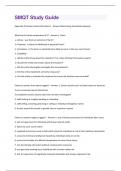
Appendix Q Contains what information? - Answer-Determining Immediate Jeopardy What are the three components of IJ? - Answer-1. Harm a. Actual - was there an outcome of harm? b. Potential - Is there the likelihood of potential harm? 2. Immediacy - Is the harm or potential harm likely to occur in the very near future? 3. Culpability - a. did the entity know about the situation? If so, when did they first become aware? b. Should the entity have known about the situation? c. Did the entity thoroughly investigate the circumstances? d. Did the entity implement corrective measures? e. Has the entity re-evaluate the measures to ensure the situation was corrected? Failure to protect from abuse triggers? - Answer-1. Serious injuries such as head trauma or fractures -consensual sexual interactions lained serious injuries that have not been investigated 4. staff striking or roughly handling an individual 5. staff yelling, swearing, gesturing or calling an individual derogatory names 6. bruises around the breast or genital area or suspicious injuries Failure to prevent neglect triggers? - Answer-1. lack of timely assessment of individuals after injury 2. lack of supervision for individual with known special needs 3. failure to carry out dr orders 4. repeated occurrences such as falls which place the individual at risk of harm without intervention 5. access to chemical and physical hazards by individuals who are at risk 6. access to hot water of sufficient temperature to cause tissue injury 7. non functioning call system without compensatory measures 8. unsupervised smoking by an individual with a known safety risk 9. lack of supervision of cognitively impaired individuals with known elopement risk10. failure to adequately monitor individuals with known severe self-injurious behavior 11. failure to adequately monitor and intervene for serious medical/surgical conditions 12. use of chemical./physical restraints without adequate monitoring 13. improper feeding/positioning of individual with known aspiration risk 14. inadequate supervision to prevent physical altercations Failure to protect from psychological harm triggers? - Answer-1. Application of chemical/physical restraints without clinical indication 2. Presence of behaviors by staff such as threatening or demeaning resulting in displays of fear, unwillingness to communicate and recent or sudden changes in behavior by individuals 3. Lack of interventions to prevent individuals from creating an environment of fear Failure to protect from undue adverse medication consequences and/or failure to provide medications as prescribed triggers - Answer-1. Administration of medication to an individual with a known history of allergic reaction to that medication 2. Lack of monitoring and identification of potential serious drug interaction, side effects, and adverse reactions 3. Administration of contraindicated medications 4. Pattern of repeated medication errors without intervention 5. Lack of diabetic monitoring resulting or likely to result in serious hypoglycemia or hyperglycemic reaction 6. Lack of timely and appropriate monitoring required for drug titration
Vista previa del contenido
Información del documento
- Subido en
- 10 de febrero de 2024
- Número de páginas
- 6
- Escrito en
- 2023/2024
- Tipo
- Examen
- Contiene
- Desconocido
$8.49
¿Documento equivocado? Cámbialo gratis
Dentro de los 14 días posteriores a la compra y antes de descargarlo, puedes elegir otro documento. Puedes gastar el importe de nuevo.
Escrito por estudiantes que aprobaron
Inmediatamente disponible después del pago
Leer en línea o como PDF

Los indicadores de reputación están sujetos a la cantidad de artículos vendidos por una tarifa y las reseñas que ha recibido por esos documentos. Hay tres niveles: Bronce, Plata y Oro. Cuanto mayor reputación, más podrás confiar en la calidad del trabajo del vendedor.
Disponible en paquete
Package deal
SMQT EXAM PACKAGE DEAL WITH COMPLETE SOLUTIONS ALREADY PASSED!!
