CLTM Neurological Examination Questions and Answers 100% Correct!
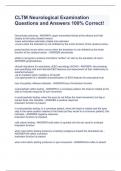
Decorticate posturing - ANSWER--upper extremities flexed at the elbows and held closely to the body (rotated inward) -lower extremities externally rotated and extended. -occurs when the brainstem is not inhibited by the motor function of the cerebral cortex. posturing that occurs when occurs when the brainstem is not inhibited by the motor function of the cerebral cortex. - ANSWER-decorticate ability to recognize numbers and letters "written" on skin by the sensation of touch - ANSWER-graphesthesia clinical indications for ambulatory cEEG recordings (ACNS) - ANSWER--documenting and quantifying ictal and interictal EEG features and assessment of their relationship to reported behavior -as an inpatient when mobility is of benefit -not appropriate for a detailed characterization of EEG features for presurgical eval loss of pupillary reflexes indicates - ANSWER-loss of brainstem function oculocephalic reflex testing - ANSWER-in a comatose patient, the head is rotated to the side to evaluate response of eye movement in oculocephalic testing, when the eyes do not follow the head movement, but lag or remain fixed, this indicates - ANSWER-a positive response brainstem function is present in oculocephalic testing, in a comatose patient, when the head is rotated and the eyes stay in the same position relative to the head (as they would in a conscious patient), this indicates - ANSWER-negative response brainstem function is impaired cold caloric testing - ANSWER-cold water is squirted into the ear canal to evaluate brainstem function when cold caloric testing produces a beating nystagmus toward the stimulated ear - ANSWER-the reflex is positive brainstem function is present when cold caloric testing produces no eye movement - ANSWER-the reflex is absent brainstem function (pons, medulla) is impaired the Babinski sign or plantar response consists of - ANSWER-upgoing big toe and/or fanning of all toes when the sole of the foot is stroked with a blunt object from heel toward toes to be considered oriented x 3, patient must be able to answer what 3 questions - ANSWER-who they are where they are current date 4 aspects of neurological exam that help determine brain death - ANSWER-1) pupillary reflexes (fixed and dilated) 2) cold caloric testing (absent) 3) oculocephalic testing (absent) 4) response to painful stimuli (absent) Decerebrate posturing - ANSWER-arms stiffen and extend at patient's side wrists flex deficit in one visual field indicates a lesion - ANSWER-in the contralateral occipital lobe or optic pa
Escuela, estudio y materia
- Institución
- CLTM Neurological
- Grado
- CLTM Neurological
Información del documento
- Subido en
- 20 de enero de 2024
- Número de páginas
- 2
- Escrito en
- 2023/2024
- Tipo
- Examen
- Contiene
- Preguntas y respuestas
Temas
-
cltm neurological examination questions and answer
-
cltm neurological examination stuvia
-
decorticate posturing answer upper extremities
-
posturing that occurs when occurs when the brainst

Documento también disponible en un lote