

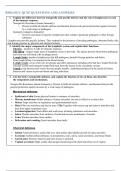
BIOLOGY QUIZ QUESTIONS AND ANSWERS
1. Explain the difference between nonspecific and specific defense and the role of lymphocytes in each of the immune response. Nonspecific Resistance (Innate Immunity) ▪ Present at birth ad includes defense mechanisms that provide general protection against invasion by a wide range of pathogens Immunity (Adaptive Immunity) ▪ Involves activation of specific lymphocytes that combat a particular pathogen or other foreign substance Lymphocytes provide specific defense. They respond to the presence of invading pathogens, abnormal body cells, and foreign proteins by physical and chemical attacks. 2. Identify the major components of the lymphatic system and explain their functions. Thymus – produces T-cells for immune response. The spleen - largest single mass of lymphatic tissue in the body. The spleen destroy blood-borne pathogens and worn-out red blood cells by phagocytosis Lymph Nodes- produce lymphocytes that kill pathogens, harmful foreign particles and debris from lymph before it is returned to the blood stream. Lymph vessels -act as reservoirs for plasma and other substances including cells that have leaked from the vascular system and transport lymph fluid back from the tissues to the circulatory system. Tonsils - trap bacteria and viruses that are people breathe. Antibodies produced in the tonsils kill these bacteria and viruses to prevent throat and lung infections. 3. List the body’s nonspecific defenses, and explain the function of two of them, also describe the components and mechanisms. Nonspecific Resistance (Innate Immunity)- Present at birth ad includes defense mechanisms that provide general protection against invasion by a wide range of pathogens Mechanical defenses • Epidermis of skin Forms physical barrier to entrance of microbes. • Mucous membranes Inhibit entrance of many microbes, but not as effective as intact skin. • Mucus Traps microbes in respiratory and gastrointestinal tracts. • Hairs Filter out microbes and dust in nose. Cilia Together with mucus trap and remove microbes and dust from upper respiratory tract. • Lacrimal apparatus Tears dilute and wash away irritating substances and microbes. • Saliva Washes microbes from surfaces of teeth and mucous membranes of mouth. • Urine Washes microbes from urethra. • Defecation and vomiting Expel microbes from body. Chemical defenses • Sebum Forms protective acidic film over skin surface that inhibits growth of many microbes. • Lysozyme Antimicrobial substance in perspiration, tears, saliva, nasal secretions, and tissue fluids. • Gastric juice Destroys bacteria and most toxins in stomach. • Vaginal secretions Slight acidity discourages bacterial growth; flush microbes out of vagina. 4. Discuss the types of T cells and the role played by each in the immune response, and explain the mechanisms of their activation. • Cytotoxic T cell -Kills host target cells by releasing granzymes that induce apoptosis, perforin that forms channels to cause cytolysis, granulysin that destroys microbes, lymphotoxin that destroys target cell DNA, gamma-interferon that attracts macrophages and increases their phagocytic activity, and macrophage migration inhibition factor that prevents macrophage migration from site of infection. • Helper T cell -Cooperates with B cells to amplify antibody production by plasma cells and secretes interleukin-2, which stimulates proliferation of T cells and B cells. May secrete gamma-IFN and tumor necrosis factor (TNF), which stimulate inflammatory response. • Memory T cell -Remains in lymphatic tissue and recognizes original invading antigens, even years after first encounter.
Información del documento
- Subido en
- 18 de enero de 2024
- Número de páginas
- 4
- Escrito en
- 2023/2024
- Tipo
- Examen
- Contiene
- Preguntas y respuestas

