
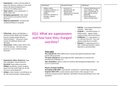
• Superpower: a nation with the ability to
project its influence anywhere in the world Hard Power Economic Power Soft Power
and be the dominant global force =
economic and military power • Military action • Economic or • Cultural attractiveness of
• Hyper power: a lone superpower i.e. • Creation of alliances to development aid some nations i.e. USA
marginalise some • Signing trade • Values and ideology of
Britain 1850-1910 nations agreements to increase some nations seen as
• Emerging superpower: India/ Brazil • Economic sanctions to economic ties appealing
power based on increased economy/ damage a nations • Moral authority of
economy nations foreign policy
resources
• Regional superpower: Germany have
continental influence not global
• Polarity = international distribution
of power – three types:
• Unipolar = 1 dominant power i.e.
• Soft power: culture and ideology i.e.
media promotes beliefs and messages ,
EQ1: What are superpowers British empire – appears stable –
unable to keep control everywhere
America maintain global influence
‘Americanisation’ – soft power causes and how have they changed • Multipolar = 3 + superpowers i.e.
EU, USA and China rise – fear over
erosion of traditional cultures and
ideologies overtime? alliances high threat of conflict
• Biopolar = 2 opposing powers i.e.
• Hard power: military action which is the USA + USSR clash between culture –
most threatening – USA have military depends on communication
presence on every continent except
Antarctica
Three stages
The colonial era: When British were in power they gained superpower status –
heavily influenced India
The post colonial era: what happened after independence in colonies and
• Superpower status: Resources: large development of Biopolar era
land, population, natural resources Neo colonialism: indirect control of countries that had gained independence – can
Economic: large national economy occur in several forms
Military: protection, nuclear weapons,
power over the world, large sea, air and Phases of empire building:
land army easily dispatched Mercantile 1600-1850: small colonies conquered on coastal fringes and islands
• Culture: control media i.e. North Korea cut Imperial 1850-1945: coastal colonies extend inland, with conquest of vast
off, USA Americanisation, Westernisation territories and government institutions with British colonial administrators set to rule
population
project its influence anywhere in the world Hard Power Economic Power Soft Power
and be the dominant global force =
economic and military power • Military action • Economic or • Cultural attractiveness of
• Hyper power: a lone superpower i.e. • Creation of alliances to development aid some nations i.e. USA
marginalise some • Signing trade • Values and ideology of
Britain 1850-1910 nations agreements to increase some nations seen as
• Emerging superpower: India/ Brazil • Economic sanctions to economic ties appealing
power based on increased economy/ damage a nations • Moral authority of
economy nations foreign policy
resources
• Regional superpower: Germany have
continental influence not global
• Polarity = international distribution
of power – three types:
• Unipolar = 1 dominant power i.e.
• Soft power: culture and ideology i.e.
media promotes beliefs and messages ,
EQ1: What are superpowers British empire – appears stable –
unable to keep control everywhere
America maintain global influence
‘Americanisation’ – soft power causes and how have they changed • Multipolar = 3 + superpowers i.e.
EU, USA and China rise – fear over
erosion of traditional cultures and
ideologies overtime? alliances high threat of conflict
• Biopolar = 2 opposing powers i.e.
• Hard power: military action which is the USA + USSR clash between culture –
most threatening – USA have military depends on communication
presence on every continent except
Antarctica
Three stages
The colonial era: When British were in power they gained superpower status –
heavily influenced India
The post colonial era: what happened after independence in colonies and
• Superpower status: Resources: large development of Biopolar era
land, population, natural resources Neo colonialism: indirect control of countries that had gained independence – can
Economic: large national economy occur in several forms
Military: protection, nuclear weapons,
power over the world, large sea, air and Phases of empire building:
land army easily dispatched Mercantile 1600-1850: small colonies conquered on coastal fringes and islands
• Culture: control media i.e. North Korea cut Imperial 1850-1945: coastal colonies extend inland, with conquest of vast
off, USA Americanisation, Westernisation territories and government institutions with British colonial administrators set to rule
population


