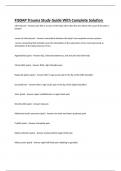
FISDAP Trauma Study Guide With Complete Solution
referred pain - Answer pain felt in an area of the body other than the area where the cause of the pain is located causes of referred pain - Answer connections between the body's two separate nervous systems -nerves connecting SNS and ANS cause the stimulation of the autonomic nerves to be perceived as stimulation of the spinal sensory nerves Appendicitis (pain) - Answer RLQ, rebound tenderness, and around navel (referred) Cholecytitis (pain) - Answer RUQ, right shoulder pain Ruptured spleen (pain) - Answer Kehr's sign (acute pain in the tip of the [left] shoulder) lacerated liver - Answer Kehr's sign (acute pain in the tip of the [right] shoulder) Ulcer (pain) - Answer upper midabdomen or upper back pain Diverticulitis (pain) - Answer LLQ pain Abdominal aortic aneurysm (pain) - Answer low back and lower quadrants pain Cystitis (pain) - Answer retropubic pain Kidney infection (pain) - Answer Costovertebral angle (CVA) pain Kidney stone (pain) - Answer right/left flank pain radiating to genitalia pancreatitis (pain) - Answer upper abdominal and back pain pneumonia (pain) - Answer referred pain to upper abdomen hernia (pain) - Answer any abdominal pain peritonitis - Answer any abdominal pain subcutaneous emphysema - Answer a characteristic crackling sensation felt on palpation of the skin -caused by the presence of air in soft tissues crepitus - Answer a grating or grinding sensation caused by fractured bone ends or joints rubbing together ecchymosis - Answer a buildup of bloof beneath the skin that produces a characteristic blue or black discoloration as the result of an injury opening the airway - Answer head-tilt-chin-lift (non-trauma) modified jaw thrust (c-spine trauma) Cushing's reflex - Answer Indicative of ICP 1. Hypertension 2. Bradycardia 3. Altered respiratory pattern -vasoconstriction leads to hypertension in an attempt to restore blood flow to the ischemic brain -initially causes hypertension then the vagus nerve induces bradycardia -increased pressure on the brainstem changes its homeostatsis that results in altered respiratory pattern or apnea Spinal cord injuries complications - Answer pain, tenderness, motor deficits, sensory deficits, paralysis, loss of bladder/bowel control, (C1-C5) respiratory arrest, neurogenic shock (hypotension without tachycardia and priapism) tourniquet use - Answer if direct pressure does not stop the bledding after 3 minutes spinal immoblization indications - Answer flexion, extension, compression, rotation, distraction, lateral heading, and penetrating injury (other signs and symptoms) commotio cordis - Answer blow to the chest during a critical portion of the heartbeat (upstroke of T wave) -causes V-fib, sudden cardiac arrest, seizure-like activity, pulseless, apneic chest wall injuries - Answer pnuemothorax, tension pneumothorax, sucking chest wound, hemothorax, cardiac tamponade, clavicle/rib fracture, flail chest, Traumatic asphyxia simple pnuemothorax - Answer accumulation of air in the pleural space (in between the visceral and parietal pleura) -decreased or absent lung sounds, chest pain, SOB, tachypnea tension pnuemothorax - Answer progressive collapsing of lung tissue -absent breath sounds over affected area, respiratory distress, tracheal deviation, anxiety, dyspnea, hyper-resonance, tachypnea, tachycardia, poor skin signs, accessory muscle use, JVD, narrowing pulse pressure, and hypotension sucking chest wound (open pneumothorax) - Answer open chest injury that penetrates the pleural space can draw air in during inhalation -tachycardia, subcutaneous emphysema, acute/sharp chest pain, SOB, tachypnea, hemorrhage, decreased breath sounds on affected side hemothorax - Answer bleeding into the pleural space -shock, hypertension, frothy/bloody sputum, flat neck veins, accessory muscle usage, poor skin signs, tachypnea, tachycardia, decreased breath sounds, dull percussion, anxiety, dyspnea cardiac/pericardial tamponade - Answer blood or other fluid accumulates in the pericardial sac and compresses the heart -Beck's triad: JVD, muffled heart sounds*, and narrowing pulse pressure -poor skin signs, tachycardia, tachypnea, hypotensive clavicle/rib fracture - Answer subcutaneous emphysema, neck swelling, neck pain, dysphagia, dyspnea flail chest - Answer portion of thorax becomes separated from the rest of the thorax -fracture of at least two consecutive ribs in two or more places -painful breathing, paradoxical chest movement, shallow breath, tachypnea, tachycardia, contusion, edema, crepitus
Escuela, estudio y materia
- Institución
- FISDAP Trauma
- Grado
- FISDAP Trauma
Información del documento
- Subido en
- 19 de diciembre de 2023
- Número de páginas
- 8
- Escrito en
- 2023/2024
- Tipo
- Examen
- Contiene
- Preguntas y respuestas
Temas
- fisdap trauma stuvia
-
fisdap trauma study guide with complete solution
-
referred pain pain felt in an area of the body oth
-
causes of referred pain connections between the bo

Documento también disponible en un lote