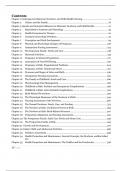
Table of Contents
Chapter 01. The Concept of Stress Adaptation .................................................................................................... 1
Chapter 02. Mental Health/Mental Illness: Historical and TheoreticalConcepts .............................................9
Chapter 03. Psychopharmacology ..................................................................................................................... 20
Chapter 04. Concepts of Psychobiology ............................................................................................................ 28
Chapter 05. Ethical and Legal Issues in Psychiatric/Mental HealthNursing ................................................... 37
Chapter 06. Cultural and Spiritual Concepts Relevant toPsychiatric/Mental Health Nursing ........................ 47
Chapter 07. Relationship Development ............................................................................................................. 55
Chapter 08. Therapeutic Communication .........................................................................................................63
Chapter 09. The Nursing Process in Psychiatric/Mental Health Nursing ....................................................... 75
Chapter 10. Therapeutic Groups ........................................................................................................................ 87
Chapter 11. Intervention With Families .............................................................................................................96
Chapter 12. Milieu Therapy - The Therapeutic Community ........................................................................... 102
Chapter 13. Crisis Intervention ......................................................................................................................... 107
Chapter 14. Assertiveness Training ................................................................................................................... 111
Chapter 15. Promoting Self-Esteem ................................................................................................................. 119
Chapter 16. Anger/Aggression Management ................................................................................................... 125
Chapter 17. The Suicidal Client ......................................................................................................................... 133
Chapter 18. Behavior Therapy .......................................................................................................................... 142
Chapter 19. Cognitive Therapy ......................................................................................................................... 149
Chapter 20. Electroconvulsive Therapy ........................................................................................................... 158
Chapter 21. The Recovery Model ...................................................................................................................... 165
Chapter 22. Neurocognitive Disorders ............................................................................................................. 172
Chapter 23. Substance-Related and Addictive Disorders ............................................................................... 178
Chapter 24. Schizophrenia Spectrum and Other Psychotic Disorders ........................................................... 189
Chapter 25. Depressive Disorders .................................................................................................................... 201
Chapter 26. Bipolar and Related Disorders ..................................................................................................... 212
Chapter 27. Anxiety, Obsessive-Compulsive, and Related Disorders ............................................................223
Chapter 28: Trauma and Stressor-Related Disorders .....................................................................................234
Chapter 29. Somatic Symptom and Dissociative Disorders ...........................................................................242
Chapter 30. Issues Related to Human Sexuality and Gender Dysphoria...................................................... 248
Chapter 31. Eating Disorders ............................................................................................................................ 253
Chapter 32. Personality Disorders ................................................................................................................... 261
Chapter 33. Children and Adolescents ............................................................................................................. 274
Chapter 34. The Aging Individual ................................................................................................................... 284
Chapter 35. Survivors of Abuse or Neglect ..................................................................................................... 290
Chapter 36. Community Mental Health Nursing ........................................................................................... 296
Chapter 37. The Bereaved Individual .............................................................................................................. 303
Chapter 38. Military Families .......................................................................................................................... 308
Chapter 01. The Concept of Stress Adaptation
Multiple Choice
1. A client has experienced the death of a close family member and at the same time becomes
unemployed. This situation has resulted in a 6-month score of 110 on the Recent Life Changes
Questionnaire. How shouldthe nurse evaluate this client data?
A. The client is experiencing severe distress and is at risk for physical and psychological illness.
B. A score of 110 on the Miller and Rahe Recent Life Changes Questionnaire indicates no
significant threat ofstress-related illness.
C. Susceptibility to stress-related physical or psychological illness cannot be estimated without
knowledge ofcoping resources and available supports.
1|Page
, D. The client may view these losses as challenges and perceive them as opportunities.
ANS: C
The Recent Life Changes Questionnaire is an expanded version of the Schedule of Recent
Experiences and the Rahe-Holmes Social Readjustment Rating Scale. A 6-month score of 300
or more, or a year-score total of 500 or more, indicates high stress in a clients life. However,
positive coping mechanisms and strong social support can limit susceptibility to stress-related
illnesses.
KEY: Cognitive Level: Application | Integrated Processes: Nursing Process: Evaluation | Client
Need:
Psychosocial Integrity
2. A physically and emotionally healthy client has just been fired. During a routine office visit
he states to a nurse: Perhaps this was the best thing to happen. Maybe Ill look into pursuing
an art degree. How should thenurse characterize the clients appraisal of the job loss
stressor?
A. Irrelevant
B. Harm/loss
C. Threatening
D. Challenging
ANS: D
The client perceives the situation of job loss as a challenge and an opportunity for growth.
KEY: Cognitive Level: Application | Integrated Processes: Nursing Process: Assessment | Client
Need:
Psychosocial Integrity
3. Which client statement should alert a nurse that a client may be responding maladaptively to stress?
A. Ive found that avoiding contact with others helps me cope.
B. I really enjoy journaling; its my private time.
C. I signed up for a yoga class this week.
D. I made an appointment to meet with a therapist.
ANS: A
Reliance on social isolation as a coping mechanism is a maladaptive method to relieve stress. It
can preventlearning appropriate coping skills and can prevent access to needed support
systems.
KEY: Cognitive Level: Application | Integrated Processes: Nursing Process: Evaluation | Client
Need:
Psychosocial Integrity
4. A nursing student finds that she comes down with a sinus infection toward the end of every
semester. Whenthis occurs, which stage of stress is the student most likely experiencing?
A. Alarm reaction stage
2|Page
, B. Stage of resistance
C. Stage of exhaustion
D. Fight-or-flight stage
ANS: C
At the stage of exhaustion, the students exposure to stress has been prolonged and adaptive
energy has beendepleted. Diseases of adaptation occur more frequently in this stage.
KEY: Cognitive Level: Application | Integrated Processes: Nursing Process: Assessment | Client
Need:
Psychosocial Integrity
5. A school nurse is assessing a female high school student who is overly concerned about her
appearance. Theclients mother states, Thats not something to be stressed about! Which is the
most appropriate nursing response?
A. Teenagers! They dont know a thing about real stress.
B. Stress occurs only when there is a loss.
C. When you are in poor physical condition, you cant experience psychological well-being.
D. Stress can be psychological. A threat to self-esteem may result in high stress levels.
ANS: D
Stress can be physical or psychological in nature. A perceived threat to self-esteem can be as
stressful as aphysiological change.
KEY: Cognitive Level: Application | Integrated Processes: Nursing Process: Implementation | Client
Need:
Psychosocial Integrity
6. A bright student confides in the school nurse about conflicts related to attending college or
working to add needed financial support to the family. Which coping strategy is most
appropriate for the nurse to recommendto the student at this time?
A. Meditation
B. Problem-solving training
C. Relaxation
D. Journaling
ANS: B
The student must assess his or her situation and determine the best course of action. Problem-
solving training,by providing structure and objectivity, can assist in decision making.
KEY: Cognitive Level: Application | Integrated Processes: Nursing Process: Implementation | Client
Need:
Psychosocial Integrity
7. An unemployed college graduate is experiencing severe anxiety over not finding a teaching
position and hasdifficulty with independent problem-solving. During a routine physical
examination, the graduate confides inthe clinic nurse. Which is the most appropriate nursing
3|Page
, intervention?
A. Encourage the student to use the alternative coping mechanism of relaxation exercises.
B. Complete the problem-solving process for the client.
C. Work through the problem-solving process with the client.
D. Encourage the client to keep a journal.
ANS: C
During times of high anxiety and stress, clients will need more assistance in problem-solving
and decisionmaking.
KEY: Cognitive Level: Application | Integrated Processes: Nursing Process: Implementation | Client
Need:
Psychosocial Integrity
8. A school nurse is assessing a distraught female high school student who is overly
concerned because herparents cant afford horseback riding lessons. How should the nurse
interpret the students reaction to her perceived problem?
A. The problem is endangering her well-being.
B. The problem is personally relevant to her.
C. The problem is based on immaturity.
D. The problem is exceeding her capacity to cope.
ANS: B
Psychological stressors to self-esteem and self-image are related to how the individual perceives
the situation or event. Self-image is of particular importance to adolescents, who feel entitled to
have all the advantages thatother adolescents experience.
KEY: Cognitive Level: Application | Integrated Processes: Nursing Process: Evaluation | Client
Need:
Psychosocial Integrity
9. Meditation has been shown to be an effective stress management technique. When
meditation is effective,what should a nurse expect to assess?
A. An achieved state of relaxation
B. An achieved insight into ones feelings
C. A demonstration of appropriate role behaviors
D. An enhanced ability to problem-solve
ANS: A
Meditation produces relaxation by creating a special state of consciousness through focused concentration.
KEY: Cognitive Level: Application | Integrated Processes: Nursing Process: Evaluation | Client
Need:
Psychosocial Integrity
10. A distraught, single, first-time mother cries and asks a nurse, How can I go to work if
4|Page
Chapter 01. The Concept of Stress Adaptation .................................................................................................... 1
Chapter 02. Mental Health/Mental Illness: Historical and TheoreticalConcepts .............................................9
Chapter 03. Psychopharmacology ..................................................................................................................... 20
Chapter 04. Concepts of Psychobiology ............................................................................................................ 28
Chapter 05. Ethical and Legal Issues in Psychiatric/Mental HealthNursing ................................................... 37
Chapter 06. Cultural and Spiritual Concepts Relevant toPsychiatric/Mental Health Nursing ........................ 47
Chapter 07. Relationship Development ............................................................................................................. 55
Chapter 08. Therapeutic Communication .........................................................................................................63
Chapter 09. The Nursing Process in Psychiatric/Mental Health Nursing ....................................................... 75
Chapter 10. Therapeutic Groups ........................................................................................................................ 87
Chapter 11. Intervention With Families .............................................................................................................96
Chapter 12. Milieu Therapy - The Therapeutic Community ........................................................................... 102
Chapter 13. Crisis Intervention ......................................................................................................................... 107
Chapter 14. Assertiveness Training ................................................................................................................... 111
Chapter 15. Promoting Self-Esteem ................................................................................................................. 119
Chapter 16. Anger/Aggression Management ................................................................................................... 125
Chapter 17. The Suicidal Client ......................................................................................................................... 133
Chapter 18. Behavior Therapy .......................................................................................................................... 142
Chapter 19. Cognitive Therapy ......................................................................................................................... 149
Chapter 20. Electroconvulsive Therapy ........................................................................................................... 158
Chapter 21. The Recovery Model ...................................................................................................................... 165
Chapter 22. Neurocognitive Disorders ............................................................................................................. 172
Chapter 23. Substance-Related and Addictive Disorders ............................................................................... 178
Chapter 24. Schizophrenia Spectrum and Other Psychotic Disorders ........................................................... 189
Chapter 25. Depressive Disorders .................................................................................................................... 201
Chapter 26. Bipolar and Related Disorders ..................................................................................................... 212
Chapter 27. Anxiety, Obsessive-Compulsive, and Related Disorders ............................................................223
Chapter 28: Trauma and Stressor-Related Disorders .....................................................................................234
Chapter 29. Somatic Symptom and Dissociative Disorders ...........................................................................242
Chapter 30. Issues Related to Human Sexuality and Gender Dysphoria...................................................... 248
Chapter 31. Eating Disorders ............................................................................................................................ 253
Chapter 32. Personality Disorders ................................................................................................................... 261
Chapter 33. Children and Adolescents ............................................................................................................. 274
Chapter 34. The Aging Individual ................................................................................................................... 284
Chapter 35. Survivors of Abuse or Neglect ..................................................................................................... 290
Chapter 36. Community Mental Health Nursing ........................................................................................... 296
Chapter 37. The Bereaved Individual .............................................................................................................. 303
Chapter 38. Military Families .......................................................................................................................... 308
Chapter 01. The Concept of Stress Adaptation
Multiple Choice
1. A client has experienced the death of a close family member and at the same time becomes
unemployed. This situation has resulted in a 6-month score of 110 on the Recent Life Changes
Questionnaire. How shouldthe nurse evaluate this client data?
A. The client is experiencing severe distress and is at risk for physical and psychological illness.
B. A score of 110 on the Miller and Rahe Recent Life Changes Questionnaire indicates no
significant threat ofstress-related illness.
C. Susceptibility to stress-related physical or psychological illness cannot be estimated without
knowledge ofcoping resources and available supports.
1|Page
, D. The client may view these losses as challenges and perceive them as opportunities.
ANS: C
The Recent Life Changes Questionnaire is an expanded version of the Schedule of Recent
Experiences and the Rahe-Holmes Social Readjustment Rating Scale. A 6-month score of 300
or more, or a year-score total of 500 or more, indicates high stress in a clients life. However,
positive coping mechanisms and strong social support can limit susceptibility to stress-related
illnesses.
KEY: Cognitive Level: Application | Integrated Processes: Nursing Process: Evaluation | Client
Need:
Psychosocial Integrity
2. A physically and emotionally healthy client has just been fired. During a routine office visit
he states to a nurse: Perhaps this was the best thing to happen. Maybe Ill look into pursuing
an art degree. How should thenurse characterize the clients appraisal of the job loss
stressor?
A. Irrelevant
B. Harm/loss
C. Threatening
D. Challenging
ANS: D
The client perceives the situation of job loss as a challenge and an opportunity for growth.
KEY: Cognitive Level: Application | Integrated Processes: Nursing Process: Assessment | Client
Need:
Psychosocial Integrity
3. Which client statement should alert a nurse that a client may be responding maladaptively to stress?
A. Ive found that avoiding contact with others helps me cope.
B. I really enjoy journaling; its my private time.
C. I signed up for a yoga class this week.
D. I made an appointment to meet with a therapist.
ANS: A
Reliance on social isolation as a coping mechanism is a maladaptive method to relieve stress. It
can preventlearning appropriate coping skills and can prevent access to needed support
systems.
KEY: Cognitive Level: Application | Integrated Processes: Nursing Process: Evaluation | Client
Need:
Psychosocial Integrity
4. A nursing student finds that she comes down with a sinus infection toward the end of every
semester. Whenthis occurs, which stage of stress is the student most likely experiencing?
A. Alarm reaction stage
2|Page
, B. Stage of resistance
C. Stage of exhaustion
D. Fight-or-flight stage
ANS: C
At the stage of exhaustion, the students exposure to stress has been prolonged and adaptive
energy has beendepleted. Diseases of adaptation occur more frequently in this stage.
KEY: Cognitive Level: Application | Integrated Processes: Nursing Process: Assessment | Client
Need:
Psychosocial Integrity
5. A school nurse is assessing a female high school student who is overly concerned about her
appearance. Theclients mother states, Thats not something to be stressed about! Which is the
most appropriate nursing response?
A. Teenagers! They dont know a thing about real stress.
B. Stress occurs only when there is a loss.
C. When you are in poor physical condition, you cant experience psychological well-being.
D. Stress can be psychological. A threat to self-esteem may result in high stress levels.
ANS: D
Stress can be physical or psychological in nature. A perceived threat to self-esteem can be as
stressful as aphysiological change.
KEY: Cognitive Level: Application | Integrated Processes: Nursing Process: Implementation | Client
Need:
Psychosocial Integrity
6. A bright student confides in the school nurse about conflicts related to attending college or
working to add needed financial support to the family. Which coping strategy is most
appropriate for the nurse to recommendto the student at this time?
A. Meditation
B. Problem-solving training
C. Relaxation
D. Journaling
ANS: B
The student must assess his or her situation and determine the best course of action. Problem-
solving training,by providing structure and objectivity, can assist in decision making.
KEY: Cognitive Level: Application | Integrated Processes: Nursing Process: Implementation | Client
Need:
Psychosocial Integrity
7. An unemployed college graduate is experiencing severe anxiety over not finding a teaching
position and hasdifficulty with independent problem-solving. During a routine physical
examination, the graduate confides inthe clinic nurse. Which is the most appropriate nursing
3|Page
, intervention?
A. Encourage the student to use the alternative coping mechanism of relaxation exercises.
B. Complete the problem-solving process for the client.
C. Work through the problem-solving process with the client.
D. Encourage the client to keep a journal.
ANS: C
During times of high anxiety and stress, clients will need more assistance in problem-solving
and decisionmaking.
KEY: Cognitive Level: Application | Integrated Processes: Nursing Process: Implementation | Client
Need:
Psychosocial Integrity
8. A school nurse is assessing a distraught female high school student who is overly
concerned because herparents cant afford horseback riding lessons. How should the nurse
interpret the students reaction to her perceived problem?
A. The problem is endangering her well-being.
B. The problem is personally relevant to her.
C. The problem is based on immaturity.
D. The problem is exceeding her capacity to cope.
ANS: B
Psychological stressors to self-esteem and self-image are related to how the individual perceives
the situation or event. Self-image is of particular importance to adolescents, who feel entitled to
have all the advantages thatother adolescents experience.
KEY: Cognitive Level: Application | Integrated Processes: Nursing Process: Evaluation | Client
Need:
Psychosocial Integrity
9. Meditation has been shown to be an effective stress management technique. When
meditation is effective,what should a nurse expect to assess?
A. An achieved state of relaxation
B. An achieved insight into ones feelings
C. A demonstration of appropriate role behaviors
D. An enhanced ability to problem-solve
ANS: A
Meditation produces relaxation by creating a special state of consciousness through focused concentration.
KEY: Cognitive Level: Application | Integrated Processes: Nursing Process: Evaluation | Client
Need:
Psychosocial Integrity
10. A distraught, single, first-time mother cries and asks a nurse, How can I go to work if
4|Page