

Shoulder
Sub Acromial Pain Syndrome
Umbrella term of when the structures in the shoulder are affected particular between the humeral
head and acromion.
It incorporates all conditions related to sub acromial structures such as sub acromial bursitis, calcific
tendonitis, rotator cuff tendinopathy, rotator cuff tears, biceps tendinopathy, or tendon cuff
degeneration.
Sub Acromial Bursitis
A Bursa is a fluid filled flattered sac which is located between bones and other structures and it acts
like a cushion and prevents friction between these structures.
When the bursa becomes inflamed or swollen it is referred to as bursitis
Causes
▪ Repetitive activities
▪ Direct trauma
▪ Overload/overpressure
Symptoms
▪ Lateral or anterior shoulder pain
▪ Overhead lifting or reaching activities become uncomfortable
▪ Night Pain
Assessment/Diagnosis
▪ Observation (Redness, Warmth, Local Tenderness)
▪ Reduced ROM (Lateral Rotation & Abduction)
▪ Painful Arc 70-120degrees
▪ X-Ray - Sometimes detect calcifications in the bursa when bursitis has been chronic or
recurrent.
▪ MRI
Treatment Pathway:
▪ Rest from the activities causing pain – let the pain/inflammation settle
▪ RC Strengthening & Improving ROM
▪ Reduce overpressure/load over the Bursa
▪ US Guided Injection adjunct to Physio to help decrease pain (Hsieh et al. 2013 reported US
guided injection technique gave improvements in passive shoulder abduction and in some
items of the SF-36 and is considered a good adjunct to physiotherapy rehabilitation)
▪ Aspiration to remove the fluid.
Calcific Tendonitis
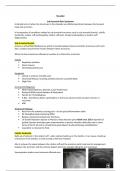
Build-up of calcium in the rotator cuff - when calcium builds up in the tendon, it can cause a build-up
of pressure in the tendon, as well causing a chemical irritation.
Also it reduces the space between the rotator cuff and the acromion which can lead to impingement
between the acromion and the calcium deposit when for example lifting the arm overhead.
Supraspinatus tendon most common effected area
, Causes
▪ The exact cause is unknown
▪ It is more common in people between the ages of 30-60 years of age.
▪ It does eventually disappear spontaneously, but this can take between 5 to 10 years to
resolve.
▪ There are theories that calcific tendonitis occurs because of a cell mediated process where
calcium deposits occur followed by spontaneous reportion but this process can be disrupted
resulting in the symptoms. However, research is now showing that biological and genetic
factors underlie calcific tendonitis hence why certain therapies can give partially satisfactory
outcomes (Sansone et al. 2018).
Symptoms
▪ Night pain
▪ Constant dull ache
▪ Pain increases considerably with AROM
▪ Decrease in ROM/stiffness
▪ Radiating pain up into the suboccipital region or down into the fingers
Assessment/Diagnosis
▪ Reduced ROM
▪ Painful Arc 70-120degree
▪ X-Rays
▪ Ultrasound – better to find small deposits which can be missed on x-rays. Ultrasound also
makes it possible to assess the size of the deposit in all directions.
Treatment Pathway:
▪ Rest from the activities causing pain
▪ RC Strengthening & Improving ROM
▪ CSI - reduces inflammation and control the pain
▪ US Guided Barbotage – The calcific deposit is injected with a saltwater solution and the
calcium is also sucked out into a syringe.
▪ Extracorporeal Shockwave Therapy – Evidence shows no major safety concerns in the short
term. Evidence on efficacy is inadequate. Therefore, this procedure should only be used in
the context of research (NICE, 2022)
▪ Surgery (Arthroscopic Subacromial Decompression) - If the above has failed. This surgery
aims to increase the amount of space between the acromion and the rotator cuff tendons,
which will then allow for easier movement and less pain and inflammation. The calcium
deposit is also debrided and released at the same time.
Rotator Cuff Tendinopathy
Pain and weakness as a consequence of excessive load on the rotator cuff muscles
Rotator Cuff Tendinopathy incidence also increases with age.
Causes
▪ Increase rate in individuals who take part in repetitive overhead activities and jobs such as
painting or carpentry etc.
▪ Direct Load Bearing
Sub Acromial Pain Syndrome
Umbrella term of when the structures in the shoulder are affected particular between the humeral
head and acromion.
It incorporates all conditions related to sub acromial structures such as sub acromial bursitis, calcific
tendonitis, rotator cuff tendinopathy, rotator cuff tears, biceps tendinopathy, or tendon cuff
degeneration.
Sub Acromial Bursitis
A Bursa is a fluid filled flattered sac which is located between bones and other structures and it acts
like a cushion and prevents friction between these structures.
When the bursa becomes inflamed or swollen it is referred to as bursitis
Causes
▪ Repetitive activities
▪ Direct trauma
▪ Overload/overpressure
Symptoms
▪ Lateral or anterior shoulder pain
▪ Overhead lifting or reaching activities become uncomfortable
▪ Night Pain
Assessment/Diagnosis
▪ Observation (Redness, Warmth, Local Tenderness)
▪ Reduced ROM (Lateral Rotation & Abduction)
▪ Painful Arc 70-120degrees
▪ X-Ray - Sometimes detect calcifications in the bursa when bursitis has been chronic or
recurrent.
▪ MRI
Treatment Pathway:
▪ Rest from the activities causing pain – let the pain/inflammation settle
▪ RC Strengthening & Improving ROM
▪ Reduce overpressure/load over the Bursa
▪ US Guided Injection adjunct to Physio to help decrease pain (Hsieh et al. 2013 reported US
guided injection technique gave improvements in passive shoulder abduction and in some
items of the SF-36 and is considered a good adjunct to physiotherapy rehabilitation)
▪ Aspiration to remove the fluid.
Calcific Tendonitis
Build-up of calcium in the rotator cuff - when calcium builds up in the tendon, it can cause a build-up
of pressure in the tendon, as well causing a chemical irritation.
Also it reduces the space between the rotator cuff and the acromion which can lead to impingement
between the acromion and the calcium deposit when for example lifting the arm overhead.
Supraspinatus tendon most common effected area
, Causes
▪ The exact cause is unknown
▪ It is more common in people between the ages of 30-60 years of age.
▪ It does eventually disappear spontaneously, but this can take between 5 to 10 years to
resolve.
▪ There are theories that calcific tendonitis occurs because of a cell mediated process where
calcium deposits occur followed by spontaneous reportion but this process can be disrupted
resulting in the symptoms. However, research is now showing that biological and genetic
factors underlie calcific tendonitis hence why certain therapies can give partially satisfactory
outcomes (Sansone et al. 2018).
Symptoms
▪ Night pain
▪ Constant dull ache
▪ Pain increases considerably with AROM
▪ Decrease in ROM/stiffness
▪ Radiating pain up into the suboccipital region or down into the fingers
Assessment/Diagnosis
▪ Reduced ROM
▪ Painful Arc 70-120degree
▪ X-Rays
▪ Ultrasound – better to find small deposits which can be missed on x-rays. Ultrasound also
makes it possible to assess the size of the deposit in all directions.
Treatment Pathway:
▪ Rest from the activities causing pain
▪ RC Strengthening & Improving ROM
▪ CSI - reduces inflammation and control the pain
▪ US Guided Barbotage – The calcific deposit is injected with a saltwater solution and the
calcium is also sucked out into a syringe.
▪ Extracorporeal Shockwave Therapy – Evidence shows no major safety concerns in the short
term. Evidence on efficacy is inadequate. Therefore, this procedure should only be used in
the context of research (NICE, 2022)
▪ Surgery (Arthroscopic Subacromial Decompression) - If the above has failed. This surgery
aims to increase the amount of space between the acromion and the rotator cuff tendons,
which will then allow for easier movement and less pain and inflammation. The calcium
deposit is also debrided and released at the same time.
Rotator Cuff Tendinopathy
Pain and weakness as a consequence of excessive load on the rotator cuff muscles
Rotator Cuff Tendinopathy incidence also increases with age.
Causes
▪ Increase rate in individuals who take part in repetitive overhead activities and jobs such as
painting or carpentry etc.
▪ Direct Load Bearing

