Endocrinology
Endocrinology 1
Endocrine System
Endocrine system along with parasympathetic and sympathetic nervous systems- main
regulators for homeostasis
Manipulating endocrine system (or intracellular signalling pathways- it regulates)- one of
main routes of pharmacological intervention
❖ Signalling molecule released into blood (or lymph) to be carried to its target(s) often
far removed
❖ Active at very low concentration
Endocrine hormones- released by glands/ specialised cells into circulating blood and influence function of target
cells at another location in body
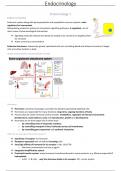
RENIN-ANGIOTENSIN- ASLDOSTERONE SYSTEM
Hormones
❖ Hormones- chemical messengers secreted into blood by specialised epithelial cells
❖ Hormones are responsible for many functions- long-term, ongoing functions of body
❖ Process that are under hormonal control include- metabolism, regulation of internal environment
(temperature, water balance, ions) and reproduction, growth and development
❖ Hormones act on their target cells in three ways:
o by controlling rates of enzymatic reactions
o by controlling transport of ions/ molecules across cell membranes
o by controlling gene expression and synthesis of proteins
What do we want from hormonal system?
❖ Specificity of receptor- for hormone
❖ Receptors expressed only on defined (reacting) cells
❖ Very high affinity of hormone for its receptor – Kds- 1X10-12M
o Hormone concentrations as low as pg/ml
❖ Integrated amplification system
❖ Protected transfer system- many hormones transferred bound to carrier proteins- e.g. Albumin especially if
hydrophobic
o H-CPr H +Cpr - only free hormone binds to its receptor- CPr- carrier protein
,Overall effectiveness depends on:
❖ Concentration of free hormone
❖ Number of receptors present on cell
❖ Affinity of hormone for receptor
❖ Efficiency of amplification
❖ Stopping signalling
Three main hormone families:
❖ Amine-derived hormones- from Tyrosine and Tryptophan
o e.g. Catecholamines
▪ Made in advance- stored in vesicles – released via Exocytosis
▪ Transport in blood- dissolving in blood
▪ Location of receptor- Cell membrane
• Activation of second messenger systems
• Target response- modification of existing proteins
o e.g. Thyroid hormones
▪ Made in advance; precursor stored in secretory vesicle – released via Transport protein
▪ Transport in blood- Bound to carrier proteins
▪ Location of receptor- Nucleus
• Activation of genes for transcription and translation
• Target response- Induction of new protein synthesis
▪ Formed by action of enzymes in cytoplasmic compartments of glandular cells
▪ Synthesised and stored in thyroid gland
❖ Peptide hormones
o Made in advance – stored in secretory vesicles and released via exocytosis
o Transport in blood- by dissolving in plasma
o Location of receptor- Cell membrane
▪ Activates second messenger system and may activate genes
▪ Target response- modification of existing proteins and induction of new protein synthesis
o Synthesised on Rough end of ER of endocrine cells – larger proteins but NOT BIOLOGICALLY
ACTIVE- and are cleaved to form smaller in ER
▪ Transferred to Golgi Apparatus- for packaging into secretory vesicles – enzymes in vesicles
cleave – produce smaller – biologically active hormones and inactive fragments
▪ Vesicles are stored in cytoplasm and many bound to cell membrane until secretion is
needed
• secretion of hormones occurs when secretory vesicles fuse with cell membrane –
release into interstitial fluid/ directly into blood stream by EXOCYTOSIS
o Peptide hormones are SOLUBLE – allow them to enter circulatory system easily- carried to their
target tissues
o Small peptide hormones- TRH and ADH/ vasopressin
o Protein hormones- insulin and growth hormone
o Glycoprotein hormones- Luteinising Hormone, Thyroid-stimulating hormone
❖ Lipid and phospholipid hormone:
o Eicosanoids- prostaglandins, prostacyclines, thromboxanes or leuktreins
o Steriod hormones derived from cholesterol- testosterone, cortisol and Calcitriol (Vit D) is sterol
derived hormone
▪ Synthesised on demand from precursors and released by Simple diffusion
▪ Transport in blood- by bound to carrier proteins
▪ Location of receptor- cytoplasm/ nucleus- some membrane have receptors also
• Activation of genes for transcription and translation
• Target response- induction of new protein synthesis
, ▪ Steroids are highly Lipid Soluble- once they synthesised – simply diffuse across cell
membrane and enter interstitial fluid and then to blood
Tissue becomes target for hormone- by expressing specific receptor to it
Hormones circulate in blood stream but only cells with receptors for it are targets for action
Hormone-Receptor interaction- defined by Kd
(dissociation constant)
- Most hormone-receptor reactions are 1:1
reactions
[𝑯][𝑹]
If it’s 1:1- -Stronger interaction- more in HR
[𝑯𝑹]
state, smaller ratio of free to bound
Interaction of receptor and hormone is REVERSIBLE and ease of separation Kd is Measure of its affinity
Hormone-receptor interactions- very specific and Kd ranges form 10-9 to 10-12 Molar- high affinity
Maximal Biological response- achieved at concentrations of hormone far lower than required to occupy all
receptors on cell (Bmax) or even 50% (Kd)- due to amplification
❖ Insulin maximum effect in adipocytes with 2-3% of receptors bound
❖ LH maximum effect in Leydig cells (Testosterone production) with 1% of receptors bound
Amplification of signal occurs within cell
Concentration of hormone needed for maximal response indicates sensitivity of system
Secondary Messengers
Limiting step is Hormone Binding- as amplification steps are very efficient- driven by second messengers/
phosphorylation cascade
Second Messengers include:
❖ Adenylate cyclase/ cyclic AMP
o causes subsequent intracellular effects of hormone
o Only direct effect that hormone has on cell- activate single type of membrane receptor
o Stimulation of Adenylate cyclase, membrane bound enzyme, by Gs protein catalyses conversion of
small amount of cytoplasmic ATP to cAMP inside cell
▪ Activates cAMP- dependent protein kinase- phosphorylates specific cell proteins
o Activates cascades of enzymes
❖ Guanylate cyclase/ cyclic GMP
❖ Calcium and Calmodulin
o Operates in response to entry of Calcium into cells – initiated by:
▪ Changes in membrane potential that open Ca2+ channels
▪ Hormone interacting with membrane receptors than pen Ca2+ channels
o On entering cell- Calcium binds with protein calmodulin – has 4 sites (3/4 sites bind with Ca2+ ions-
calmodulin changes its shape and initiates multiple effects inside cell)
o Activation of Calmodulin-dependent protein kinases causes activation and inhibition of proteins in
cell’s response to hormone
❖ Phospholipase C catalysing phosphoinositide turnover
o Catalyses breakdown of some phospholipids in cell membrane
o Phospholipase C enzyme catalyses breakdown of some phospholipids in cell membrane, PIP2
(phosphatidylinositol biphosphate) into 2 different second messenger products- DAG and IP3
▪ DAG (Diacylglycerol)- activates enzyme protein kinase C- phosphorylates large number of
proteins- leading to cell’s response
▪ IP3 (Inositol triphosphate)- mobilises Ca2+ ions from mitochondria to endoplasmic reticulum
Ca2+ have their own secondary messenger effects- smooth muscle concentration and
changes in cell secretion
, ❖ Phosphorylation cascades
❖ NO
Concentration of hormone seen by target cells is determined by Three Factors:
❖ Rate of release:
o Synthesis and Secretion of hormones are most highly regulated aspect of endocrine control
o Controlled by positive and negative feedback loops
▪ Negative feedback loops- ensure proper level of hormone activity at target tissue
• prevent over-secretion of hormone or over-activity at target tissue
▪ Positive feedback loops- causes additional secretion of hormone
❖ Rate of delivery:
o Blood flow from endocrine organs to target organ/ group of target cells
▪ High blood flow delivers more hormone than low
❖ Rate of degradation and elimination
o Hormones- have characteristic rate of decay (metabolised and excreted)
o Shutting of secretion of hormone with short life- causes circulating hormone concentrations to drop
rapidly
But if hormone’s biological half-life is long- effective concentrations persist after secretion ceases
o Hormones are ‘cleared’ from plasma in:
o Hormones effect is longer lasting than merely hormone receptor interaction time
Carrier proteins- act to protect them from degradation but prevent being in active form, also specific degrading
enzymes for some hormones
How can we measure levels of Hormones
❖ Radio-Immune Assay- revolutionised measurement
of hormones, their precursors, and their metabolic
end products
o Sensitivities to 10-14 M
❖ ELISA (Enzyme Linked Immunosorbent Assay)- used
to measure almost any protein including hormones
o Doesn’t employ radioactive isotopes
o Much of assay can be automated using 96-well
plates
o proved to be cost-effective and accurate method
for assessing hormone levels
o Sensitivities to 10-12 M
Where are receptors for hormones sitting on cell?
❖ Hydrophilic hormones- water soluble hormones (peptides and catecholamines)
- dissolved in plasma
- transported from their sites of synthesis to target cells – diffuse out of capillaries
into interstitial fluid and ultimately to target cells
Must have secondary messengers
o Cell Surface transmembrane receptors
o Ion channel linked receptors
o Enzyme receptors
o Tyrosine kinases
o G protein- linked receptors
❖ Hydrophobic hormones- circulate in blood mainly bound to plasma proteins
- Protein- bound hormones- can’t diffuse across capillaries and gain access to target cells – Biologically
inactive until they dissociate from plasma proteins
Don’t need secondary messengers
Endocrinology 1
Endocrine System
Endocrine system along with parasympathetic and sympathetic nervous systems- main
regulators for homeostasis
Manipulating endocrine system (or intracellular signalling pathways- it regulates)- one of
main routes of pharmacological intervention
❖ Signalling molecule released into blood (or lymph) to be carried to its target(s) often
far removed
❖ Active at very low concentration
Endocrine hormones- released by glands/ specialised cells into circulating blood and influence function of target
cells at another location in body
RENIN-ANGIOTENSIN- ASLDOSTERONE SYSTEM
Hormones
❖ Hormones- chemical messengers secreted into blood by specialised epithelial cells
❖ Hormones are responsible for many functions- long-term, ongoing functions of body
❖ Process that are under hormonal control include- metabolism, regulation of internal environment
(temperature, water balance, ions) and reproduction, growth and development
❖ Hormones act on their target cells in three ways:
o by controlling rates of enzymatic reactions
o by controlling transport of ions/ molecules across cell membranes
o by controlling gene expression and synthesis of proteins
What do we want from hormonal system?
❖ Specificity of receptor- for hormone
❖ Receptors expressed only on defined (reacting) cells
❖ Very high affinity of hormone for its receptor – Kds- 1X10-12M
o Hormone concentrations as low as pg/ml
❖ Integrated amplification system
❖ Protected transfer system- many hormones transferred bound to carrier proteins- e.g. Albumin especially if
hydrophobic
o H-CPr H +Cpr - only free hormone binds to its receptor- CPr- carrier protein
,Overall effectiveness depends on:
❖ Concentration of free hormone
❖ Number of receptors present on cell
❖ Affinity of hormone for receptor
❖ Efficiency of amplification
❖ Stopping signalling
Three main hormone families:
❖ Amine-derived hormones- from Tyrosine and Tryptophan
o e.g. Catecholamines
▪ Made in advance- stored in vesicles – released via Exocytosis
▪ Transport in blood- dissolving in blood
▪ Location of receptor- Cell membrane
• Activation of second messenger systems
• Target response- modification of existing proteins
o e.g. Thyroid hormones
▪ Made in advance; precursor stored in secretory vesicle – released via Transport protein
▪ Transport in blood- Bound to carrier proteins
▪ Location of receptor- Nucleus
• Activation of genes for transcription and translation
• Target response- Induction of new protein synthesis
▪ Formed by action of enzymes in cytoplasmic compartments of glandular cells
▪ Synthesised and stored in thyroid gland
❖ Peptide hormones
o Made in advance – stored in secretory vesicles and released via exocytosis
o Transport in blood- by dissolving in plasma
o Location of receptor- Cell membrane
▪ Activates second messenger system and may activate genes
▪ Target response- modification of existing proteins and induction of new protein synthesis
o Synthesised on Rough end of ER of endocrine cells – larger proteins but NOT BIOLOGICALLY
ACTIVE- and are cleaved to form smaller in ER
▪ Transferred to Golgi Apparatus- for packaging into secretory vesicles – enzymes in vesicles
cleave – produce smaller – biologically active hormones and inactive fragments
▪ Vesicles are stored in cytoplasm and many bound to cell membrane until secretion is
needed
• secretion of hormones occurs when secretory vesicles fuse with cell membrane –
release into interstitial fluid/ directly into blood stream by EXOCYTOSIS
o Peptide hormones are SOLUBLE – allow them to enter circulatory system easily- carried to their
target tissues
o Small peptide hormones- TRH and ADH/ vasopressin
o Protein hormones- insulin and growth hormone
o Glycoprotein hormones- Luteinising Hormone, Thyroid-stimulating hormone
❖ Lipid and phospholipid hormone:
o Eicosanoids- prostaglandins, prostacyclines, thromboxanes or leuktreins
o Steriod hormones derived from cholesterol- testosterone, cortisol and Calcitriol (Vit D) is sterol
derived hormone
▪ Synthesised on demand from precursors and released by Simple diffusion
▪ Transport in blood- by bound to carrier proteins
▪ Location of receptor- cytoplasm/ nucleus- some membrane have receptors also
• Activation of genes for transcription and translation
• Target response- induction of new protein synthesis
, ▪ Steroids are highly Lipid Soluble- once they synthesised – simply diffuse across cell
membrane and enter interstitial fluid and then to blood
Tissue becomes target for hormone- by expressing specific receptor to it
Hormones circulate in blood stream but only cells with receptors for it are targets for action
Hormone-Receptor interaction- defined by Kd
(dissociation constant)
- Most hormone-receptor reactions are 1:1
reactions
[𝑯][𝑹]
If it’s 1:1- -Stronger interaction- more in HR
[𝑯𝑹]
state, smaller ratio of free to bound
Interaction of receptor and hormone is REVERSIBLE and ease of separation Kd is Measure of its affinity
Hormone-receptor interactions- very specific and Kd ranges form 10-9 to 10-12 Molar- high affinity
Maximal Biological response- achieved at concentrations of hormone far lower than required to occupy all
receptors on cell (Bmax) or even 50% (Kd)- due to amplification
❖ Insulin maximum effect in adipocytes with 2-3% of receptors bound
❖ LH maximum effect in Leydig cells (Testosterone production) with 1% of receptors bound
Amplification of signal occurs within cell
Concentration of hormone needed for maximal response indicates sensitivity of system
Secondary Messengers
Limiting step is Hormone Binding- as amplification steps are very efficient- driven by second messengers/
phosphorylation cascade
Second Messengers include:
❖ Adenylate cyclase/ cyclic AMP
o causes subsequent intracellular effects of hormone
o Only direct effect that hormone has on cell- activate single type of membrane receptor
o Stimulation of Adenylate cyclase, membrane bound enzyme, by Gs protein catalyses conversion of
small amount of cytoplasmic ATP to cAMP inside cell
▪ Activates cAMP- dependent protein kinase- phosphorylates specific cell proteins
o Activates cascades of enzymes
❖ Guanylate cyclase/ cyclic GMP
❖ Calcium and Calmodulin
o Operates in response to entry of Calcium into cells – initiated by:
▪ Changes in membrane potential that open Ca2+ channels
▪ Hormone interacting with membrane receptors than pen Ca2+ channels
o On entering cell- Calcium binds with protein calmodulin – has 4 sites (3/4 sites bind with Ca2+ ions-
calmodulin changes its shape and initiates multiple effects inside cell)
o Activation of Calmodulin-dependent protein kinases causes activation and inhibition of proteins in
cell’s response to hormone
❖ Phospholipase C catalysing phosphoinositide turnover
o Catalyses breakdown of some phospholipids in cell membrane
o Phospholipase C enzyme catalyses breakdown of some phospholipids in cell membrane, PIP2
(phosphatidylinositol biphosphate) into 2 different second messenger products- DAG and IP3
▪ DAG (Diacylglycerol)- activates enzyme protein kinase C- phosphorylates large number of
proteins- leading to cell’s response
▪ IP3 (Inositol triphosphate)- mobilises Ca2+ ions from mitochondria to endoplasmic reticulum
Ca2+ have their own secondary messenger effects- smooth muscle concentration and
changes in cell secretion
, ❖ Phosphorylation cascades
❖ NO
Concentration of hormone seen by target cells is determined by Three Factors:
❖ Rate of release:
o Synthesis and Secretion of hormones are most highly regulated aspect of endocrine control
o Controlled by positive and negative feedback loops
▪ Negative feedback loops- ensure proper level of hormone activity at target tissue
• prevent over-secretion of hormone or over-activity at target tissue
▪ Positive feedback loops- causes additional secretion of hormone
❖ Rate of delivery:
o Blood flow from endocrine organs to target organ/ group of target cells
▪ High blood flow delivers more hormone than low
❖ Rate of degradation and elimination
o Hormones- have characteristic rate of decay (metabolised and excreted)
o Shutting of secretion of hormone with short life- causes circulating hormone concentrations to drop
rapidly
But if hormone’s biological half-life is long- effective concentrations persist after secretion ceases
o Hormones are ‘cleared’ from plasma in:
o Hormones effect is longer lasting than merely hormone receptor interaction time
Carrier proteins- act to protect them from degradation but prevent being in active form, also specific degrading
enzymes for some hormones
How can we measure levels of Hormones
❖ Radio-Immune Assay- revolutionised measurement
of hormones, their precursors, and their metabolic
end products
o Sensitivities to 10-14 M
❖ ELISA (Enzyme Linked Immunosorbent Assay)- used
to measure almost any protein including hormones
o Doesn’t employ radioactive isotopes
o Much of assay can be automated using 96-well
plates
o proved to be cost-effective and accurate method
for assessing hormone levels
o Sensitivities to 10-12 M
Where are receptors for hormones sitting on cell?
❖ Hydrophilic hormones- water soluble hormones (peptides and catecholamines)
- dissolved in plasma
- transported from their sites of synthesis to target cells – diffuse out of capillaries
into interstitial fluid and ultimately to target cells
Must have secondary messengers
o Cell Surface transmembrane receptors
o Ion channel linked receptors
o Enzyme receptors
o Tyrosine kinases
o G protein- linked receptors
❖ Hydrophobic hormones- circulate in blood mainly bound to plasma proteins
- Protein- bound hormones- can’t diffuse across capillaries and gain access to target cells – Biologically
inactive until they dissociate from plasma proteins
Don’t need secondary messengers