MARKETING AND BRANDING:
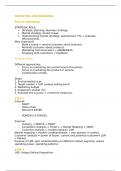
Role of marketing:
STRATEGIC ROLE:
Strategic planning: Business strategy.
Market strategy: brand image.
Implementing market strategy: operational (7 Ps + evaluate
effectiveness).
Why important?
- Build a brand = remind customer about business.
- Reminds customer about products.
- Marketing communication = AWARENESS.
- Engaging with customers = feedback.
FORMULATING:
Different approaches:
- Focus on marketing the overall brand of business.
- Focus on marketing the product or service.
- Combination of both.
Steps:
1. Environmental scan
2. Target market + USP (unique selling point)
3. Marketing budget
4. Implement market mix
5. Evaluate the success + corrective measures.
STEP 1
Internal:
- SWOT
- Value-chain
- Resource BASED
- PORTER’S 6 FORCES
External:
- Industry = PESTLE + SWOT
- Competitor Analysis = Porter’s + Market Mapping + SWOT.
- Customer analysis = market research LSM.
Market mapping = market condition/trends + own position in market.
Customer analysis = power of buyer, current and potential customers LSM
= Market.
Purpose of LSM: gain understanding on different market segment, assess
spending power, spending patterns.
STEP 2
USP: Unique Selling Proposition:
, - Price
- Brand identity
- Utilisation / incorporation
- Quality.
STEP 3
Marketing budget:
- Money spent on marketing = investment – long term benefits.
- Determined by methods of marketing communication.
- Rule of thumb: spend about 10% of gross profits related to sales.
STEP 4
Marketing strategy:
o 7 Ps.
o Advertising
o Selling
o Sales promotion
o Public Relations
o Direct marketing/internet marketing
o Packaging
1. Product policy:
Delivering a product = consumer wants + able to buy product.
The product = add value to the consumers’ life.
Products not always tangible = services e.g., insurance, banking.
Ongoing consumer development.
Keeping up to date with changes = technology, trends.
Packaging is linked to the product.
- Types of products:
Convenience goods: intensively distributed = high quantity at
variety of places.
Selected goods: selectively distributed = medium to high quantity at
selected stores.
Speciality goods: exclusively distributed = medium to low quantity
at specialised stores.
- Product packaging:
Easier to stack.
Identify the manufacturer.
Gives consumer valuable information: CPA.
Target different segments of the target market.
2. Price policy:
Products and services are only worth what potential customers are
willing to pay for them (price sensitivity).
The price charged can also be a competitive advantage.
Price provides the business with profit.
Price positions the business in the market place.
Current/loyal customer are less price sensitive.
New/potential customers need to see the value in price.
Role of marketing:
STRATEGIC ROLE:
Strategic planning: Business strategy.
Market strategy: brand image.
Implementing market strategy: operational (7 Ps + evaluate
effectiveness).
Why important?
- Build a brand = remind customer about business.
- Reminds customer about products.
- Marketing communication = AWARENESS.
- Engaging with customers = feedback.
FORMULATING:
Different approaches:
- Focus on marketing the overall brand of business.
- Focus on marketing the product or service.
- Combination of both.
Steps:
1. Environmental scan
2. Target market + USP (unique selling point)
3. Marketing budget
4. Implement market mix
5. Evaluate the success + corrective measures.
STEP 1
Internal:
- SWOT
- Value-chain
- Resource BASED
- PORTER’S 6 FORCES
External:
- Industry = PESTLE + SWOT
- Competitor Analysis = Porter’s + Market Mapping + SWOT.
- Customer analysis = market research LSM.
Market mapping = market condition/trends + own position in market.
Customer analysis = power of buyer, current and potential customers LSM
= Market.
Purpose of LSM: gain understanding on different market segment, assess
spending power, spending patterns.
STEP 2
USP: Unique Selling Proposition:
, - Price
- Brand identity
- Utilisation / incorporation
- Quality.
STEP 3
Marketing budget:
- Money spent on marketing = investment – long term benefits.
- Determined by methods of marketing communication.
- Rule of thumb: spend about 10% of gross profits related to sales.
STEP 4
Marketing strategy:
o 7 Ps.
o Advertising
o Selling
o Sales promotion
o Public Relations
o Direct marketing/internet marketing
o Packaging
1. Product policy:
Delivering a product = consumer wants + able to buy product.
The product = add value to the consumers’ life.
Products not always tangible = services e.g., insurance, banking.
Ongoing consumer development.
Keeping up to date with changes = technology, trends.
Packaging is linked to the product.
- Types of products:
Convenience goods: intensively distributed = high quantity at
variety of places.
Selected goods: selectively distributed = medium to high quantity at
selected stores.
Speciality goods: exclusively distributed = medium to low quantity
at specialised stores.
- Product packaging:
Easier to stack.
Identify the manufacturer.
Gives consumer valuable information: CPA.
Target different segments of the target market.
2. Price policy:
Products and services are only worth what potential customers are
willing to pay for them (price sensitivity).
The price charged can also be a competitive advantage.
Price provides the business with profit.
Price positions the business in the market place.
Current/loyal customer are less price sensitive.
New/potential customers need to see the value in price.