Oliver Dyson
(21) Recombinant DNA technologies
Producing DNA fragments:
DNA and gene technologies have benefitted society in a wide range of ways
-> from medical to industrial applications
Many diseases can be treated and detected using this – for example mass production of
insulin for diabetes treatment
When DNA of two different organisms is combined, as is seen very often here (usually
insertion of eukaryotic into prokaryotic), this is called recombinant DNA
The resulting organisms is known as a transgenic or genetically modified organism (GMO)
This is made possible by the genetic code being universal
-> which means there is no issue for incorporation / function (in most cases)
Making a protein using DNA technology:
This occurs in 5 main stages
-> which are:
1. Isolation of the DNA fragments that have the gene for the desired protein
2. Insertion of the DNA fragment into a vector
3. Transformation – transfer of DNA into suitable host cells
4. Identification – finding which host cells have taken up the gene using gene markers
5. Growth / cloning – increasing the population of the host cells
This can be done in a few different ways
-> finding and isolating gene is first:
Conversion of mRNA to cDNA using reverse transcriptase
Using restriction endonucleases to cut fragments containing the desired gene from
DNA
Creating the gene in a gene machine – usually basing it off of a known protein
structure
Using reverse transcriptase:
This is an enzyme which is found in many retroviruses such as HIV
-> and is what is used to convert their RNA into DNA in a host cell
A cell that readily produced the protein is selected (e.g. β-cells of islets of
Langerhans in the pancreas, for insulin production)
These contain large amounts of the corresponding mRNA – easily extracted
Reverse transcriptase is used to make DNA from RNA
This DNA is called cDNA – because it is made up of nucleotides that are
complementary to the mRNA
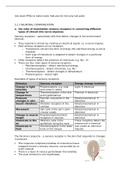
To make up the other strand of DNA – DNA polymerase is used to build up the
complementary nucleotides on the cDNA template, forming a double helix / strand Figure 1 – reproduced
from [1]
, Oliver Dyson
Using restriction endonucleases:
All organisms have defensive mechanisms against pathogens
-> bacteria are frequently infected by viruses
A defence against this is by producing enzymes that can cut up the viral DNA
These are called restriction endonucleases
There are many types of this enzyme
-> each one cutting different sequences of bases apart
These sections / sequences are called recognition sequences
Cuts can sometimes occur between two opposite base pairs
This leaves two straight edges known as blunt ends
For example, one endonuclease cuts in the middle of the base recognition sequence GTTAC (as in
diagram)
Others cut DNA in a staggered fashion – leaving an uneven cut in which each strand of the
DNA has exposed bases
E.g. the endonuclease for AAGCTT
The unpaired bases formed from this are a palindrome
-> and the recognition sequence is known as a six bp palindromic sequence
This is used to cut DNA, leaving ‘sticky ends’
Figure 2 – reproduced from [1]
(21) Recombinant DNA technologies
Producing DNA fragments:
DNA and gene technologies have benefitted society in a wide range of ways
-> from medical to industrial applications
Many diseases can be treated and detected using this – for example mass production of
insulin for diabetes treatment
When DNA of two different organisms is combined, as is seen very often here (usually
insertion of eukaryotic into prokaryotic), this is called recombinant DNA
The resulting organisms is known as a transgenic or genetically modified organism (GMO)
This is made possible by the genetic code being universal
-> which means there is no issue for incorporation / function (in most cases)
Making a protein using DNA technology:
This occurs in 5 main stages
-> which are:
1. Isolation of the DNA fragments that have the gene for the desired protein
2. Insertion of the DNA fragment into a vector
3. Transformation – transfer of DNA into suitable host cells
4. Identification – finding which host cells have taken up the gene using gene markers
5. Growth / cloning – increasing the population of the host cells
This can be done in a few different ways
-> finding and isolating gene is first:
Conversion of mRNA to cDNA using reverse transcriptase
Using restriction endonucleases to cut fragments containing the desired gene from
DNA
Creating the gene in a gene machine – usually basing it off of a known protein
structure
Using reverse transcriptase:
This is an enzyme which is found in many retroviruses such as HIV
-> and is what is used to convert their RNA into DNA in a host cell
A cell that readily produced the protein is selected (e.g. β-cells of islets of
Langerhans in the pancreas, for insulin production)
These contain large amounts of the corresponding mRNA – easily extracted
Reverse transcriptase is used to make DNA from RNA
This DNA is called cDNA – because it is made up of nucleotides that are
complementary to the mRNA
To make up the other strand of DNA – DNA polymerase is used to build up the
complementary nucleotides on the cDNA template, forming a double helix / strand Figure 1 – reproduced
from [1]
, Oliver Dyson
Using restriction endonucleases:
All organisms have defensive mechanisms against pathogens
-> bacteria are frequently infected by viruses
A defence against this is by producing enzymes that can cut up the viral DNA
These are called restriction endonucleases
There are many types of this enzyme
-> each one cutting different sequences of bases apart
These sections / sequences are called recognition sequences
Cuts can sometimes occur between two opposite base pairs
This leaves two straight edges known as blunt ends
For example, one endonuclease cuts in the middle of the base recognition sequence GTTAC (as in
diagram)
Others cut DNA in a staggered fashion – leaving an uneven cut in which each strand of the
DNA has exposed bases
E.g. the endonuclease for AAGCTT
The unpaired bases formed from this are a palindrome
-> and the recognition sequence is known as a six bp palindromic sequence
This is used to cut DNA, leaving ‘sticky ends’
Figure 2 – reproduced from [1]