Part 2: Homeostasis
LO:
• Define and describe homeostasis.
Principles of physiological control:
Homeostasis is the principle of maintaining ‘dynamic constancy’ of the internal environment.
Coined by Walter Cannon
Essential for normal functioning of cells
Different homeostatic mechanisms control different physiological parameters.
It is maintaining a stable
They need a constant
condition internally
environment to function
regardless of what is
normally to produce the
happening externally.
outputs.
Homeostasis:
The endocrine system (hormones) and nervous system (electrical impulses) regulate homeostasis.
– Hormones = “to excite”
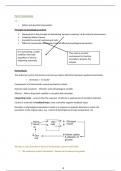
Components of a homeostatic control mechanism include:
Detector (aka receptors) – Monitors some physiological variable.
Effector – Able to bring back variable to set point after deviation.
Integrating center – ensures that the response of effector is appropriate to deviation detected
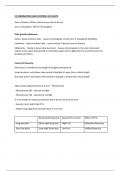
Control is achieved via feedback loops, most commonly negative feedback loops.
Deviation in physiological parameters results in a response in opposite direction to return the
parameter to the original value, e.g., control of blood [glucose], body temperature, etc.
Blood cells Glucagon
Gluco cells Insulin
se
Gluc Cellular uptake
ose & utilization of
glucose
We have 2 main branches in terms of homeostasis control in the body:
1. The endocrine system (hormones) - Release of hormones from glands
LO:
• Define and describe homeostasis.
Principles of physiological control:
Homeostasis is the principle of maintaining ‘dynamic constancy’ of the internal environment.
Coined by Walter Cannon
Essential for normal functioning of cells
Different homeostatic mechanisms control different physiological parameters.
It is maintaining a stable
They need a constant
condition internally
environment to function
regardless of what is
normally to produce the
happening externally.
outputs.
Homeostasis:
The endocrine system (hormones) and nervous system (electrical impulses) regulate homeostasis.
– Hormones = “to excite”
Components of a homeostatic control mechanism include:
Detector (aka receptors) – Monitors some physiological variable.
Effector – Able to bring back variable to set point after deviation.
Integrating center – ensures that the response of effector is appropriate to deviation detected
Control is achieved via feedback loops, most commonly negative feedback loops.
Deviation in physiological parameters results in a response in opposite direction to return the
parameter to the original value, e.g., control of blood [glucose], body temperature, etc.
Blood cells Glucagon
Gluco cells Insulin
se
Gluc Cellular uptake
ose & utilization of
glucose
We have 2 main branches in terms of homeostasis control in the body:
1. The endocrine system (hormones) - Release of hormones from glands