NUR 219 Exam #2 Study Guide 2023/24
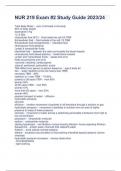
NUR 219 Exam #2 Study Guide 2023/24 Total Body Water - sum of all fluids in the body 60% of body weight expressed in Kg 1L=2.2lbs intracellular fluid (IFC) - fluid inside the cell 2/3 TBW Extracellular fluid - fluid outside of the cell 1/3 TBW Extracellular fluid comaprtments - interstitial fluid intravascular fluid (plasma) Lymph & transcellular fluids interstitial fluid - between the cells and outside the blood vessels intravascular fluid (blood plasma) - inside blood vessels Lymph and Transcellular fluids - sweat and urine fluids around joints and urine -synovial, intestinal, cerebrospinal -pleural, peritoneal, pericardial, ocular TBS differs form person to person based on - age & body fat fat= - water repelling (more fat means less TBW) neonates TBW - 90% newborn to 1 year TBW - 70-80% puberty to 39 years TBW - men 60% women 52% 40-60 years TBW - men 55% women 47% more than 60 years - men 52% women 46% passive transport of water - diffusion hydrostatic pressure osmosis diffusion - random movement of particles in all directions through a solution or gas hydrostatic pressure - movement of particles in solution form an area of higher pressure to areas of lower pressure osmosis - movement of water across a selectively permeable membrane from high to low concentration potassium - intracellular molecule sodium - extracelular molecule starling hypothesis - net filtration= forces favoring filtration- forces opposing filtration Aquaporins - protein water channels that reabsorb water Sodium - extra cellular osmotic balance edema - excessive accumulation of fluid wishing interstitial spaces (plasma volume overload) hydrostatic pressure increases - venous obstruction - thrombophlebitis - tight clothing - prolonged sitting/standing Na and H2O retention - congestive Heart failure - renal failure increases blood volume osmolality - concentration of body fluids and electrolytes Antidiuretic Hormone (ADH) - secreted when: - plasma osmolality increases - Circulating Blood volume decreases it make you not pee generalized edema - just everywhere all over acute edema - around an injury, so when your finger swells after you hurt it aldosterone - increases Na and H2O retention Isotonic depletion - too little fluid isotonic excess - too much fluid Hypotonic contraction deficit - osmolality of ECF 294 mOsm not caused by dietary sodium fever, profuse sweating Hypotonic Contraction Excess - osmolality ECF 280 mOsm cells swell renal failure, congestive heart failure objective of fluid therapy - electrolyte replacement maintenance of fluid balance isotonic fluid therapy - same osmolality as normal body fluids expands the extracellular fluid volume 0.9% normal saline (NS) lastend ringers solution 5% dextrose in water hypotonic fluid therapy - expands and hydrated the cells decreases the amount of fluid in the circulatory system lowers sodium levels 0.45% NaCl (1/2 normal saline) hypertonic fluid replacement therapy - draws fluid out of the cells and into the blood helps restore circulating volume normal potassium levels - ECF 3.5-5.0 mEq/L ICF 150-160 potassium promotes - normal cardiac rhythms muscle contraction glycogen and glucose storage in the liver and skeletal muscles kidney (function) - filter blood excrete wastes maintain pH balance distal convoluted tubule determines - how much Potassium is excreted form the body kidney (hormones) - ADH Insulin aldosterone
Información del documento
- Subido en
- 4 de octubre de 2023
- Número de páginas
- 6
- Escrito en
- 2023/2024
- Tipo
- Examen
- Contiene
- Preguntas y respuestas