Trends in stem cell biology
Epigenetics and pluripotency in mouse embryonic stem cells
Stem cells
- Biological cells that can differentiate into other types of cells
- Can divide to produce more of the same type of stem cells (self-renewal)
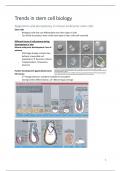
Different forms of cell potency during
development in vivo
Mouse embryonic development: loss of
potency
- ICM stage already contains two
defined, irreversible cell
populations → becomes embryo
- Trophectoderm → becomes
placenta
Further development (gastrulation) and
full mouse
- 2nd lineage decision: ectoderm-endoderm-mesoderm
- During further differentiation, all ~200 cell types emerge
1
,Different types of cell potency during development can be mimicked in the culture dish
- Totipotency → trophoblast and inner
cell mass
- Embryonic stem cells
o Pluripotency → capable of
differentiation into all three
germ layers (ecto-, endo-,
mesoderm)
- Adult stem cells
o Multipotency → progenitor cells
(hematopoietic stem cells)
o Oligopotency → e.g. myeloid
stem cell (not lymphoid lineage)
o Unipotency → differentiate in
one cell only
Waddington’s landscape
- Canalization of development → not genetic! → epigenetic factors
Conclusion: cells loose potency during in vivo development
Different pluripotent cells in vitro (mouse)
Origin of 3 types of pluripotent mouse cells
Different types of in vitro pluripotent cells
- Five different types of pluripotent cells
o Embryonic stem cells (ESCs)
o Epiblast stem cells (EpiSCs; primed ES cells)
o Embryonal carcinoma cells (ECs; from teratocarcinoma in mouse testis from
primordial germ cells)
o Embryonic germ cells (EGCs)
o Induced pluripotent stem cells (iPSCs)
- Pluripotency is transient in the embryo → ES cells are a culture phenomenon → in normal
situation this will progress
2
,Test for pluripotency for newly derived cell lines
- Mouse
o Multilineage differentiation in vitro/in vivo
(germline colonization)
o Extensive proliferation in vitro under well-
defined culture conditions
o Known marker genes/proteins (Oct4,
Nanog, Sox2, SSEA, etc.)
- In practice absolute proof
o Contribute to all somatic
lineages/produce germ line
(chimerism) → single cell
can generate a mouse (get
rid of the other cells)
o Teratomas → inject single cell under the skin of the mouse → teratoma with all
layers if it is pluripotent/teratocarcinoma
- Human
o Multilineage differentiation in vitro (not vivo!) (germline colonization)
o Normal, stable karyotype
o Extensive proliferation in vitro under well-defined culture conditions
o Known marker genes/proteins (Oct4, Nanog, Sox2, SSEA, etc.)
- In practice absolute proof
o NOT: contribute to all somatic lineages/produce germ line (chimerism)
o Teratomas with differentiated cells of all three germ layers (could be performed in
mice; part of ethical discussion)
Conclusion: ES cells, like some other in vitro cultured cells, are pluripotent
Application of ES cells
Why are ES cells so interesting?
- Pluripotent, self-renewal
- ES cells are the only ones that will form the complete body
- Model for embryonic development
o Regenerative medicine (grow in large quantities+differentiate)
o Generation of KO mouse
o Disease model (because differentiate into desired specialization)
o Cytotoxicity tests (especially during pregnancy for fetus)
- Ethical concern: can we use human ESCs? Are human embryonic stem cells human beings
with full moral status?
3
, Use of (human) ESCs for regenerative medicine
(Embryonal) stem cell therapies
- Replace lost cells, might be useful in
o Stroke (heart attack) → loss of muscle cells
o Duchenne muscular dystrophy → muscle degeneration (eventual death)
o Parkinson’s disease → loss of dopamine-generating cells in the substantia nigra, a
region of the midbrain
o Alzheimer
- Dangers
o Graft rejection (but not when it’s from the patient itself; blood cord)
o Graft-versus-host → injected cells start attacking host cells
o Teratocarcinoma
Conclusion: ES cells are very useful for regenerative medicine and to study embryonic development
Molecular mechanisms to maintain pluripotency
Embryonic stem cells
- Pluripotent, (clonal) self-renewal
o Pluripotency is transient in the embryo
o ES cells are a culture phenomenon
o ES cells are primed to differentiate due to autocrine FGF4
- Different ways to inhibit differentiation in vitro
o Feeders + serum
o Lif + serum
o 2i (+Lif)
Regulatory pluripotency network in ES cells
- The pluripotency network acts to
o Self-induce its own expression, and of other pluripotency genes, by binding in the
promoter
o Repress genes that induce differentiation
4
Epigenetics and pluripotency in mouse embryonic stem cells
Stem cells
- Biological cells that can differentiate into other types of cells
- Can divide to produce more of the same type of stem cells (self-renewal)
Different forms of cell potency during
development in vivo
Mouse embryonic development: loss of
potency
- ICM stage already contains two
defined, irreversible cell
populations → becomes embryo
- Trophectoderm → becomes
placenta
Further development (gastrulation) and
full mouse
- 2nd lineage decision: ectoderm-endoderm-mesoderm
- During further differentiation, all ~200 cell types emerge
1
,Different types of cell potency during development can be mimicked in the culture dish
- Totipotency → trophoblast and inner
cell mass
- Embryonic stem cells
o Pluripotency → capable of
differentiation into all three
germ layers (ecto-, endo-,
mesoderm)
- Adult stem cells
o Multipotency → progenitor cells
(hematopoietic stem cells)
o Oligopotency → e.g. myeloid
stem cell (not lymphoid lineage)
o Unipotency → differentiate in
one cell only
Waddington’s landscape
- Canalization of development → not genetic! → epigenetic factors
Conclusion: cells loose potency during in vivo development
Different pluripotent cells in vitro (mouse)
Origin of 3 types of pluripotent mouse cells
Different types of in vitro pluripotent cells
- Five different types of pluripotent cells
o Embryonic stem cells (ESCs)
o Epiblast stem cells (EpiSCs; primed ES cells)
o Embryonal carcinoma cells (ECs; from teratocarcinoma in mouse testis from
primordial germ cells)
o Embryonic germ cells (EGCs)
o Induced pluripotent stem cells (iPSCs)
- Pluripotency is transient in the embryo → ES cells are a culture phenomenon → in normal
situation this will progress
2
,Test for pluripotency for newly derived cell lines
- Mouse
o Multilineage differentiation in vitro/in vivo
(germline colonization)
o Extensive proliferation in vitro under well-
defined culture conditions
o Known marker genes/proteins (Oct4,
Nanog, Sox2, SSEA, etc.)
- In practice absolute proof
o Contribute to all somatic
lineages/produce germ line
(chimerism) → single cell
can generate a mouse (get
rid of the other cells)
o Teratomas → inject single cell under the skin of the mouse → teratoma with all
layers if it is pluripotent/teratocarcinoma
- Human
o Multilineage differentiation in vitro (not vivo!) (germline colonization)
o Normal, stable karyotype
o Extensive proliferation in vitro under well-defined culture conditions
o Known marker genes/proteins (Oct4, Nanog, Sox2, SSEA, etc.)
- In practice absolute proof
o NOT: contribute to all somatic lineages/produce germ line (chimerism)
o Teratomas with differentiated cells of all three germ layers (could be performed in
mice; part of ethical discussion)
Conclusion: ES cells, like some other in vitro cultured cells, are pluripotent
Application of ES cells
Why are ES cells so interesting?
- Pluripotent, self-renewal
- ES cells are the only ones that will form the complete body
- Model for embryonic development
o Regenerative medicine (grow in large quantities+differentiate)
o Generation of KO mouse
o Disease model (because differentiate into desired specialization)
o Cytotoxicity tests (especially during pregnancy for fetus)
- Ethical concern: can we use human ESCs? Are human embryonic stem cells human beings
with full moral status?
3
, Use of (human) ESCs for regenerative medicine
(Embryonal) stem cell therapies
- Replace lost cells, might be useful in
o Stroke (heart attack) → loss of muscle cells
o Duchenne muscular dystrophy → muscle degeneration (eventual death)
o Parkinson’s disease → loss of dopamine-generating cells in the substantia nigra, a
region of the midbrain
o Alzheimer
- Dangers
o Graft rejection (but not when it’s from the patient itself; blood cord)
o Graft-versus-host → injected cells start attacking host cells
o Teratocarcinoma
Conclusion: ES cells are very useful for regenerative medicine and to study embryonic development
Molecular mechanisms to maintain pluripotency
Embryonic stem cells
- Pluripotent, (clonal) self-renewal
o Pluripotency is transient in the embryo
o ES cells are a culture phenomenon
o ES cells are primed to differentiate due to autocrine FGF4
- Different ways to inhibit differentiation in vitro
o Feeders + serum
o Lif + serum
o 2i (+Lif)
Regulatory pluripotency network in ES cells
- The pluripotency network acts to
o Self-induce its own expression, and of other pluripotency genes, by binding in the
promoter
o Repress genes that induce differentiation
4