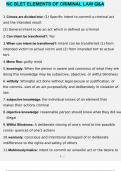
NC BLET ELEMENTS OF CRIMINAL LAW Q&A
.Crimes are divided into: (1) Specific intent to commit a criminal act and the intended result
(2) General intent to do an act which is defined as criminal
2.Can intent be transferred?: Yes
3.When can intent be transferred?: Intent can be transferred (1) from intended victim to actual victim and (2) from intended tort to actual tort.
4.Mens Rea: guilty mind
5.knowingly: When the person is aware and conscious of what they are doing this knowledge may be subjective, objective, or willful blindness
6.willfully: Wrongful act done without legal excuse or justification, or the commis- sion of an act purposefully and deliberately in violation of law.
7.subjective knowledge: the individual knows of an element that makes their actions criminal
8.objective knowledge: reasonable person should know what they did was
illegal
9.Willful Blindness: A deliberate closing of one's mind to the possible
conse- quences of one's actions
10.wantonly: conscious and intentional disregard of or deliberate indifference to the rights and safety of others
11.Maliciously/malice: intent to commit an unlawful act or the desire to NC BLET ELEMENTS OF CRIMINAL LAW Q&A
inflict pain or injury to another
12.Malice is often used in cases involving?: Homicide
13.In NC there are three recognized meanings of malice they are:: 1. Done with hatred or spite
2.Inherently dangerous to human life
3.Done intentionally without justification
14.Criminal Negligence is also know as?: Culpable negligence
15.Criminal Negligence: recklessness/carelessness that shows a thoughtless dis- regard on consequences or a heedless indifference to the safety and rights of others.
16.Strict Liability: liability without fault
17.in NC a misdemeanor statute is how long?: 2 years
18.in NC how long is a felony statute?: There is no statute for a felony
19.Bars to prosecution: Prevent the state from prosecuting a person not based on evidence or facts but based on constitutional and statutory protections.
20.Bars to prosecution include:: Double jeopardy lack of jurisdiction
expiration of a statute of limitation
21.Principals: Main person committing the crime NC BLET ELEMENTS OF CRIMINAL LAW Q&A
.aiding and abetting: someone helping another person commit a crime "advises, instigates, encourages, procures or helps the other person commit the crime"
23.Accessory before the fact to a felony:: BEFORE a felony is committed by another person he/she counsels, procures, commands or knowingly aids the person to commit the felony
24.North Carolina General Statutes: Divided according to the subject matter in to a series of numbered chapters
25.Chapter 7A
Hint: Alan, Magistrate: Judicial department
26.ch 7B
Hint: 7 year old boy: Juvenile code
27.Ch 14: Criminal law
28.Ch 15 & 15A: Criminal Procedure (Law enforcement)
29.Ch 18 B
Hint: 21 to drink 18 to vote: Regulation of Alcoholic Beverages
30.Ch 20
Hint: speed limit is normally 55 but around corners is may be 20: Motor vehicle laws
31.Ch 50B: Domestic Violence
32.Ch 90 Art 5
.Crimes are divided into: (1) Specific intent to commit a criminal act and the intended result
(2) General intent to do an act which is defined as criminal
2.Can intent be transferred?: Yes
3.When can intent be transferred?: Intent can be transferred (1) from intended victim to actual victim and (2) from intended tort to actual tort.
4.Mens Rea: guilty mind
5.knowingly: When the person is aware and conscious of what they are doing this knowledge may be subjective, objective, or willful blindness
6.willfully: Wrongful act done without legal excuse or justification, or the commis- sion of an act purposefully and deliberately in violation of law.
7.subjective knowledge: the individual knows of an element that makes their actions criminal
8.objective knowledge: reasonable person should know what they did was
illegal
9.Willful Blindness: A deliberate closing of one's mind to the possible
conse- quences of one's actions
10.wantonly: conscious and intentional disregard of or deliberate indifference to the rights and safety of others
11.Maliciously/malice: intent to commit an unlawful act or the desire to NC BLET ELEMENTS OF CRIMINAL LAW Q&A
inflict pain or injury to another
12.Malice is often used in cases involving?: Homicide
13.In NC there are three recognized meanings of malice they are:: 1. Done with hatred or spite
2.Inherently dangerous to human life
3.Done intentionally without justification
14.Criminal Negligence is also know as?: Culpable negligence
15.Criminal Negligence: recklessness/carelessness that shows a thoughtless dis- regard on consequences or a heedless indifference to the safety and rights of others.
16.Strict Liability: liability without fault
17.in NC a misdemeanor statute is how long?: 2 years
18.in NC how long is a felony statute?: There is no statute for a felony
19.Bars to prosecution: Prevent the state from prosecuting a person not based on evidence or facts but based on constitutional and statutory protections.
20.Bars to prosecution include:: Double jeopardy lack of jurisdiction
expiration of a statute of limitation
21.Principals: Main person committing the crime NC BLET ELEMENTS OF CRIMINAL LAW Q&A
.aiding and abetting: someone helping another person commit a crime "advises, instigates, encourages, procures or helps the other person commit the crime"
23.Accessory before the fact to a felony:: BEFORE a felony is committed by another person he/she counsels, procures, commands or knowingly aids the person to commit the felony
24.North Carolina General Statutes: Divided according to the subject matter in to a series of numbered chapters
25.Chapter 7A
Hint: Alan, Magistrate: Judicial department
26.ch 7B
Hint: 7 year old boy: Juvenile code
27.Ch 14: Criminal law
28.Ch 15 & 15A: Criminal Procedure (Law enforcement)
29.Ch 18 B
Hint: 21 to drink 18 to vote: Regulation of Alcoholic Beverages
30.Ch 20
Hint: speed limit is normally 55 but around corners is may be 20: Motor vehicle laws
31.Ch 50B: Domestic Violence
32.Ch 90 Art 5