PEDIATRIC CCRN: Pulmonary
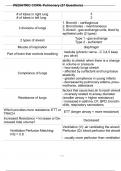
# of lobes in right lung # of lobes in left lung 3 divisions of lungs 2 types of alveoli Muscle of inspiration Part of brain that controls breathing Compliance of lungs Resistance of lungs Which provides more resistance: ETT or TRACH Increased Resistance = Increase or De- creased tidal volume? Ventilation Perfusion Matching: V/Q = 0.8 3 2 1. Bronchi - cartilaginous 2. Bronchioles - membraneous 3. Alveoli - gas exchange units, lined by epithelial cells (2 types) Type 1 - gas exchange Type 2 - surfactant diaphragm medulla (phrenic nerve - C 3,4,5 keep you alive) ability to stretch when there is a change in volume or pressure - how easily lungs stretch - affected by surfactant and lung tissue elasticity - greater compliance in young infants - decreased by pulmonary edema, pneu- mothorax, atelectasis factors that cause less air to reach alveoli - inversely related to airway diameter (smaller airway = higher resistance) - increased in asthma, CF, BPD, bronchi- olitis, respiratory secreations ETT (longer airway = more resistance) Decreased Ventilation (V): air ventilating the alveoli Perfusion (Q): blood perfusion the alveoli - usually more perfusion than ventilation PEDIATRIC CCRN: Pulmonary (27 Questions) 2 / 26 Low V/Q vs. High V/Q Pulmonary Vascular Resistance What increases pulmonary vascular re- sistance? Different in Kids Lungs: Low: decerase in ventilation compared to perfusion - hypoxia - pulmonary edema (O2 doesn't help) High: decrease in perfusion relative to ventilation - shock resistance that must be overcome to push blood through the vasculature of the lungs - RIGHT VENTRICLE pushes blood through PULMONARY ARTERY - decreased area - CF - ASD - AVC flooding lungs - polycythemia - thick blood - Smaller alveoli - more likely to collapse - Lung volume increases 4 times in 1st year of life - Chest shape: infant - cylindrical shape; AP transverse diameter until 3 years of age - Upper airway: elongated epiglottis - high in pharynx (obligatory nose bleed- ers until 6 months); pharynx is mus- culomembraneous tube; larynx - funnel shaped (connects pharynx and trachea, thyroid cartilage, vocal cords, epiglottis, cricoid cartilage); trachea - membrane- ous rigid thin walled tube - Chest wall becomes less compliant as child ages: retractions d/t intercostal muscles not strong enough to stabilize chest against stronger diaphragm con
Información del documento
- Subido en
- 6 de septiembre de 2023
- Número de páginas
- 26
- Escrito en
- 2023/2024
- Tipo
- Examen
- Contiene
- Preguntas y respuestas