Prometric CNA FL Study Exam With Complete Solution 2023
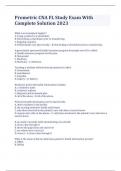
Prometric CNA FL Study Exam With Complete Solution 2023 What is an example of neglect? A. Tying a patient to a wheelchair. B. Not locking a wheelchair prior to transferring. C. Slapping a patient. D. Following the care plan exactly. - B. Not locking a wheelchair prior to transferring. A government sponsored health insurance program for people over 65 is called: A. Health insurance program for the poor. B. Metoprolol C. Medicare. D. Medicaid. - C. Medicare. Touching a resident without their permission is called: A. harassment. B. punishment. C. empathy. D. battery. - D. Battery. Resident's protected health information includes: A. a resident's name B. resident's address C. diagnosis and treatment plan D. all of the above - D. all of the above. Protected health information can be shared with: A. other residents in the facility B. the nursing assistant's family and friends C. only those involved in the patient's care who have a need to know D. anyone who calls on the phone - C. only those involved in the patient's care who have a need to know If you make a mistake while documenting, you should: A. draw a line through it B. throw the page away and start over C. use white out to correct it D. erase it - A. draw a line through it What is the name of the law that keeps patient's health information private? A. OBRA B. HIPAA C. OSHA D. NAFTA - B. HIPAA A person assigned by law to be a legal advocate for a patient is called: A. ombudsman B. occupational therapist C. nurse D. CNA - A. ombudsman Which of the following is not in a CNA's scope of practice? A. bathing a patient B. inserting a catheter C. observing an IV site for redness D. documenting vital signs - B. inserting a catheter What does the term "chronic" mean? A. a condition expected to last a long time B. a condition that happened suddenly C. a type of restraint D. a hospital for psychiatric patients - A. a condition expected to last a long time Define: Domestic Violence - D. Abuse by spouses, intimate partners or family members. Define: Hospice Care - G. Care provided for people with a terminal illness. Define: Acute Care - C. Medically necessary care performed in a hospital. Define: Long Term Care - F. Continuous care for chronic illnesses. Define: Scope Of Practice - I. Defines what you are allowed to do and how to do it safely. Define: Liability - J. A legal term regarding responsibility for harm Define: Resident's Rights - B. Specifies how residents must be treated when living in a long-term care facility Define: Neglect - H. Failure to provide necessary care for a patient Define: Ombusman - E. A legal advocate for the resident assigned by law Define: HIPAA - A. A law designed to keep health information private CHAPTER 2 - Which of the following would you NOT report immediately to your nurse? A. chest pain B. loss of consciousness C. normal vital signs D. high fever - C. Normal vital signs When should unsafe conditions be reported? A. After an accident has occurred B. before an accident can occur C. when you find time D. when someone complains - B. Before an accident occurs Standard Precautions are rules for: A. Infection control B. accident prevention C. communication D. recognizing abuse - A. Infection control Bloodborne diseases are transmitted by: A. hugs and cuddling B. sweat C. blood and body fluids D. talking, laughing or singing - C. blood and body fluids During seizures, you should: A. time the seizure B. protect the patient C. notify the nurse D. all of the above - D. all of the above When controlling, you should: A. apply direct pressure with clean gauze B. apply a band- aid immediately C. call 911 D. restrain the patient - A. apply direct pressure with clean gauze In the event of a fire, what is your FIRST action? A. Extinguish the fire B. call for help C. remove the residents from the area D. portal of entry - C. remove the residents from the area The single most important thing a CNA can do to prevent the spread of disease is: A. forbidding visitors B. handwashing C. antibiotic therapy D: sterilizing sheets - B. Handwashing MRSA is: A. a staph infection resistant to powerful antibiotics B. a very minor disease C. a problem in Europe D. a form of cancer - A. a staph infection resistant to powerful antibiotics Define: Objective information - G. Observations based on what you see, hear, touch or smell Define: Disorientation - D. Confusion about person, place or time Define: Incontinence - I. The inability to control the bladder or bowels Define: Culture - A. A system of behaviors people learn from the people they live with Define: Insulin Reaction - B. Results from too much insulin or too little food (hypoglemcemia) Define: CVA - J. Cerebrovascular accident - the medical term for a stroke Define: Seizures - C. Involuntary, often violent, contractions of the muscles Define: Gloves - F. A type of personal protective equipment (PPE) worn on the hands Define: Airbrone Precautions - E. Used for diseases that can be transmitted through the air Define: Hepatitis - H. An inflammation of the liver caused by viral infection CHAPTER 3 - A loss of independence can cause: A. depression B. isolation or anger C. poor self-image D. all of the above - D. all of the above Which of the following is a psychosocial need? A. food B. shelter C. acceptance D. oxygen - B. shelter Your patient has a different religion than you, you should: A. Allow the patient to discuss their beliefs B. tell them why your religion is better C. refuse to discuss religion D. have your pastor visit them - A. all the patient to discuss their beliefs Culture may include all of the following EXPECT: A. language B. food choices C. ombudsman D. religion - C. ombudsman Which of the following is NOT a normal sign of aging? A. hormone levels decrease B. weakened immune system C. incontinence D. thinner, drier skin - D. thinner, drier skin Which of the following is NOT an example of advanced directives? A. Resident's rights B. living will C. do not resuscitate (DNR) D. durable power of attorney for health care - A. Resident's rights What is the goal for Hospice patients? A. Regain function B. promote comfort and dignity C. reducing independence D. planning elaborate funerals - B. promote comfort and dignity What is NOT involved in postmortem care? A. bathing the body B. close the patient's eyes C. notify the family of death D. position body on back with arms crossed - C. notify the family of death Which of the following is NOT one the stages of grieving: A. depression B. changes in religion C. anger D. bargaining - B. changes in religion To promote dignity and respect, you should: A. open a resident's personal mail B. do everything for the patient C. knock before entering the patient's room D. listen in on personal conversations - C. knock before entering the patient's room Define: postmortem care - E. Care performed on a decreased body Define: Palliative Care - A. Care of terminally ill patient centered on comfort
Información del documento
- Subido en
- 1 de septiembre de 2023
- Número de páginas
- 21
- Escrito en
- 2023/2024
- Tipo
- Examen
- Contiene
- Preguntas y respuestas