ENG2603/Assignment 03/2023
PREVIEW
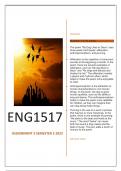
1. In Welcome to our
Hillbrow, Mpe also uses
AIDS in South Africa to
examine human rights.
Discuss how the theme of
disease is depicted in the
text . Ensure that you
support your argument by
using examples from the
primary text. (20
marks)
In "Welcome to Our Hillbrow,"
Phaswane Mpe uses the
theme of AIDS to not only
explore the devastating
impact of the disease on
individuals and communities
but also to delve into the
broader issues of human
rights, social stigma, and the
ENG2603
challenges faced by
postcolonial South Africa.
The novel depicts the AIDS
epidemic as a lens through
which various characters'
lives are affected, revealing
the complex interplay
ASSIGNMENT 3 SEMESTER 2 2023 between disease, societal
norms, and human rights.
NATALIE FOXX
, Due date: 05 September 2023
Unique Number: 608440
Compulsory: Yes
Assignment : Welcome to our Hillbrow by Phaswane Mpe
Instructions:
Before you attempt this assignment, you must make sure that you have engaged the prescribed
book: Welcome to our Hillbrow by Phaswane Mpe. It is your responsibility to access the
prescribed book.
Question 1
1. To what extent would you agree with the view that Welcome to Our Hillbrow questions the
habits of cultural stereotyping of other Africans in postcolonial South Africa. In your answer,
focus on the depiction of female characters, and foreigners as presented in the text. (20
marks)
"Welcome to Our Hillbrow" by Phaswane Mpe is a thought-provoking novel that delves into
the complexities of postcolonial South Africa, addressing issues of cultural identity,
stereotypes, and the experiences of various characters, especially female characters and
foreigners. The book challenges and questions the cultural stereotyping of other Africans,
presenting a nuanced portrayal of these themes.
In the novel, Mpe explores the lives of characters living in Hillbrow, a diverse and vibrant
neighborhood in Johannesburg. Through the depiction of female characters, the author
challenges cultural stereotypes by offering multifaceted portrayals that go beyond
conventional norms. For instance, the character Refentše is an ambitious young woman who
defies traditional gender roles by pursuing her education and career aspirations. Her story
challenges the stereotype that African women are solely confined to domestic roles.
1
PREVIEW
1. In Welcome to our
Hillbrow, Mpe also uses
AIDS in South Africa to
examine human rights.
Discuss how the theme of
disease is depicted in the
text . Ensure that you
support your argument by
using examples from the
primary text. (20
marks)
In "Welcome to Our Hillbrow,"
Phaswane Mpe uses the
theme of AIDS to not only
explore the devastating
impact of the disease on
individuals and communities
but also to delve into the
broader issues of human
rights, social stigma, and the
ENG2603
challenges faced by
postcolonial South Africa.
The novel depicts the AIDS
epidemic as a lens through
which various characters'
lives are affected, revealing
the complex interplay
ASSIGNMENT 3 SEMESTER 2 2023 between disease, societal
norms, and human rights.
NATALIE FOXX
, Due date: 05 September 2023
Unique Number: 608440
Compulsory: Yes
Assignment : Welcome to our Hillbrow by Phaswane Mpe
Instructions:
Before you attempt this assignment, you must make sure that you have engaged the prescribed
book: Welcome to our Hillbrow by Phaswane Mpe. It is your responsibility to access the
prescribed book.
Question 1
1. To what extent would you agree with the view that Welcome to Our Hillbrow questions the
habits of cultural stereotyping of other Africans in postcolonial South Africa. In your answer,
focus on the depiction of female characters, and foreigners as presented in the text. (20
marks)
"Welcome to Our Hillbrow" by Phaswane Mpe is a thought-provoking novel that delves into
the complexities of postcolonial South Africa, addressing issues of cultural identity,
stereotypes, and the experiences of various characters, especially female characters and
foreigners. The book challenges and questions the cultural stereotyping of other Africans,
presenting a nuanced portrayal of these themes.
In the novel, Mpe explores the lives of characters living in Hillbrow, a diverse and vibrant
neighborhood in Johannesburg. Through the depiction of female characters, the author
challenges cultural stereotypes by offering multifaceted portrayals that go beyond
conventional norms. For instance, the character Refentše is an ambitious young woman who
defies traditional gender roles by pursuing her education and career aspirations. Her story
challenges the stereotype that African women are solely confined to domestic roles.
1