NUR 425 - Complex Care Exam 1 Review.
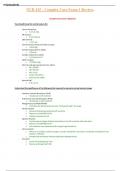
NUR 425 - Complex Care Exam 1 Review.Complex Care Exam 1 Blueprint You should know the normal valuesfor: • Serum Potassium: o 3.5-5.0 mEq • PR interval: o 0.12-0.20 sec • QRS interval: o 0.12 sec • Central Venous Pressure (CVP) in adults o 2-8mmHg • Cardiac Output (CO) in adults o 4-8L/min • Cardiac Index (CI) in adults o 2.2-4L/min/m^2 • MAP in adults o 70-105mmHg • Normal vital signs parametersfor adults o BP: 120/80 o HR: 60-100 o RR: 12-20 o Temp: 97.8-99.1F, o Pulse Ox: 95-100% • Normal INR o 0.8-1.2 sec Understand the significance of the following Not required to memorize actual normal ranges • Systemic Vascular Resistance (SVR) o Resistance to left ventricle • Pulmonary Vascular Resistance (PVR) o Resistance to right ventricle • Wedge Pressure (PAOP/PAWP) o Estimatesthe left atrial pressure by “looking through” the lungs • Stroke Volume o Amount of blood ejected from left ventricle o Measure of CONTRACTILITY o Volume measured in mL • Ejection fraction o Fraction (percentage) of blood ejected from the left ventricle with each beat o Measure of CONTRACTILITY o Left ventricle mustsqueeze hard enough to get blood out • Serum Lactate o When pt is unable to perfuse oxygen, aerobic metabolism converts to anaerobic metabolism and lactate isreleased. o Elevated serum lactate indicatessignificant hypoperfusion • PTT/aPTT o Partial Thromboplastin Time o May be prolonged with DIC onlystudents NUR 425 - Complex Care Exam 1 Review. o Measuresintegrity of the intrinsic system • D-Dimer o Detects protein that resultsfrom clot breakdown o Indicated that fibrin has been formed and degraded (fibrinolysis) o Often markedly elevated with DIC o Unlikely DIC if this test is normal • Fibrinogen o Clotting factor that typically is low with DIC • The concept of a therapeutic PTT and INR o PTT: o INR: While taking Warfarin, it istypically expected thatINR (standardized measurement of PT) is prolonged. ▪ 2-3 seconds You DO NOT need to memorize the coagulation cascade (eg. which factors activate which factors), just a general understanding of its purpose and what happens if there are more or less clotting factors, if it is slowed down/sped up, and what triggers the coagulation cascade. The following medications could be tested on this exam. You should know the medication’s indications,side effects, and nursing considerations when administering these: • Warfarin (Coumadin) - Anticoagulant o Interferes with synthesis of clotting factorsthat use Vitamin K to be synthesized o Will not affect factors already floating around, will prevent future factorsfrom being made o Indications: ▪ Venous Thrombosis ▪ Pulmonary Embolism ▪ A-fib ▪ Myocardial Infarction o Nursing Considerations: ▪ Can cause bleeding ▪ Aspirin and NSAIDs increase risk of bleeding ▪ Therap
Información del documento
- Subido en
- 18 de agosto de 2023
- Número de páginas
- 21
- Escrito en
- 2023/2024
- Tipo
- Examen
- Contiene
- Preguntas y respuestas