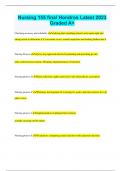
Nursing 155 final Hondros Latest 2023 Graded A+
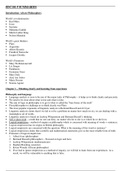
Nursing 155 final Hondros Latest 2023 Graded A+ Checking accuracy and reliability realizing that something doesn't seem quite right and taking action to determine if it is accurate or not, sounds suspicious and looking further into it Nursing Process step by step approach directed at planning and providing pt care. Data collection(assessment), Planning, Implementation, Evaluation Nursing process D Data collection- gather and review info about the pt, assessment Nursing process P Planning- development of a nursing dx, goals, and interventions for a pt plan of care. Nursing process I implementation of planned interventions actually carrying out the orders Nursing process E Evaluation- comparing actual outcomes with expected outcomes Tanner's Model of Clinical Judgement A model based on how a nurse thinks, it explains the 4 steps in the critical thinking process that nurses use to solve any problem: Noticing Interpereting Responding Reflecting Step 1 Noticing -Identifying signs and symptoms -gathering complete and accurate data -assessing systematically and comprehensivly -predicting and (managing) potential complications -identifying assumptions Identifying signs and symptoms Indicates when a situation is normal, abnormal, or has changed, something is different than expected Gathering complete and accurate data Data collected from all available sources is used as the basis for identifying issues, problems, concerns. Must verify that data is complete and accurate Assessing systematically and comprehensively A method of assessing information or data so nothing is omitted or forgotten. Focused, head to toe, body systems Predicting (and managing) potential complications Look at the big picture to prepare for potential future complications for an individual pt, you are predicting complications which means you are identifying possible problems. What will put our pt at risk nize that all pt have risk for atelectasis after surgery Identifying assumptions Recognize information taken for granted, hastily arriving at a conclusion without supporting evidence, a misconception. EVIDENCE ex. all thin people are healthy Step 2- Interpreting -clustering related information -recognizing inconsistencies -checking accuracy and reliability -Distinguishing relevant from irrelevant -determining the importance of information -comparing and contrasting -(predicting) and managing potential complications -judging how much ambiguity is acceptable -using legal, ethical and professional HERE WE- PLANNING, PRIORITIZE, DESICIONS WHAT ARE YOU GOING DO WITH THE DATA YOU RECIEVE, MAKE SENCE OF THE DATA* Clustering related information Grouping together information with a common theme. A method of organizing data so that you put .things together in order to understand the situation, what is alike ex. headache-clustering orther related sx-sleepy, hit head, dizziness Recognizing inconsistencies does the objective data match the subjective data ex. pt says they aren't in pain but face is telling you diff. they are grimacing, clinching fists, tearful, holding their side Distinguishing relevant from irrelevant decidingco what information is pertinent or connects to the matter at hand, sort out what info relates to the current problem ex. pt tells cardiologist my back hurts may be important to pt overall care but not the current problem Comparing and contrasting looking at 2 similar cases, identifying the subtle differences, and acting on them ex. pts both have arthritis look at similarities and subtle differences (Predicting) and managing potential complications look at big picture figure our possible complications for and individual pt. must know common complications and consider individual differences. Interpreting- you are planning interventions to help manage or reduce the risk of complications ex. plan interventions to reduce atelectasis and pneumonia- encourage use of incentive spirometer, ambulation schedule. ex. pt fall risk. plan for bed down, toileting assisted, socks with grips Judging how much ambiguity is acceptable - unclear, uncertain, or vague situation. how much wiggle room do you have when applying a rule to a particular situation. look at pt situations and assessment data to determine if assessment measures are acceptable for that particular pt ex. pt flu and temp 100.2, although temp above norm, this temp is ok based on the specific situation Using legal ethical professional guidelines nurses must consider legal ethical and professional guidline when providing care. work in guidelines of the states nurse practice act as well as make judgments that are ethical and professional ex. HIPAA Step 3- Responding -setting priorities -delegating what a nurse does*, hand on Setting priorities comparing and sorting through information, ranking it in order of importance to decide what needs to be done first and what can wait ex. triage, prioritize who is in greater more emergent need at that time. pt needs dressing change, bp checked, give bp med, go to toilet t- maslow basic need s 3. bp med 4. change dressing Delegating asking someone to do part of your job that is not part of their expected job assignment. delegating to a competent UAP make sure willing and able to do the task 5 rights of delegation right task right circumstance ex. no rx for UAP right person ex. competent, experience right direction ex. exact directions right supervision ex check if task done an done correctly 1.Evaluating data (Step 4- Reflecting) after actions and interventions are preformed, assessment data is collected again to determine if the interventions were effective. helps determine what further actions are needed REFLECTION IN ACTION ex. pt 8/10 pain Demerol given at 3;30 IM 25mg, check back 45-1hr, check pain level again and maybe vitals Evaluating and correcting thinking reflecting on what just happened , how the situation was handled,, what lessons can be learned for use in similar situations in the future. how were the results, what could be done better. REFLECTION ON ACTION blue, came back to life, sent to icu, reflection on this what could have been done better, what was done good Brenners stages of clinical competance 1. novice 2. advanced beginner 3. competent 4. proficient 5. the expert Novice beginner no experience in situation, lack confidence to demonstrate safe practice and requires continual verbal and physical cues Advanced beginner demonstrate marginally acceptable performance because nurse has had prior experience in actual situations, efficient and skillfull in parts of the practice with occasional supportive cues,, knowledge developing Competant nurse on the job who has been on the same or similar situations for 2-3 years, demonstrates efficiency and has confidence in her actions Proficient perceives situations as a whole rather than chopped up parts the expert intuitive grasp of each situation , deep understanding of the total picture, fluid and flexible and highly proficient Maslow's Hierarchy of Needs (level 1) Physiological Needs, (level 2) Safety and Security, (level 3) Relationships, Love and Affection, (level 4) Self Esteem, (level 5) Self Actualization physiological needs the most basic human needs to be satisfied- water, food, shelter, and clothing Safety and security security, freedom from harm, and protection love and belonging love, effection and companionship ex, does pt have support for when leave hospital Esteem respect and recognition ex. what the pt is doing or can do that will assist them in earning a positive sense of self Self actualization highest level of needs, not everyone attains this level, maximum realization and fullfillmant SPICES Sleep disorder Problems with eating or feeding Incontinence confusion evidence of falls skin breakdown SPICES-S sleep disorders SPICES-P Problems with eating or feeding SPICES-I Incontinance SPICES-C Confusion SPICES-E Evidence of falls SPICES-S Skin breakdown Epworth sleepiness scale measures average daytime sleep, can lead to falls, declining quality of life , less chance of recovery. Can enable the nurse to intervene or refer to another Epworth sleepiness scale scoring 0-3- never sleepy 3+ always sleepy above 10- above normal daytime sleepiness, need of futher eval Noticing def all about data, assessment Interpreting def make sense of the data, planning Responding def what a nurse does, hands on, implement your plan Reflecting def evaluation, look at a current situation what needs to change or look back at what could have been done better focused assessment ex. pt walks in with chest pain bloody stools body system assessment when the nurse examines one specific body system, clusters the data related to the specific body system to identify issues ex. GI- comes in throwing up, stomach pains. Head- pt complains of headache, dizziness head to toe assessment A complete assessment of the patient, one that includes all systems ex. admissions assessment critical thinking puposful informed, outcome focused thinking, driven by the pt, family, and community-approaches based on circumstance, based on principle of the nursing process and scientific method-judgments based on evidence, use logic and intuition based on knowledge, skills and experience of lpn, guided by professional standards, use individual stregnths, constantly reevaluating, self correcting , and striving to improve Factors that influence critical thinking upbringing and culture, motivation, attidude influences thinking ethics def system of standards or morals that direct actiions as being right or wrong morals def dealing with right or wrong behavior, conduct and character NANDA-I a professional nursing organization that provides standardized language that would provide a common language for nurses to communicate with one another barrier in nursing data insufficient time, cultural differences, poor skills in data collection, communication failure, language barrier, comatose pt, distractions, too sick to speak well, pt bias-label the pt before interview is complete(make assumptions) instead of evidence or fact, respectful distance is nessesary
Escuela, estudio y materia
- Institución
- Nursing 155 Hondros
- Grado
- Nursing 155 Hondros
Información del documento
- Subido en
- 1 de agosto de 2023
- Número de páginas
- 14
- Escrito en
- 2023/2024
- Tipo
- Examen
- Contiene
- Preguntas y respuestas
Temas
-
nursing 155 final hondros latest 2023 graded a

Documento también disponible en un lote