PREVIEW
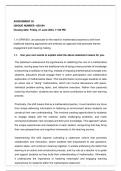
In the context of language of learning and
teaching in South African schools, the
terms "home language level," "mother
tongue or home language," and "first
additional language level" refer to different
language proficiency levels of students.
Here's an outline of the differences
between these levels:Home Language
Level:• The home language level
refers to the language that a student
speaks at home and is most proficient in.•
In South Africa, there are 11 official
languages, including English, Afrikaans,
Zulu, Xhosa, and others. The home
language level would typically refer to one
of these languages.• In terms of
language of learning and teaching,
students at the home language level
receive instruction in their native language,
CHL2601
using it as a medium for learning across
various subjects.
NATALIE FOXX
ASSIGNMENT 9 2023
,In the context of language of learning and teaching in South African schools, the terms "home
language level," "mother tongue or home language," and "first additional language level" refer
to different language proficiency levels of students. Here's an outline of the differences
between these levels:
Home Language Level:
The home language level refers to the language that a student speaks at home and is most
proficient in.
In South Africa, there are 11 official languages, including English, Afrikaans, Zulu, Xhosa, and
others. The home language level would typically refer to one of these languages.
In terms of language of learning and teaching, students at the home language level receive
instruction in their native language, using it as a medium for learning across various subjects.
Mother Tongue or Home Language:
The mother tongue or home language is essentially the same as the home language level. It
refers to the language that a student is most fluent in and speaks at home.
In South African schools, the mother tongue or home language is a significant aspect of
education, as it is considered the most effective medium for teaching foundational knowledge
and developing cognitive skills.
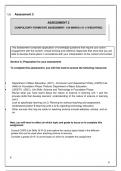
Assessment 9
This assessment measures your achievement of the outcomes of Learning Units 5 and 6.
Question 1 [20]
1.1 Outline the difference between home language level, mother tongue or home language
and first additional language level in relation to its use as a language of
learning and teaching in South African schools. (6)
In the context of language of learning and teaching in South African schools, the terms "home
language level," "mother tongue or home language," and "first additional language level" refer
to different language proficiency levels of students. Here's an outline of the differences
between these levels:
Home Language Level:
The home language level refers to the language that a student speaks at home and is most
proficient in.
In South Africa, there are 11 official languages, including English, Afrikaans, Zulu, Xhosa, and
others. The home language level would typically refer to one of these languages.
In terms of language of learning and teaching, students at the home language level receive
instruction in their native language, using it as a medium for learning across various subjects.
Mother Tongue or Home Language:
1
, The mother tongue or home language is essentially the same as the home language level. It
refers to the language that a student is most fluent in and speaks at home.
In South African schools, the mother tongue or home language is a significant aspect of
education, as it is considered the most effective medium for teaching foundational knowledge
and developing cognitive skills.
Students who study in their mother tongue or home language are more likely to understand
concepts, engage actively, and achieve better academic outcomes.
First Additional Language Level:
The first additional language level refers to a language that a student learns as an additional
language, apart from their home language or mother tongue.
In South Africa, English is commonly taught as the first additional language in schools. Other
languages such as Afrikaans, isiZulu, isiXhosa, or Sepedi may also be offered as additional
language options depending on the school and region.
The first additional language is typically taught as a subject and is not used as the primary
medium of instruction. However, it plays a significant role in developing bilingualism and
communication skills, as well as fostering cultural understanding and national unity.
In summary, the key difference lies in the proficiency level and role of each language in the
educational context. The home language level and mother tongue are synonymous,
representing the primary language of the student, while the first additional language level
refers to an additional language learned alongside the home language for broader language
proficiency. The home language is often the language used as a medium of instruction, while
the first additional language is typically taught as a subject to enhance students' linguistic
abilities.
1.2 How is the additive approach implemented in South African schools to promote
multilingualism? (4)
The additive approach is implemented in South African schools to promote multilingualism by
recognizing and valuing the diverse languages spoken by students. Here are four key ways in
which the additive approach is implemented:
Mother Tongue-Based Education:
South African schools strive to provide mother tongue-based education, particularly at the
foundation phase (early grades).
The curriculum encourages using students' mother tongue or home language as the
language of instruction, allowing them to develop foundational knowledge and cognitive skills
in a familiar language.
2
In the context of language of learning and
teaching in South African schools, the
terms "home language level," "mother
tongue or home language," and "first
additional language level" refer to different
language proficiency levels of students.
Here's an outline of the differences
between these levels:Home Language
Level:• The home language level
refers to the language that a student
speaks at home and is most proficient in.•
In South Africa, there are 11 official
languages, including English, Afrikaans,
Zulu, Xhosa, and others. The home
language level would typically refer to one
of these languages.• In terms of
language of learning and teaching,
students at the home language level
receive instruction in their native language,
CHL2601
using it as a medium for learning across
various subjects.
NATALIE FOXX
ASSIGNMENT 9 2023
,In the context of language of learning and teaching in South African schools, the terms "home
language level," "mother tongue or home language," and "first additional language level" refer
to different language proficiency levels of students. Here's an outline of the differences
between these levels:
Home Language Level:
The home language level refers to the language that a student speaks at home and is most
proficient in.
In South Africa, there are 11 official languages, including English, Afrikaans, Zulu, Xhosa, and
others. The home language level would typically refer to one of these languages.
In terms of language of learning and teaching, students at the home language level receive
instruction in their native language, using it as a medium for learning across various subjects.
Mother Tongue or Home Language:
The mother tongue or home language is essentially the same as the home language level. It
refers to the language that a student is most fluent in and speaks at home.
In South African schools, the mother tongue or home language is a significant aspect of
education, as it is considered the most effective medium for teaching foundational knowledge
and developing cognitive skills.
Assessment 9
This assessment measures your achievement of the outcomes of Learning Units 5 and 6.
Question 1 [20]
1.1 Outline the difference between home language level, mother tongue or home language
and first additional language level in relation to its use as a language of
learning and teaching in South African schools. (6)
In the context of language of learning and teaching in South African schools, the terms "home
language level," "mother tongue or home language," and "first additional language level" refer
to different language proficiency levels of students. Here's an outline of the differences
between these levels:
Home Language Level:
The home language level refers to the language that a student speaks at home and is most
proficient in.
In South Africa, there are 11 official languages, including English, Afrikaans, Zulu, Xhosa, and
others. The home language level would typically refer to one of these languages.
In terms of language of learning and teaching, students at the home language level receive
instruction in their native language, using it as a medium for learning across various subjects.
Mother Tongue or Home Language:
1
, The mother tongue or home language is essentially the same as the home language level. It
refers to the language that a student is most fluent in and speaks at home.
In South African schools, the mother tongue or home language is a significant aspect of
education, as it is considered the most effective medium for teaching foundational knowledge
and developing cognitive skills.
Students who study in their mother tongue or home language are more likely to understand
concepts, engage actively, and achieve better academic outcomes.
First Additional Language Level:
The first additional language level refers to a language that a student learns as an additional
language, apart from their home language or mother tongue.
In South Africa, English is commonly taught as the first additional language in schools. Other
languages such as Afrikaans, isiZulu, isiXhosa, or Sepedi may also be offered as additional
language options depending on the school and region.
The first additional language is typically taught as a subject and is not used as the primary
medium of instruction. However, it plays a significant role in developing bilingualism and
communication skills, as well as fostering cultural understanding and national unity.
In summary, the key difference lies in the proficiency level and role of each language in the
educational context. The home language level and mother tongue are synonymous,
representing the primary language of the student, while the first additional language level
refers to an additional language learned alongside the home language for broader language
proficiency. The home language is often the language used as a medium of instruction, while
the first additional language is typically taught as a subject to enhance students' linguistic
abilities.
1.2 How is the additive approach implemented in South African schools to promote
multilingualism? (4)
The additive approach is implemented in South African schools to promote multilingualism by
recognizing and valuing the diverse languages spoken by students. Here are four key ways in
which the additive approach is implemented:
Mother Tongue-Based Education:
South African schools strive to provide mother tongue-based education, particularly at the
foundation phase (early grades).
The curriculum encourages using students' mother tongue or home language as the
language of instruction, allowing them to develop foundational knowledge and cognitive skills
in a familiar language.
2