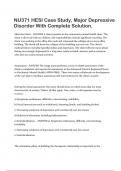
NU371 HESI Case Study, Major Depressive Disorder With Complete Solution.
NU371 HESI Case Study, Major Depressive Disorder With Complete Solution. Meet the Client - ANSWER A client presents to the community mental health clinic. The client is divorced with no children. Job responsibilities include significant traveling. The client was working in the office this week and witnessed the collapse of a 6-story office building. The death toll from the collapse of that building was over 100. The client's medical history includes hypothyroidism and depression. The client tells the nurse about feeling increasingly depressed for a long time, easily irritated, anxious, and as someone who does not enjoy normal activities. Assessment - ANSWER The triage nurse performs a more in-depth assessment of the client's complaints and reports the assessment to the Advanced Practice Registered Nurse in Psychiatric-Mental Health (APRN-PMH). These two nurses collaborate on development of the care plan to facilitate assessment and interventions for the client's anxiety. During the initial assessment, the nurse should focus on which areas that are most characteristic of anxiety? (Select all that apply. One, some, or all responses may be correct.) a) Symptoms restlessness, difficulty concentrating, irritability. b) Social interactions such as withdrawal, shunning family, and drinking alcohol. c) Increasing symptoms of depression with consistently sad, low mood. d) Behavioral alterations including hallucinations. e) Suicidal ideation. - ANSWER a) Symptoms restlessness, difficulty concentrating, irritability. c) Increasing symptoms of depression with consistently sad, low mood. e) Suicidal ideation. The orientation phase of building the therapeutic relationship is important to the establishment in which rapport can grow. Which approach is best for the nurse to use when assessing for subjective information from the client? a) Have the client say what is causing the anxiety. b) Tell the client that it sounds like the anxiety is causing depression. c) Get the client to explain how anxiety affects normal activities. d) Ask the client to give an example of how they feel when they are anxious. - ANSWER d) Ask the client to give an example of how they feel when they are anxious. - This statement of asking for an example can clarify vague statements made by a client with anxiety . The client meets with the nurse. During the group session, the client tells the nurse about an extreme amount of stress at work. The client has filed multiple harassment complaints against the boss. The client states feeling it is necessary to hold self to a higher set of standards than coworkers because their boss uses a stricter set of standards for the client's performance appraisal. - ANSWER - The nurse recognizes that the client is experiencing what level of anxiety? a) Mild b) Moderate c) Severe d) Panic - ANSWER c) Severe - The individual with severe anxiety can only focus on a narrowed area of concern, such as the client only focusing on her employer and coworkers. Planning - ANSWER During the interview, the client identifies intense anxiety, irritability, and feelings of depression with thoughts of suicide as reasons for seeking treatment. The nurse develops a plan of care to assist the client in managing anxiety. Which approach is best for the nurse to use when assessing a client's risk for attempting suicide? a) Tell the client to express which specific stress causes anxiety. b) Find out from client how is their social life at work and at home. c) Have the client explain what causes worse feelings. d) Ask the client about having a plan to harm self. - ANSWER d) Ask the client about having a plan to harm self. - Assessment of suicidal intent and determining if there is an actual, viable plan is the most important component of client assessment and care plan development. The client tells the nurse about sweating all the time and occasional chest pains, plus numbness in arms and hands. - ANSWER - How should the nurse respond to the client's comments? a) Tell the client that these issues are probably due to anxiety. b) Ask the client about the most recent check-up. c) Distract the client from worrying about these symptoms right now. d) Have the client elaborate on experiencing chest pain. - ANSWER d) Have the client elaborate on experiencing chest pain. - It is important for the nurse to understand the client's perception of the problems before making further recommendations.
Escuela, estudio y materia
- Institución
- NU371
- Grado
- NU371
Información del documento
- Subido en
- 25 de julio de 2023
- Número de páginas
- 12
- Escrito en
- 2022/2023
- Tipo
- Examen
- Contiene
- Preguntas y respuestas
Temas
- nu371 hesi case study
-
major depressive disorder
-
nu371 hesi case study
-
nu371 major depressive disorder
-
nu371 hesi case study with complete solution
-
nu371 case study with complete solution

Documento también disponible en un lote