Question 1
14.3 out of 14.3 points
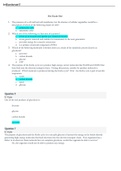
According to Smith and Kleinman, the ideology of "affective neutrality" or
"detached concern" in medicine is strong. Why is this?
Selected
Answer:
Because the discussion of feelings, especially
inappropriate feelings (e.g., disgust, desire), is considered ta
Question 1
14.3 out of 14.3 points
According to Smith and Kleinman, the ideology of
"affective neutrality" or "detached concern" in medicine is
strong. Why is this?
Selected
Answer:
Because the discussion of feelings, especially
inappropriate feelings (e.g., disgust, desire),
is considered taboo.
Answers:
Because the discussion of feelings, especially
inappropriate feelings (e.g., disgust, desire),
is considered taboo.
Because having feelings toward patients---
especially 'inappropriate' feelings (e.g.,
disgust, fear, arousal) is just plain wrong!
Because the curriculum of medicine does an
excellent job preparing medical professionals
about ways to manage their (sometimes)
inappropriate feelings with patients.
Because faculty members encourage medical
students to discuss their inappropriate
feelings in an open and honest way.
Question 2
14.3 out of 14.3 points
What method(s) did the researchers use for this study?
Selected
Answer:
They conducted participant observation, as
well as open-ended, in-depth interviews with
medical students (and others) at a major
medical school in the Southeast.
Answers:
They conducted participant observation, as
This study source was downloaded by 100000853497421 from CourseHero.com on 06-27-2023 20:40:23 GMT -05:00
https://www.coursehero.com/file/33387041/soc210-quizdocx/
, well as open-ended, in-depth interviews with
medical students (and others) at a major
medical school in the Southeast.
They surveyed a representative sample of
medical students at 10 major medical schools
across the U.S., and analyzed differences in
the ways schools socialized their medical
students.
They relied on existing data from a research
project at a major medical school in the
Southeast.
Using content analysis, they analyzed a
representative sample of medical school
curriculums across the U.S.
Question 3
0 out of 14.3 points
According to the authors, how does medical
school itself act as a barrier against the uncomfortable
feelings (embarrassment, disgust, arousal) students may
have?
Selected
Answer:
The 'emotion management' courses medical
students are required to take helps them to
prepare for these uncomfortable feelings.
Answers:
The long hours and academic pressures
medical students face work to dull and/or
anesthetize their feelings.
The camaraderie and social support students
feel with others going through 'the same
thing' helps to create an atmosphere of
openness and honesty.
Medical students are strongly encouraged to
discuss their uncomfortable feelings with
faculty members.
The 'emotion management' courses medical
students are required to take helps them to
prepare for these uncomfortable feelings.
Question 4
14.3 out of 14.3 points
The emotion management strategy the authors refer to as
"Transforming the Contact" (dehumanizing
transformations) includes ALL of the following EXCEPT:
This study source was downloaded by 100000853497421 from CourseHero.com on 06-27-2023 20:40:23 GMT -05:00
https://www.coursehero.com/file/33387041/soc210-quizdocx/
14.3 out of 14.3 points
According to Smith and Kleinman, the ideology of "affective neutrality" or
"detached concern" in medicine is strong. Why is this?
Selected
Answer:
Because the discussion of feelings, especially
inappropriate feelings (e.g., disgust, desire), is considered ta
Question 1
14.3 out of 14.3 points
According to Smith and Kleinman, the ideology of
"affective neutrality" or "detached concern" in medicine is
strong. Why is this?
Selected
Answer:
Because the discussion of feelings, especially
inappropriate feelings (e.g., disgust, desire),
is considered taboo.
Answers:
Because the discussion of feelings, especially
inappropriate feelings (e.g., disgust, desire),
is considered taboo.
Because having feelings toward patients---
especially 'inappropriate' feelings (e.g.,
disgust, fear, arousal) is just plain wrong!
Because the curriculum of medicine does an
excellent job preparing medical professionals
about ways to manage their (sometimes)
inappropriate feelings with patients.
Because faculty members encourage medical
students to discuss their inappropriate
feelings in an open and honest way.
Question 2
14.3 out of 14.3 points
What method(s) did the researchers use for this study?
Selected
Answer:
They conducted participant observation, as
well as open-ended, in-depth interviews with
medical students (and others) at a major
medical school in the Southeast.
Answers:
They conducted participant observation, as
This study source was downloaded by 100000853497421 from CourseHero.com on 06-27-2023 20:40:23 GMT -05:00
https://www.coursehero.com/file/33387041/soc210-quizdocx/
, well as open-ended, in-depth interviews with
medical students (and others) at a major
medical school in the Southeast.
They surveyed a representative sample of
medical students at 10 major medical schools
across the U.S., and analyzed differences in
the ways schools socialized their medical
students.
They relied on existing data from a research
project at a major medical school in the
Southeast.
Using content analysis, they analyzed a
representative sample of medical school
curriculums across the U.S.
Question 3
0 out of 14.3 points
According to the authors, how does medical
school itself act as a barrier against the uncomfortable
feelings (embarrassment, disgust, arousal) students may
have?
Selected
Answer:
The 'emotion management' courses medical
students are required to take helps them to
prepare for these uncomfortable feelings.
Answers:
The long hours and academic pressures
medical students face work to dull and/or
anesthetize their feelings.
The camaraderie and social support students
feel with others going through 'the same
thing' helps to create an atmosphere of
openness and honesty.
Medical students are strongly encouraged to
discuss their uncomfortable feelings with
faculty members.
The 'emotion management' courses medical
students are required to take helps them to
prepare for these uncomfortable feelings.
Question 4
14.3 out of 14.3 points
The emotion management strategy the authors refer to as
"Transforming the Contact" (dehumanizing
transformations) includes ALL of the following EXCEPT:
This study source was downloaded by 100000853497421 from CourseHero.com on 06-27-2023 20:40:23 GMT -05:00
https://www.coursehero.com/file/33387041/soc210-quizdocx/