LLL5TRUCTURE
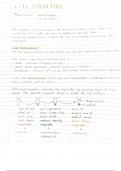
Magn1tication : SIZe of Image
SLZe of actual
mntmum dustance apact that two
The resolution of a miccoscope is the
objccts can be n order tor then to appea asseparate tens
always the
lncreasia magniticatron incrcases the size of aa mage, not alwcys
resolution.
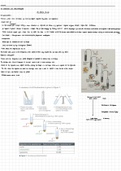
Cel fractionation
pocess where cells are brolken up and the oraaneles are sefperatea
Ihe tissue is placed i a solution that is
cold preuent enzyme act1uity
Same water potential- preveat bsnaDss usotonic)
bnffered preuents pH chanqe that miaht atfed enzynes ur orgaales
Cells ace homogin1sed (brakea up) and homogenate ISfiteced. to cenave
any amplete cells or debas.
UltcacentAfuaation
The denset
separates Hhe oragaaellea by spuaaing them at high
speed. arganelle forms a pellet at the hottoa
Supernatant
pellet
spin at low spin supernatant spin for
Speed tor agaun longer tiane, Loagest Ease at
shart time tastee speed aughest speed
most dense medium density Least dense
orgoneles organelle organelle
nulei mitochon daa,
chloroplasts
bosownes
, 3.2. 2 MT0SIS
Mitoss is a division of acel that resuts in tuwo qpnet co ly ndentiol daughter eli
A mutation would also be' copied to daughter cells
Interphase' replicaton of DNA
celulor actvity
Prophase hromosOmes ViSible
centrioles to poles
spindle fibres spon pole - pole
neuclear envelope brealcs down
Metaphase' - chromasomes alo ng eauator
chromosomes made of two chromotids,
joined by centromere
MIcrotubules atath to centromere
Anaphasel- (entronmer spits and chromat1ds
pul apart due to spind le fibres
Telophase - chromosomes beome chromatin
spindle fibres disintergrate
nudeor envelope reforms
inportance of mitosIs: Prokanyobe ces dude by binary fusscn. Circular
- Growth DNA repicates and atatches to cell mennbrane, which
Repar div des the cyto plasm between the DNA. (el wal
-
Reproducion forms acund eah new cel.
Viruses ae non- liviag and cannot undergo cell division: They replicate inside a
host cell, by njeting thest nudew acid ,which nstruck the ced to produce virat
camponents. These are assembled into new viruses that burst out of the cell.
Magn1tication : SIZe of Image
SLZe of actual
mntmum dustance apact that two
The resolution of a miccoscope is the
objccts can be n order tor then to appea asseparate tens
always the
lncreasia magniticatron incrcases the size of aa mage, not alwcys
resolution.
Cel fractionation
pocess where cells are brolken up and the oraaneles are sefperatea
Ihe tissue is placed i a solution that is
cold preuent enzyme act1uity
Same water potential- preveat bsnaDss usotonic)
bnffered preuents pH chanqe that miaht atfed enzynes ur orgaales
Cells ace homogin1sed (brakea up) and homogenate ISfiteced. to cenave
any amplete cells or debas.
UltcacentAfuaation
The denset
separates Hhe oragaaellea by spuaaing them at high
speed. arganelle forms a pellet at the hottoa
Supernatant
pellet
spin at low spin supernatant spin for
Speed tor agaun longer tiane, Loagest Ease at
shart time tastee speed aughest speed
most dense medium density Least dense
orgoneles organelle organelle
nulei mitochon daa,
chloroplasts
bosownes
, 3.2. 2 MT0SIS
Mitoss is a division of acel that resuts in tuwo qpnet co ly ndentiol daughter eli
A mutation would also be' copied to daughter cells
Interphase' replicaton of DNA
celulor actvity
Prophase hromosOmes ViSible
centrioles to poles
spindle fibres spon pole - pole
neuclear envelope brealcs down
Metaphase' - chromasomes alo ng eauator
chromosomes made of two chromotids,
joined by centromere
MIcrotubules atath to centromere
Anaphasel- (entronmer spits and chromat1ds
pul apart due to spind le fibres
Telophase - chromosomes beome chromatin
spindle fibres disintergrate
nudeor envelope reforms
inportance of mitosIs: Prokanyobe ces dude by binary fusscn. Circular
- Growth DNA repicates and atatches to cell mennbrane, which
Repar div des the cyto plasm between the DNA. (el wal
-
Reproducion forms acund eah new cel.
Viruses ae non- liviag and cannot undergo cell division: They replicate inside a
host cell, by njeting thest nudew acid ,which nstruck the ced to produce virat
camponents. These are assembled into new viruses that burst out of the cell.