Chapter 7: Child Welfare Questions Answered 100% correct
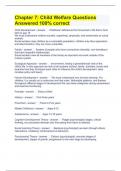
Chapter 7: Child Welfare Questions Answered 100% correct Child Development Childhood: defined as the first period in life that is from birth to age 18 We must understand children socially, cognitively, physically, and emotionally as social workers Social workers view children as a vulnerable population, children may face oppression and discrimination, they are more vulnerable Family System of people who have connections (heredity, non-hereditary) that have impactful relationships Social workers view all members of the family as important and work outside of the nuclear system Ecological Approach envornment, having a general/broad view of the child's life. In this approach we look at all systems (school, family, activities, home) and examine how they all impact each other to influence the child's development. (also includes policy and laws!) Human Development We must understand how humans develop. For children, it is usually on a continuum and has order. Noticeable patterns, and themes throughout different stages of development We use these categories during assessment and examine functioning. Prenatal Fetus to Birth Infancy First three years Preschool Three to Five years Middle Childhood Ages 6-12 Adolescence Ages 13-18 years Cognitive Development Theory Piaget (psychologist) stages, critical thinking, our processes develop over time going from basic to abstract Social Learning Theory Bandura (psychologist) we learn through others, interactions, modeling, reinforcement of behaviors Psychosocial Theory Erikson (psychologist) concrete stages of development, stages of growth, progression to the next stage by developing Child Welfare Activities, programs, and policies that are for the sake of children Child Protective Services (CPS) Foster Care systems: care for kids while family works on problems Permanency planning: returning to home, or seeking adoption Adoption: legally moving a child into another family Family Preservation Services: avoiding removal from family Juvenile Justice Delinquency, juvenile detentions, probationary programs, case management Case Management Assessment, looking for needs, and creating plans Direct Practice Direct contact with families, therapy, use of theory, specific therapy intervention (play therapy, cognitive behavioral techniques) Advocacy and Policy Building Reviewing policy and systems that impact children and advocating for change for children. Referral Children referred to the social worker to intervene for a specific or general concern. Can be requested or mandatory (identified need vs a requirement (CPS referral, for a mandated reporter) Assessment and Engagement Collection of information used to help the client. Social worker plans intervention techniques and sets goals and plans -strong interviewing skills -build connection with client, rapport building -critical thinking, taking the collected information, and drawing conclusions, and understanding points of intervention Intervention Strategies How will you address the concern? What approach will you use? Plan and Implement Make your plan and then use it! Termination Your work has been completed together and it is time to close the relationship Self Determination allowing your clients (even children) the freedom to make their own decisions. Respect for Confidentiality Keeping children's trust open with the social worker, while also respecting the parent as the caregiver/guardian, who is concerned about their well-being of their child
Escuela, estudio y materia
- Institución
- Child welfare
- Grado
- Child welfare
Información del documento
- Subido en
- 20 de junio de 2023
- Número de páginas
- 3
- Escrito en
- 2022/2023
- Tipo
- Examen
- Contiene
- Preguntas y respuestas
Temas
- having a general
-
chapter 7 child welfare questions answered 100 c
-
child development childhood defined as the first
-
family system of people who have connections here
-
ecological approach envornment

Documento también disponible en un lote