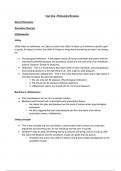
Year One - Philosophy Revision
Moral Philosophy
Normative theories
Utilitarianism
Utility
Utility refers to usefulness, an object or action has utility if it helps us to achieve a specific goal
or goals. An object or action has utility if it helps to bring about something we want / are aiming
for.
● Psychological hedonism - A descriptive theory of human motivation that claims that the
individual's potential pleasure and avoidance of pain are the sole aims of an individual’s
actions. (hedone- Greek for pleasure)
● Hedonism - This is a moral theory that claims that for each individual, pursuing pleasure
and avoiding pleasure is the right thing to do. One ought to seek pleasure.
● Classic/hedonistic utilitarianism - This is the moral theory that claims that a right action is
one that increases the general happiness.
○ 1. We can only aim for pleasure (Psychological hedonism).
○ 2. We should aim for pleasure (Ethical hedonism).
○ 3. Utilitarianism claims we should aim for communal pleasure.
Bentham’s utilitarianism
● Pain and pleasure are our two sovereign masters.
● Bentham puts forward both a descriptive and prescriptive theory.
○ He claims that pain and pleasure are the ends of human action (psychological
hedonism).
○ He also suggests that pain and pleasure can form the basis of an ethical
prescriptive theory, utilitarianism.
Utility principle
● This is the principle that we must follow a moral system that invokes us to maximise
happiness and minimise pain, for the individual and the sum of society.
● Bentham’s idea of utility (something having a purpose and being useful) is built up with
the claim that pleasure and the avoidance of pain are goals that we pursue.
○ Therefore any action has utility if it helps to bring about pleasure/happiness or the
avoidance of pain.
, ○ We can assess the utility of an action by looking at its consequences in terms of
the pain and pleasure it causes people - this is how Bentham assesses a good
act.
○ The more happiness an action brings about, the more it maximises utility - the
better the action is.
● Bentham claims therefore that morally good actions are those which bring about
happiness and morally bad actions are those that bring about more pain than pleasure.
Bentham’s utility calculus
● This is Bentham’s guide to the application of the utility principle, the hedonistic/utility
calculus essentially weights up the pleasure/pain of an action.
● It is done in several steps:
Step 1: Determine the amount of pleasure and pain brought to the person most directly affected
by your action. In doing this you us measure:
1. The intensity of the pain/pleasure
2. The duration of the pain/pleasure
3. The certainty of the pain/pleasure
4. The remoteness of the pain/pleasure.
Step 2: Examine the effects of the pain/pleasure including:
5. The fecundity of the pain/pleasure
6. The punity of the pain/pleasure .
Fecundity- the tendency of that pleasure (or pain) to produce other pleasures (or pain).
Punity- by punity Bentham means the tendency of the pleasure to only produce pleasure or the
tendency of the pain to only produce pain.
Step 3: This step comes only when we consider the effects on other individuals:
7. The extent of the pain/pleasure.
Step 4: You calculate the total utility by using steps 1-7 to count up the amount of pleasure units
an action causes and the amount of pain units as well.
Step 5: If you have a range of actions available to you then you must repeat steps 1-4 for all of
these actions and choose the action which yields the most pleasure.
From this we can conclude that the moral action is the one which yields the greatest amount of
pleasure from all available actions- just causing happiness in and of itself does not necessarily
mean the action is correct. This seems clear and intuitive enough.
Criticisms of Bentham’s hedonistic calculus
,Criticism 1: Impossible to compare pleasures
● We cannot compare the pleasure of eating an apple with the pleasure of playing tennis
for example.
● They are such different things.
● Thus they have no common currency with which we are to compare them.
● Additionally pleasure is very subjective, people gain varying amounts of pleasure from
playing tennis and thus there is simply no way in which we can accurately compare
pleasures.
Criticism 2: Is quantity the only factor?
● In the calculus quantity is the only indicator of utility.
● He argues that in comparing two pleasures we should choose the one in the greatest
quantity.
● To Bentham all pleasures are homogenous in contrast to Mill who believed there to be
higher and lower pleasures.
○ “A game of push-pin is of equal value with the arts and sciences of music and
poetry” - Bentham.
Consequentialism
● What are consequences of an action- whether an action is good lies in how much
pleasure it brings into the world.
● Consequentialist ethics are also called teleological ethics as telos means “end” in
ancient Greek, and in consequentialist ethics you are working towards an end.
Criticisms of consequentialism
● Consequentialist ethical theories can feel counter-intuitive as they disregard the action
itself and the motive behind the action, which is often the source of its moral worth rather
than the outcome.
Bentham’s reponse
● As a psychological hedonist the issue of motive is a red herring - people are always
motivated by pleasure, even if the way in which they achieve it vary.
● Have to ensure that people will maximise the general happiness by modifying laws so
we can modify people’s intentions such that they align to the pursuit of individual
happiness with the pursuit of general happiness.
Criticism of this response - social engineering
, ● [Thought experiment - soma drug] - everyone is happy even because they take the soma
drug (like in “a brave new world”) this dystopian society that is socially engineered is
permissible as long as people are happy, regardless of the means.
Act utilitarianism
● We should appeal directly to the principle of utility in order to judge what is right in any
particular situation, we must calculate the effects of a potential act on its own merits.
Criticisms of Act utilitarianism
Criticism 1: Act utilitarianism has counter-intuitive implications
● Act utilitarianism bases whether an act is good or bad solely on the consequences.
○ The nature of the act is irrelevant.
○ The ends will always justify the means as long as the end result is happiness.
● This is contradictory to our intuition - the nature of the act itself, the means, are also
important.
● This is best illustrated with the example of the scapegoat:
A serial killer is on the loose, the whole city is terrified, police have no idea who it is, the mayor
selects some random guy to blame it on, he is put on trial and falsely found guilty and executed,
the mob is calmed.
● Act utilitarianism would conclude that this act is morally correct- it avoids rioting and it
calms the mob.
● Yet this goes against our intuitions - we know it is morally unjust to kill an innocent man
to appease the mob.
Criticism 2: Impossible to follow
● This serves as a criticism of the UTILITY CALCULUS
● It is often impossible to work out how much happiness an action might bring.
○ Especially true on a case by case basis.
○ Especially true also when you have so many things to consider.
● This is made even worse by the fact that even if one could work it out it would take an
incredibly long time.
● Sometimes doing the right thing requires spontaneity rather than working out what would
maximise the general happiness.
● So even if utilitarianism was the right way to judge the morality of an action it is not fit for
purpose as a method of deliberation.
John Stuart Mill
Moral Philosophy
Normative theories
Utilitarianism
Utility
Utility refers to usefulness, an object or action has utility if it helps us to achieve a specific goal
or goals. An object or action has utility if it helps to bring about something we want / are aiming
for.
● Psychological hedonism - A descriptive theory of human motivation that claims that the
individual's potential pleasure and avoidance of pain are the sole aims of an individual’s
actions. (hedone- Greek for pleasure)
● Hedonism - This is a moral theory that claims that for each individual, pursuing pleasure
and avoiding pleasure is the right thing to do. One ought to seek pleasure.
● Classic/hedonistic utilitarianism - This is the moral theory that claims that a right action is
one that increases the general happiness.
○ 1. We can only aim for pleasure (Psychological hedonism).
○ 2. We should aim for pleasure (Ethical hedonism).
○ 3. Utilitarianism claims we should aim for communal pleasure.
Bentham’s utilitarianism
● Pain and pleasure are our two sovereign masters.
● Bentham puts forward both a descriptive and prescriptive theory.
○ He claims that pain and pleasure are the ends of human action (psychological
hedonism).
○ He also suggests that pain and pleasure can form the basis of an ethical
prescriptive theory, utilitarianism.
Utility principle
● This is the principle that we must follow a moral system that invokes us to maximise
happiness and minimise pain, for the individual and the sum of society.
● Bentham’s idea of utility (something having a purpose and being useful) is built up with
the claim that pleasure and the avoidance of pain are goals that we pursue.
○ Therefore any action has utility if it helps to bring about pleasure/happiness or the
avoidance of pain.
, ○ We can assess the utility of an action by looking at its consequences in terms of
the pain and pleasure it causes people - this is how Bentham assesses a good
act.
○ The more happiness an action brings about, the more it maximises utility - the
better the action is.
● Bentham claims therefore that morally good actions are those which bring about
happiness and morally bad actions are those that bring about more pain than pleasure.
Bentham’s utility calculus
● This is Bentham’s guide to the application of the utility principle, the hedonistic/utility
calculus essentially weights up the pleasure/pain of an action.
● It is done in several steps:
Step 1: Determine the amount of pleasure and pain brought to the person most directly affected
by your action. In doing this you us measure:
1. The intensity of the pain/pleasure
2. The duration of the pain/pleasure
3. The certainty of the pain/pleasure
4. The remoteness of the pain/pleasure.
Step 2: Examine the effects of the pain/pleasure including:
5. The fecundity of the pain/pleasure
6. The punity of the pain/pleasure .
Fecundity- the tendency of that pleasure (or pain) to produce other pleasures (or pain).
Punity- by punity Bentham means the tendency of the pleasure to only produce pleasure or the
tendency of the pain to only produce pain.
Step 3: This step comes only when we consider the effects on other individuals:
7. The extent of the pain/pleasure.
Step 4: You calculate the total utility by using steps 1-7 to count up the amount of pleasure units
an action causes and the amount of pain units as well.
Step 5: If you have a range of actions available to you then you must repeat steps 1-4 for all of
these actions and choose the action which yields the most pleasure.
From this we can conclude that the moral action is the one which yields the greatest amount of
pleasure from all available actions- just causing happiness in and of itself does not necessarily
mean the action is correct. This seems clear and intuitive enough.
Criticisms of Bentham’s hedonistic calculus
,Criticism 1: Impossible to compare pleasures
● We cannot compare the pleasure of eating an apple with the pleasure of playing tennis
for example.
● They are such different things.
● Thus they have no common currency with which we are to compare them.
● Additionally pleasure is very subjective, people gain varying amounts of pleasure from
playing tennis and thus there is simply no way in which we can accurately compare
pleasures.
Criticism 2: Is quantity the only factor?
● In the calculus quantity is the only indicator of utility.
● He argues that in comparing two pleasures we should choose the one in the greatest
quantity.
● To Bentham all pleasures are homogenous in contrast to Mill who believed there to be
higher and lower pleasures.
○ “A game of push-pin is of equal value with the arts and sciences of music and
poetry” - Bentham.
Consequentialism
● What are consequences of an action- whether an action is good lies in how much
pleasure it brings into the world.
● Consequentialist ethics are also called teleological ethics as telos means “end” in
ancient Greek, and in consequentialist ethics you are working towards an end.
Criticisms of consequentialism
● Consequentialist ethical theories can feel counter-intuitive as they disregard the action
itself and the motive behind the action, which is often the source of its moral worth rather
than the outcome.
Bentham’s reponse
● As a psychological hedonist the issue of motive is a red herring - people are always
motivated by pleasure, even if the way in which they achieve it vary.
● Have to ensure that people will maximise the general happiness by modifying laws so
we can modify people’s intentions such that they align to the pursuit of individual
happiness with the pursuit of general happiness.
Criticism of this response - social engineering
, ● [Thought experiment - soma drug] - everyone is happy even because they take the soma
drug (like in “a brave new world”) this dystopian society that is socially engineered is
permissible as long as people are happy, regardless of the means.
Act utilitarianism
● We should appeal directly to the principle of utility in order to judge what is right in any
particular situation, we must calculate the effects of a potential act on its own merits.
Criticisms of Act utilitarianism
Criticism 1: Act utilitarianism has counter-intuitive implications
● Act utilitarianism bases whether an act is good or bad solely on the consequences.
○ The nature of the act is irrelevant.
○ The ends will always justify the means as long as the end result is happiness.
● This is contradictory to our intuition - the nature of the act itself, the means, are also
important.
● This is best illustrated with the example of the scapegoat:
A serial killer is on the loose, the whole city is terrified, police have no idea who it is, the mayor
selects some random guy to blame it on, he is put on trial and falsely found guilty and executed,
the mob is calmed.
● Act utilitarianism would conclude that this act is morally correct- it avoids rioting and it
calms the mob.
● Yet this goes against our intuitions - we know it is morally unjust to kill an innocent man
to appease the mob.
Criticism 2: Impossible to follow
● This serves as a criticism of the UTILITY CALCULUS
● It is often impossible to work out how much happiness an action might bring.
○ Especially true on a case by case basis.
○ Especially true also when you have so many things to consider.
● This is made even worse by the fact that even if one could work it out it would take an
incredibly long time.
● Sometimes doing the right thing requires spontaneity rather than working out what would
maximise the general happiness.
● So even if utilitarianism was the right way to judge the morality of an action it is not fit for
purpose as a method of deliberation.
John Stuart Mill