PREVIEW
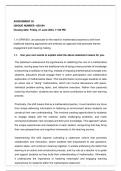
I agree with the statement that
decoding is an important and necessary
skill in reading development, but it
does not automatically result in
enhanced reading comprehension
skills. Here are three reasons to support
this view:1. Comprehension requires
more than just decoding: Decoding
refers to the ability to sound out and
recognize words. While this skill is
crucial for reading, it is not sufficient for
comprehension. Understanding a text
involves making meaning from the
words, connecting ideas, inferring
information, and applying background
knowledge. These higher-level
cognitive processes go beyond
decoding and require additional skills
such as vocabulary knowledge,
FLT3701
inference-making abilities, and critical
thinking.2. Contextual understanding
is essential: Reading comprehension
involves understanding the context in
which the text is presented. Decoding
ASSIGNMENT 2 S1 2023 alone does not provide the necessary
context to grasp the meaning of a text.
NATALIE FOXX
, WHATSAPP 0747160449
QUESTION 1: (25)
Read the scenario below, then answer the questions that follow:
In Mrs Selepe’ s Grade 3 class, the learners are seated in a reading circle. Each learner has
an English text as a First Additional Language reading book. They proceed to read the text
out aloud chorally. Initially, an observer may think that the learners are reading well, with an
accent from their home language. However, the more you listen, the more it becomes clear
that the learners are not using the correct intonation. When the teacher questions them on
the content of the story they are reading, the majority cannot answer appropriately. They do
not understand what they are reading and are unable to derive meaning from the text. The
children are simply “word calling” or “barking at print”.
Adapted from Hugo and Lenyai (2016), Teaching English as a First Additional Language
1.1 The above scenario illustrates that, while decoding is an important and
necessary skill in reading development, it does not automatically result in
enhanced reading comprehension skills. Provide THREE (3) reasons why
you agree or disagree with this statement. (10)
I agree with the statement that decoding is an important and necessary skill in
reading development, but it does not automatically result in enhanced reading
comprehension skills. Here are three reasons to support this view:
1. Comprehension requires more than just decoding: Decoding refers to the
ability to sound out and recognize words. While this skill is crucial for reading,
it is not sufficient for comprehension. Understanding a text involves making
meaning from the words, connecting ideas, inferring information, and applying
background knowledge. These higher-level cognitive processes go beyond
decoding and require additional skills such as vocabulary knowledge,
inference-making abilities, and critical thinking.
2. Contextual understanding is essential: Reading comprehension involves
understanding the context in which the text is presented. Decoding alone does
not provide the necessary context to grasp the meaning of a text.
Comprehension relies on understanding the purpose, audience, genre, and
other contextual factors that shape the meaning of the text. Without these
contextual cues, even if learners can decode the words correctly, they may
struggle to make sense of the overall message.
, 3. Fluency and automaticity contribute to comprehension: Fluent reading,
characterized by accuracy, speed, and prosody, is closely linked to
comprehension. When readers struggle with decoding, their attention is
occupied with deciphering individual words, and they may lose sight of the
overall meaning. In contrast, fluent readers can devote their cognitive
resources to understanding the text, making connections, and deriving
meaning. Thus, while decoding is necessary to achieve fluency, fluency itself is
a critical factor in enhancing reading comprehension.
In summary, decoding is a fundamental skill in reading, but it is not sufficient on
its own to ensure reading comprehension. Comprehension requires additional
cognitive processes, contextual understanding, and the development of fluency
and automaticity.
1.2 Describe how the use of the following strategies can enhance reading with
understanding:
1.2.1 Phonological awareness: Phonological awareness refers to the ability to
identify and manipulate the sounds in spoken language. It plays a crucial role
in reading with understanding by helping learners develop strong
foundational skills in phonics and word recognition. By focusing on the
sounds of language, learners can improve their ability to decode and
understand words. Phonological awareness strategies, such as phonemic
awareness activities, can enhance reading comprehension by:
Developing phonemic segmentation: Breaking words into individual
sounds or phonemes helps learners recognize and manipulate the
sound structure of words. This skill aids in decoding unfamiliar words
and understanding their pronunciation.
Improving phoneme blending: Blending individual sounds into whole
words helps learners understand how sounds come together to form
meaningful units. This skill contributes to recognizing familiar words
quickly and accurately.
Enhancing phoneme manipulation: Activities that involve adding,
deleting, or substituting phonemes in words develop learners' ability to
manipulate sounds, which can support their understanding of word
meanings and the relationships between words.
2
I agree with the statement that
decoding is an important and necessary
skill in reading development, but it
does not automatically result in
enhanced reading comprehension
skills. Here are three reasons to support
this view:1. Comprehension requires
more than just decoding: Decoding
refers to the ability to sound out and
recognize words. While this skill is
crucial for reading, it is not sufficient for
comprehension. Understanding a text
involves making meaning from the
words, connecting ideas, inferring
information, and applying background
knowledge. These higher-level
cognitive processes go beyond
decoding and require additional skills
such as vocabulary knowledge,
FLT3701
inference-making abilities, and critical
thinking.2. Contextual understanding
is essential: Reading comprehension
involves understanding the context in
which the text is presented. Decoding
ASSIGNMENT 2 S1 2023 alone does not provide the necessary
context to grasp the meaning of a text.
NATALIE FOXX
, WHATSAPP 0747160449
QUESTION 1: (25)
Read the scenario below, then answer the questions that follow:
In Mrs Selepe’ s Grade 3 class, the learners are seated in a reading circle. Each learner has
an English text as a First Additional Language reading book. They proceed to read the text
out aloud chorally. Initially, an observer may think that the learners are reading well, with an
accent from their home language. However, the more you listen, the more it becomes clear
that the learners are not using the correct intonation. When the teacher questions them on
the content of the story they are reading, the majority cannot answer appropriately. They do
not understand what they are reading and are unable to derive meaning from the text. The
children are simply “word calling” or “barking at print”.
Adapted from Hugo and Lenyai (2016), Teaching English as a First Additional Language
1.1 The above scenario illustrates that, while decoding is an important and
necessary skill in reading development, it does not automatically result in
enhanced reading comprehension skills. Provide THREE (3) reasons why
you agree or disagree with this statement. (10)
I agree with the statement that decoding is an important and necessary skill in
reading development, but it does not automatically result in enhanced reading
comprehension skills. Here are three reasons to support this view:
1. Comprehension requires more than just decoding: Decoding refers to the
ability to sound out and recognize words. While this skill is crucial for reading,
it is not sufficient for comprehension. Understanding a text involves making
meaning from the words, connecting ideas, inferring information, and applying
background knowledge. These higher-level cognitive processes go beyond
decoding and require additional skills such as vocabulary knowledge,
inference-making abilities, and critical thinking.
2. Contextual understanding is essential: Reading comprehension involves
understanding the context in which the text is presented. Decoding alone does
not provide the necessary context to grasp the meaning of a text.
Comprehension relies on understanding the purpose, audience, genre, and
other contextual factors that shape the meaning of the text. Without these
contextual cues, even if learners can decode the words correctly, they may
struggle to make sense of the overall message.
, 3. Fluency and automaticity contribute to comprehension: Fluent reading,
characterized by accuracy, speed, and prosody, is closely linked to
comprehension. When readers struggle with decoding, their attention is
occupied with deciphering individual words, and they may lose sight of the
overall meaning. In contrast, fluent readers can devote their cognitive
resources to understanding the text, making connections, and deriving
meaning. Thus, while decoding is necessary to achieve fluency, fluency itself is
a critical factor in enhancing reading comprehension.
In summary, decoding is a fundamental skill in reading, but it is not sufficient on
its own to ensure reading comprehension. Comprehension requires additional
cognitive processes, contextual understanding, and the development of fluency
and automaticity.
1.2 Describe how the use of the following strategies can enhance reading with
understanding:
1.2.1 Phonological awareness: Phonological awareness refers to the ability to
identify and manipulate the sounds in spoken language. It plays a crucial role
in reading with understanding by helping learners develop strong
foundational skills in phonics and word recognition. By focusing on the
sounds of language, learners can improve their ability to decode and
understand words. Phonological awareness strategies, such as phonemic
awareness activities, can enhance reading comprehension by:
Developing phonemic segmentation: Breaking words into individual
sounds or phonemes helps learners recognize and manipulate the
sound structure of words. This skill aids in decoding unfamiliar words
and understanding their pronunciation.
Improving phoneme blending: Blending individual sounds into whole
words helps learners understand how sounds come together to form
meaningful units. This skill contributes to recognizing familiar words
quickly and accurately.
Enhancing phoneme manipulation: Activities that involve adding,
deleting, or substituting phonemes in words develop learners' ability to
manipulate sounds, which can support their understanding of word
meanings and the relationships between words.
2