
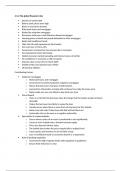
4.5.4 The global financial crisis
Decline of worlds GDP
Before asset prices were high
Boom in economic demand
Risky bank loans and mortgages
Backed by subprime mortgages
Borrowers with poor credit histories allowed mortgages
Housing prices crashed and people defaulted on their mortgages
Banks had insufficient funds
After the UK used expansionary fiscal policy
VAT cut from 17.5% to 15%
Government received less tax revenue die to recession
Increased government borrowing
Global recession started spreading and interest rates cut further
No confidence in economy so did not spend
Interest rates cut to 0.5% in March 2009
Initially £75bn was injected now £375bn
UK had low inflation
Contributing Factors
Subprime mortgages
o Risky bank loans and mortgages
o Government securities backed by subprime mortgages
o Means that borrowers had poor credit histories
o Asymmetric information as banks did not know how risky the loans were
o Banks make sure you can afford to pay back your loan
Moral hazard
o There is a risk that the borrower does the things that the lender would not deem
desirable
o Makes the borrower less likely to repay the loan
o Usually occurs when there is some form of insurance for the mistake
o Banks may take risks if they know the BoE will bail them out
o Systematic risk can be seen as a negative externality.
Speculation & market bubbles
o Occurs when a price of an asset is predicated to rise significantly
o Causes it to be traded more, demand exceeds supply
o Price rises beyond intrinsic value
o The bubble burst when the price steeply falls to original level
o Causes panic and investors try to sell their assets
o Loss of confidence leads to economic decline or a depression
Role of banking regulation
o Government might regulate banks with regulation & guidelines
o Ensure their behaviour is clear
Decline of worlds GDP
Before asset prices were high
Boom in economic demand
Risky bank loans and mortgages
Backed by subprime mortgages
Borrowers with poor credit histories allowed mortgages
Housing prices crashed and people defaulted on their mortgages
Banks had insufficient funds
After the UK used expansionary fiscal policy
VAT cut from 17.5% to 15%
Government received less tax revenue die to recession
Increased government borrowing
Global recession started spreading and interest rates cut further
No confidence in economy so did not spend
Interest rates cut to 0.5% in March 2009
Initially £75bn was injected now £375bn
UK had low inflation
Contributing Factors
Subprime mortgages
o Risky bank loans and mortgages
o Government securities backed by subprime mortgages
o Means that borrowers had poor credit histories
o Asymmetric information as banks did not know how risky the loans were
o Banks make sure you can afford to pay back your loan
Moral hazard
o There is a risk that the borrower does the things that the lender would not deem
desirable
o Makes the borrower less likely to repay the loan
o Usually occurs when there is some form of insurance for the mistake
o Banks may take risks if they know the BoE will bail them out
o Systematic risk can be seen as a negative externality.
Speculation & market bubbles
o Occurs when a price of an asset is predicated to rise significantly
o Causes it to be traded more, demand exceeds supply
o Price rises beyond intrinsic value
o The bubble burst when the price steeply falls to original level
o Causes panic and investors try to sell their assets
o Loss of confidence leads to economic decline or a depression
Role of banking regulation
o Government might regulate banks with regulation & guidelines
o Ensure their behaviour is clear


