How are Antigens Captured and Presented to Cells
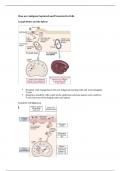
Lymph Nodes and the Spleen
Dendritic cells (Langerhans cell) are antigen presenting cells and work alongside
T cells
Immature dendritic cells reside in the epidermis whereas mature ones reside in
T cell rich areas of the lymph nodes and spleen
Dendritic Cell Migration
, Antigen Presenting Cells
Professional APCs like dendritic cells capture bacteria and viruses then
associated their antigens with the MHC molecules
APCs
T Cell Receptors
TCRs have alpha and beta chains
Conserved and variable region
Variable region binds to the antigen
TCRs only recognise antigens when presented by MHCs
MHC Complex
Peptide binding cell surface proteins
MHC in humans=MLA complex
MHC class I and II
MHC class I:
Lymph Nodes and the Spleen
Dendritic cells (Langerhans cell) are antigen presenting cells and work alongside
T cells
Immature dendritic cells reside in the epidermis whereas mature ones reside in
T cell rich areas of the lymph nodes and spleen
Dendritic Cell Migration
, Antigen Presenting Cells
Professional APCs like dendritic cells capture bacteria and viruses then
associated their antigens with the MHC molecules
APCs
T Cell Receptors
TCRs have alpha and beta chains
Conserved and variable region
Variable region binds to the antigen
TCRs only recognise antigens when presented by MHCs
MHC Complex
Peptide binding cell surface proteins
MHC in humans=MLA complex
MHC class I and II
MHC class I: