ADDICTION
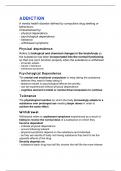
A mental health disorder defined by compulsive drug seeking or
behaviours.
Characterised by:
- physical dependence
- psychological dependence
- tolerance
- withdrawal symptoms
Physical dependence
Refers to biological and chemical changes in the brain/body so
the substance has been incorporated into the normal functioning
so that one can’t function properly when the substance is withdrawn
- physically adapts
- results in tolerance
- withdrawal syndrome
Psychological Dependence
The mental and emotional compulsion to keep taking the substance.
- believes they need to keep taking it
- absence results in psychological effects like anxiety
- can be experienced without physical dependence
- cognitive element ie belief or mental drive/compulsion to continue
Tolerance
The physiological reaction by which the body increasingly adapts to a
substance over prolonged use needing larger doses in order to
achieve the same effect
Withdrawal
Withdrawal refers to unpleasant symptoms experienced as a result of
failing to receive the normal dose of a substance on which they
become dependent
- indicate physical dependence
- occurs following tolerant
- physical symptoms depend on the substance and individual
- as they are results of body not having substance they tend to be the
opposite effects of the drug
Severity depends on:
- substance (each drug has half life; shorter the half life the more intense
,the withdrawal)
- amount consumer (larger the dose, worse the withdrawal)
- drug use pattern (regular substance use will have greater withdrawal due
to higher physical dependence)
Alcohol: 24 hours intense, nausea, sweating, seizures, delirium tremors
causing confusion, aggression, agitation
Nicotine: 24-48 hours maximum intensity, can last weeks/months,
irritability, loss of sleep, weight gain
risk factor is anything internal or external that increases the chance of
someone using an addictive drug or engage in addictive behaviours
GENETIC VULNERABILITY - risk factor 1
Addiction itself is not inherited but a predisposition or
vulnerability to drug dependence is.
Low d2 dopamine receptors: the proportion of receptors in
the brain are determined genetically thus genetics determine the
number of dopamine receptors of an individual
- low number of d2 dopamine receptor linked to addictive behaviour
- reward system of addicts functions differently
Individuals who are more able to metabolise: might be
at greater risk of becoming addicted
EVALUATION METABOLISM
50% of Asian people are unable to metabolise alcohol to release the acetic
acid into their urine so when they consume alcohol they feel nauseous. This
means they are much less likely to become addicted
Genetics may also play an indirect role in addiction as our genes determine
self control and the ability to regulate emotions.
difficulty controlling behaviours when young —> poor outcomes in school
—> spiral into disruptive behaviour —> low achievement —> lead to
vulnerability to experiment with substances
All major studies for alcoholism have found that identical twins are more concordant than DZ twins
which implies a genetic link
RESEARCH EVIDENCE MCGUE ET AL
Used interviews with MZ and DZ twins on their alcohol use using DSM
criteria. Results showed that MZ twins had 77% concordance rate and DZ
twins had 54%, suggesting a genetic influence on alcohol abuse.
, - MZ twins will also experience more similar environments than DZ who may look
different and have different characteristics so it is difficult to separate out the
environmental from genetic influences here
RESEARCH EVIDENCE KENDLER
Adoption studies looking at studies where the adult was adopted away as a
child from biological parents in which at least one had an addiction. Results
showed that adopted individuals had a significantly greater risk of
developing an addiction (8.6%) compared with those adopted away from a
family with no addicted parents (4.2%)
FURTHER EVALUATION
- genetic links are 1 possible risk factor but important alternative factors
include environmental factors such as stress
- twin studies not 100% concordance rate
- genetic link varies across substances, vulnerability may be more specific to
certain substances
STRESS - risk factor 2
People with high levels of stressed are more likely to be drawn to
drugs
Increased risk of substance addiction is linked to:
- Prolonged stress
- Traumatic life events
Because substances act as a temporary relief for anxiety
Extreme early life stress like abuse can influence brain development producing a
diathesis making later addiction more likely as a way to cope with life challenges/
stressors
Stress contributes to the:
- initiation of substance abuse
- long term stress contributes to maintenance of abuse
- relapse
Operant conditioning as we are negatively reinforced by removal of the
unwanted stimuli when the substance is taken
Classically conditioned through associating relaxation with the
substance
MEDIATING FACTORS AFFECTING INDIVIDALS DIFFERENTLY
- Social support
A mental health disorder defined by compulsive drug seeking or
behaviours.
Characterised by:
- physical dependence
- psychological dependence
- tolerance
- withdrawal symptoms
Physical dependence
Refers to biological and chemical changes in the brain/body so
the substance has been incorporated into the normal functioning
so that one can’t function properly when the substance is withdrawn
- physically adapts
- results in tolerance
- withdrawal syndrome
Psychological Dependence
The mental and emotional compulsion to keep taking the substance.
- believes they need to keep taking it
- absence results in psychological effects like anxiety
- can be experienced without physical dependence
- cognitive element ie belief or mental drive/compulsion to continue
Tolerance
The physiological reaction by which the body increasingly adapts to a
substance over prolonged use needing larger doses in order to
achieve the same effect
Withdrawal
Withdrawal refers to unpleasant symptoms experienced as a result of
failing to receive the normal dose of a substance on which they
become dependent
- indicate physical dependence
- occurs following tolerant
- physical symptoms depend on the substance and individual
- as they are results of body not having substance they tend to be the
opposite effects of the drug
Severity depends on:
- substance (each drug has half life; shorter the half life the more intense
,the withdrawal)
- amount consumer (larger the dose, worse the withdrawal)
- drug use pattern (regular substance use will have greater withdrawal due
to higher physical dependence)
Alcohol: 24 hours intense, nausea, sweating, seizures, delirium tremors
causing confusion, aggression, agitation
Nicotine: 24-48 hours maximum intensity, can last weeks/months,
irritability, loss of sleep, weight gain
risk factor is anything internal or external that increases the chance of
someone using an addictive drug or engage in addictive behaviours
GENETIC VULNERABILITY - risk factor 1
Addiction itself is not inherited but a predisposition or
vulnerability to drug dependence is.
Low d2 dopamine receptors: the proportion of receptors in
the brain are determined genetically thus genetics determine the
number of dopamine receptors of an individual
- low number of d2 dopamine receptor linked to addictive behaviour
- reward system of addicts functions differently
Individuals who are more able to metabolise: might be
at greater risk of becoming addicted
EVALUATION METABOLISM
50% of Asian people are unable to metabolise alcohol to release the acetic
acid into their urine so when they consume alcohol they feel nauseous. This
means they are much less likely to become addicted
Genetics may also play an indirect role in addiction as our genes determine
self control and the ability to regulate emotions.
difficulty controlling behaviours when young —> poor outcomes in school
—> spiral into disruptive behaviour —> low achievement —> lead to
vulnerability to experiment with substances
All major studies for alcoholism have found that identical twins are more concordant than DZ twins
which implies a genetic link
RESEARCH EVIDENCE MCGUE ET AL
Used interviews with MZ and DZ twins on their alcohol use using DSM
criteria. Results showed that MZ twins had 77% concordance rate and DZ
twins had 54%, suggesting a genetic influence on alcohol abuse.
, - MZ twins will also experience more similar environments than DZ who may look
different and have different characteristics so it is difficult to separate out the
environmental from genetic influences here
RESEARCH EVIDENCE KENDLER
Adoption studies looking at studies where the adult was adopted away as a
child from biological parents in which at least one had an addiction. Results
showed that adopted individuals had a significantly greater risk of
developing an addiction (8.6%) compared with those adopted away from a
family with no addicted parents (4.2%)
FURTHER EVALUATION
- genetic links are 1 possible risk factor but important alternative factors
include environmental factors such as stress
- twin studies not 100% concordance rate
- genetic link varies across substances, vulnerability may be more specific to
certain substances
STRESS - risk factor 2
People with high levels of stressed are more likely to be drawn to
drugs
Increased risk of substance addiction is linked to:
- Prolonged stress
- Traumatic life events
Because substances act as a temporary relief for anxiety
Extreme early life stress like abuse can influence brain development producing a
diathesis making later addiction more likely as a way to cope with life challenges/
stressors
Stress contributes to the:
- initiation of substance abuse
- long term stress contributes to maintenance of abuse
- relapse
Operant conditioning as we are negatively reinforced by removal of the
unwanted stimuli when the substance is taken
Classically conditioned through associating relaxation with the
substance
MEDIATING FACTORS AFFECTING INDIVIDALS DIFFERENTLY
- Social support