NAME: SECTION: DATE:
EXERCISE 2-1
lgneous Rocks
PURPOSE
The primary purpose of this exercise is to help youmaster the process of identifyingigneous
rocks. The secondary purpose of this exercise is to help you understand the relationships
between ifferent textures and compositions of igneous rocks.
lgneous Rock ldentification
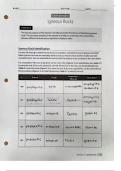
Use your lab manual to determine the texture, composition, and identity of each igneous rock listed
below. IgneOus rock sets are essentially identical, but you should look at another set after you have
completed yours. You are responsible for learning only the igneous rocks numbered in the chart below.
For composition: If the rock is aphanitic use the color index (Figure 2.1) and identifcation key (Table 2.1)
to name the rock. If the rock is phaneritic, identify the minerals in the rock, use the identification key
(Table 2.1) and color index (Figure 2.1) to name the rock. If the rock is porphyritic, use the color index of
the groundmass (Figure 2.1) and identification key (Table 2.1) to identify the rock.
Texture Origin Composition Rock Name
/Minerals
Intermediate
porphynhe
100
porphyntc both andesite
por phyritie
101
popngtie bot 1felsidaic
(rhyolite
102 phanenitic Intusive felsic granite
103 phanerithcin tus ive Interme di ate diorite
104 phaneritic In usive felsic 9ranite
Exercise 2-1 | lgneous Rocks 25
EXERCISE 2-1
lgneous Rocks
PURPOSE
The primary purpose of this exercise is to help youmaster the process of identifyingigneous
rocks. The secondary purpose of this exercise is to help you understand the relationships
between ifferent textures and compositions of igneous rocks.
lgneous Rock ldentification
Use your lab manual to determine the texture, composition, and identity of each igneous rock listed
below. IgneOus rock sets are essentially identical, but you should look at another set after you have
completed yours. You are responsible for learning only the igneous rocks numbered in the chart below.
For composition: If the rock is aphanitic use the color index (Figure 2.1) and identifcation key (Table 2.1)
to name the rock. If the rock is phaneritic, identify the minerals in the rock, use the identification key
(Table 2.1) and color index (Figure 2.1) to name the rock. If the rock is porphyritic, use the color index of
the groundmass (Figure 2.1) and identification key (Table 2.1) to identify the rock.
Texture Origin Composition Rock Name
/Minerals
Intermediate
porphynhe
100
porphyntc both andesite
por phyritie
101
popngtie bot 1felsidaic
(rhyolite
102 phanenitic Intusive felsic granite
103 phanerithcin tus ive Interme di ate diorite
104 phaneritic In usive felsic 9ranite
Exercise 2-1 | lgneous Rocks 25