7.0 Business Ethics and the
Environment
8.0 Business Ethics and Shareholders
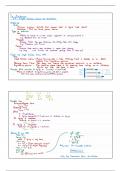
,Pollution-related problems
Intense urbanisation
Scarcity of resources getting worse
Destruction of habitat and species
Air and water contamination
Waste
,The global environment crisis
The three parallel trends-falling water tables, shrinking cropland area per person, and the levelling
of the oceanic fish catch-all suggest that it will be far more difficult to keep up with the growth in
world demand for food over the next half century.
The situation is quite grim and requires humanity to respond as one to meet the crisis. Can we do
something collectively to help meet this crisis? Does business ethics have something to offer to he
analyse and solve the environmental problems that are staring us in the face? In fact, there are qu
a few interesting and helpful theories that the field of business ethics can offer to understand and
and meet these problems.
Ever since the Industrial Revolution started in the late 18th century, the global output of industria
products and services has increased by thousands of times. This has led to indiscriminate exploita
of non-renewable resources, depleting their stock, and uncontrolled dumping of industrial waste i
the air and water, contaminating their quality. For more than two centuries, businesses were able
ignore the impact of their activities on the environment for many reasons:
Industry was able to treat air and water as free goods, with no one taking care of them;
Nature was looked upon as too vast and its regenerative capacities too huge to be affected advers
by business activities
, Arguments in favour of changes at the core
Population : lower the birth and death rates to as low a level as
feasible
Production : because the demand for non-renewable inputs mu
decrease, we will have to stop the frenzy of “growth”
Environment
8.0 Business Ethics and Shareholders
,Pollution-related problems
Intense urbanisation
Scarcity of resources getting worse
Destruction of habitat and species
Air and water contamination
Waste
,The global environment crisis
The three parallel trends-falling water tables, shrinking cropland area per person, and the levelling
of the oceanic fish catch-all suggest that it will be far more difficult to keep up with the growth in
world demand for food over the next half century.
The situation is quite grim and requires humanity to respond as one to meet the crisis. Can we do
something collectively to help meet this crisis? Does business ethics have something to offer to he
analyse and solve the environmental problems that are staring us in the face? In fact, there are qu
a few interesting and helpful theories that the field of business ethics can offer to understand and
and meet these problems.
Ever since the Industrial Revolution started in the late 18th century, the global output of industria
products and services has increased by thousands of times. This has led to indiscriminate exploita
of non-renewable resources, depleting their stock, and uncontrolled dumping of industrial waste i
the air and water, contaminating their quality. For more than two centuries, businesses were able
ignore the impact of their activities on the environment for many reasons:
Industry was able to treat air and water as free goods, with no one taking care of them;
Nature was looked upon as too vast and its regenerative capacities too huge to be affected advers
by business activities
, Arguments in favour of changes at the core
Population : lower the birth and death rates to as low a level as
feasible
Production : because the demand for non-renewable inputs mu
decrease, we will have to stop the frenzy of “growth”